
Here's what nobody tells you before you move to Georgia: the country runs on apps. Not in the Silicon Valley way — in the "you literally cannot function without six specific apps on your phone" way. You can't hail a taxi on the street anymore (well, you can, but you'll pay triple and probably get taken for a scenic route). You can't pay most utility bills without an app. Half the government services are digital-first.
The good news? Georgia's app ecosystem is genuinely excellent. Better than most of Western Europe, honestly. The banking apps alone would make your European bank weep with envy. The bad news? Most of these apps are designed for Georgian users, so discovery is rough when you don't read ქართული yet.
This guide covers every app and digital service you'll actually need — organized by how urgently you need them. Download the first three categories before you even leave the airport.
Before You Arrive
Download Bolt, Google Maps (with Georgia offline maps), and Google Translate before you land. You'll need them from the moment you step outside the airport. Everything else can wait until you have a Georgian SIM card.
Ride-Hailing: Bolt and Maxim
Forget Uber — it doesn't operate in Georgia. The ride-hailing market here is a two-horse race: Bolt and Maxim. If you only download one, make it Bolt.
Bolt is the dominant app. Every expat uses it. Prices are absurdly cheap compared to Western standards — a cross-city ride in Tbilisi rarely exceeds 10–15 GEL ($4–6). Surge pricing exists but is mild. Drivers are generally good; most cars are modern. The app works in English, payment via card is seamless, and you can share your ride status with someone for safety. Bolt also handles scooter rentals — their electric scooters are parked all over central Tbilisi. 1 GEL to unlock, then 0.20 GEL per minute.
Maxim is the budget option. It's 15–30% cheaper than Bolt for the same routes, but there's a reason: older cars, less predictable quality, and the app is clunkier. Maxim is more popular outside Tbilisi — in Kutaisi, Batumi, and smaller cities, it sometimes has better coverage than Bolt. Worth having as a backup.
| Feature | Bolt | Maxim |
|---|---|---|
| Typical Tbilisi ride | 5–15 GEL | 4–12 GEL |
| Car quality | Good — mostly newer models | Variable — some older vehicles |
| Card payment | Yes, reliable | Yes, but cash preferred |
| English interface | Full English | English available |
| Coverage outside Tbilisi | Good in major cities | Better in smaller towns |
| Scooter rentals | Yes (integrated) | No |
| Food delivery | Yes (Bolt Food) | No |
Pro tip: Always set a destination
Some drivers will cancel if you don't set a destination in the app. It also locks in the price — without it, you're at the mercy of the meter, and some drivers take "creative" routes. Always set your destination before confirming the ride.
Food Delivery: Wolt and Glovo
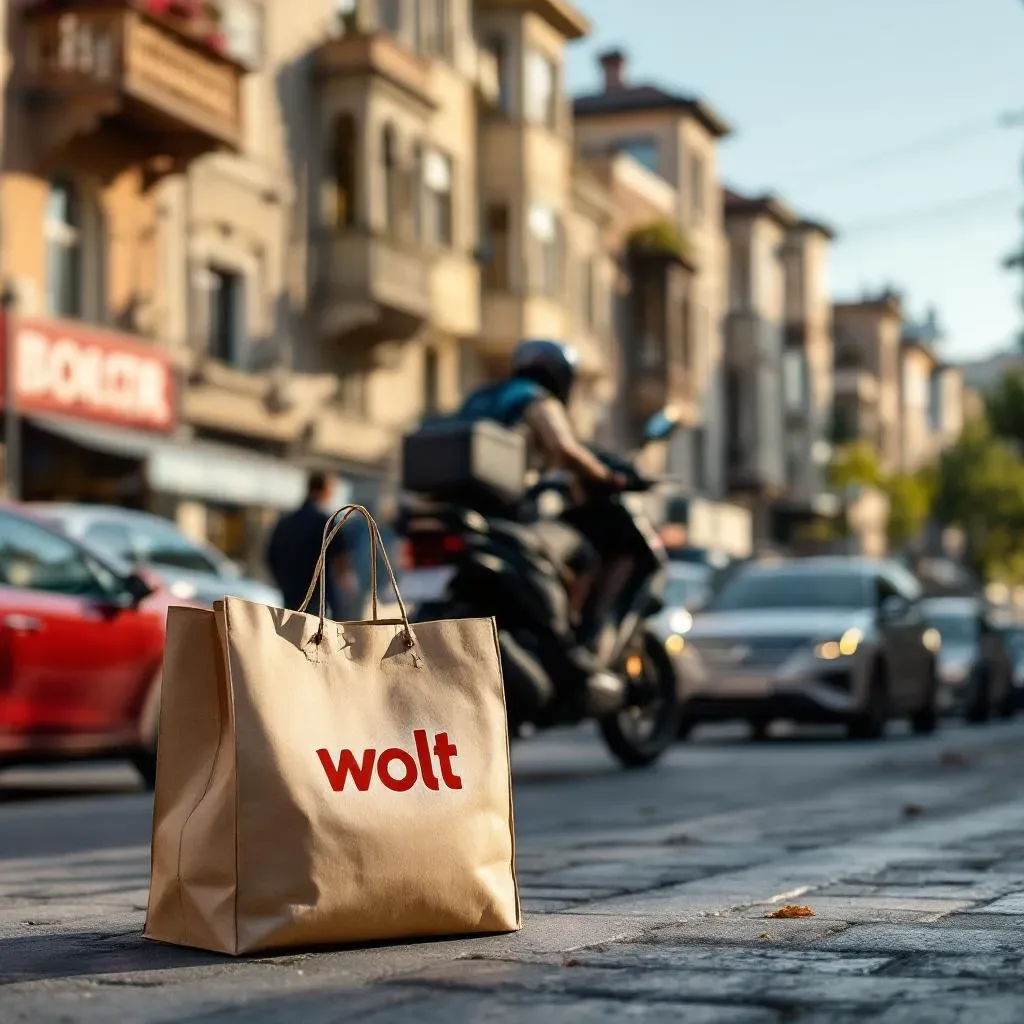
Georgia has two main food delivery platforms, and they're both excellent: Wolt and Glovo. Between them, you can get food from virtually every restaurant in Tbilisi delivered to your door — plus groceries, pharmacy items, and whatever else you need.
Wolt has the better interface and more curated restaurant selection. It's the app most expats default to. Restaurant listings include photos of actual dishes (not stock images), delivery time estimates are accurate, and the customer service is responsive if something goes wrong. Wolt+ subscription (9.90 GEL/month) waives delivery fees — worth it if you order more than twice a week.
Glovo covers more ground. It has a broader range of restaurants, including smaller neighborhood spots that Wolt doesn't list. Glovo also does "anything delivery" — you can send a courier to pick up something from any address and bring it to you. Useful for grabbing a document from a notary or collecting something from a friend across town.
Bolt Food exists too, built into the Bolt app. The restaurant selection is smaller than Wolt or Glovo, but it sometimes has exclusive deals and lower delivery fees. Check all three if you're price-conscious.
| Feature | Wolt | Glovo | Bolt Food |
|---|---|---|---|
| Restaurant selection | Large, curated | Largest | Smaller |
| Delivery fee | 1–4 GEL | 1–5 GEL | 0–3 GEL |
| Grocery delivery | Yes (Carrefour, Goodwill) | Yes (wider selection) | Limited |
| Anything delivery | No | Yes | No |
| Subscription | Wolt+ (9.90 GEL/mo) | Glovo Prime (varies) | None |
| Interface quality | Excellent | Good | Basic |
Banking Apps: BOG and TBC
Georgia has two major banks, and their mobile apps are genuinely world-class. This isn't hyperbole — both Bank of Georgia (BOG) and TBC Bank have apps that outperform most Western banking apps in features, speed, and usability. You'll use your banking app daily, for everything from paying for coffee to transferring money internationally.

Which bank you choose depends on your needs (see our full banking guide), but here's the app comparison:
| Feature | Bank of Georgia | TBC Bank |
|---|---|---|
| Multi-currency accounts | GEL, USD, EUR, GBP + more | GEL, USD, EUR, GBP + more |
| Instant currency exchange | Yes, in-app | Yes, in-app |
| Utility payments | Telasi, gas, water, internet | Telasi, gas, water, internet |
| QR payments | Yes — widely accepted | Yes — widely accepted |
| International transfers | SWIFT + in-app | SWIFT + in-app |
| Apple Pay / Google Pay | Yes | Yes |
| English interface | Full English | Full English |
| Crypto purchases | No | No (use Binance P2P) |
Both apps let you pay utility bills directly — electricity (Telasi), natural gas (KazTransGas), water (GWP), and internet. You scan a QR code on your bill or enter your subscriber number. The whole process takes 30 seconds. No more standing in bank queues.
Open accounts at both banks
Seriously — most long-term expats have accounts at both BOG and TBC. They're free to open, free to maintain, and you'll occasionally need the one you don't primarily use. Some landlords only accept transfers to a specific bank. Some services only work with one. Having both costs you nothing and saves headaches.
Payment Apps: BOG Pay and TBC Pay
Georgia is rapidly going cashless. Even the fruit vendor at Dezerter Bazaar often has a QR code taped to his stall. The two payment systems are BOG Pay (Bank of Georgia) and TBC Pay — each integrated into their respective banking apps.
QR code payments work everywhere: supermarkets, restaurants, taxis, pharmacies, street vendors, even some marshrutka routes. You open the banking app, tap "Pay," scan the merchant's QR code, confirm the amount, done. No need to carry cash for most transactions.
Apple Pay and Google Pay both work in Georgia with cards from either bank. Contactless payment is accepted at virtually every POS terminal in Tbilisi. Even most smaller shops and cafés have contactless readers.
That said, always carry some cash. Small mechanic shops, some marshrutka drivers, market vendors, and parking attendants still operate cash-only. A 50 GEL note in your wallet as backup is enough.
Navigation & Maps
Google Maps is your primary navigation tool. It's accurate, frequently updated, and has good coverage of Tbilisi's streets, restaurants, and businesses. Download the offline map for Georgia before you arrive — you'll need it in areas with poor signal (which is most of the countryside).
Google Maps handles public transport routing in Tbilisi reasonably well. It shows metro stations, bus routes, and walking directions. It's not perfect — bus schedule data can be off — but it's the best option available.
Waze is popular among drivers for real-time traffic updates. Tbilisi traffic is genuinely terrible during rush hours (8–10 AM and 5–8 PM), and Waze does a better job than Google Maps at finding alternative routes through the city's confusing web of one-way streets.
2GIS is a hidden gem that most expats don't know about. It's a Russian-made mapping app with extremely detailed business listings — floor numbers in shopping centers, opening hours that are actually accurate, and indoor maps for some malls. The Georgian data is solid. It's especially useful for finding specific businesses that Google Maps doesn't list well.
Google Maps
Best overall. Download offline maps for Georgia. Good for walking, driving, and transit directions. Restaurant reviews are reliable.
Waze
Best for driving. Real-time traffic, speed cameras, and community-reported hazards. Essential if you own a car.
2GIS
Best for finding businesses. Detailed listings, accurate hours, indoor maps. Great for "where is the nearest notary" moments.
Maps.me
Best for hiking and offline use. OpenStreetMap data with hiking trails, mountain paths, and rural roads that Google misses.
Public Transport Apps
Tbilisi's public transport isn't as app-friendly as London or Berlin, but there are tools that help.
Tbilisi Transport Company (TTC) — the official app. It shows real-time bus and minibus locations on a map, which is genuinely useful since bus stops in Tbilisi often have no schedule information whatsoever. The interface is rough, but the tracking data is accurate. Available in English.
Metromoney — not an app per se, but the card system you need. You buy a physical Metromoney card (2 GEL) from any metro station and load credit onto it. It works for metro, buses, and cable cars. You can also use contactless bank cards directly on metro turnstiles and bus readers — just tap your BOG or TBC card instead.
| Transport | Cost | Payment Method |
|---|---|---|
| Metro | 1 GEL | Metromoney card or contactless bank card |
| City bus | 1 GEL | Metromoney card or contactless bank card |
| Minibus (marshrutka) | 0.80 GEL | Cash only (some accept card) |
| Cable car (Rike–Narikala) | 1 GEL | Metromoney card or contactless bank card |
| Bolt ride (typical) | 5–15 GEL | In-app (card or cash) |
90-minute transfer window
With Metromoney, your first trip costs 1 GEL. Any transfers within 90 minutes (metro → bus, bus → metro, bus → bus) are free. This makes multi-leg journeys extremely cheap. The same transfer window applies when paying with contactless bank cards.
Government & Official Services
Georgia's e-government is surprisingly advanced. You can handle most bureaucratic tasks online — which is great, because Georgian bureaucracy in person involves queues and confusion.
| Portal | URL | What It Does |
|---|---|---|
| rs.ge | rs.ge | Tax portal — file returns, get TIN, register as entrepreneur, pay taxes |
| my.gov.ge | my.gov.ge | Unified portal — request documents, check permit status, digital signatures |
| psh.gov.ge | psh.gov.ge | Public Service Hall — book appointments, check service status |
| napr.gov.ge | napr.gov.ge | Property registry — check ownership, view extracts, register property |
rs.ge is the one you'll use most. If you're starting a business or working as a freelancer, you'll file monthly tax returns here. The interface is available in English (switch language in the top right), and the process is straightforward once you know where everything is. Registration requires a Georgian mobile number for SMS verification.
my.gov.ge is the catch-all government portal. You can request certificates, check residency permit status, and handle various official requests without visiting Public Service Hall. It requires a digital signature or SMS verification to log in.
Translation & Language Tools
You will need translation help. Georgian is one of the most linguistically isolated languages in the world — it's not related to Russian, Turkish, Arabic, or any European language. The script (მხედრული) is unique. Google Translate will be your constant companion for the first few months.
Google Translate
Camera translation is a lifesaver for menus, signs, and documents in Georgian. Download the Georgian language pack for offline use. Accuracy is decent for simple phrases, unreliable for complex sentences.
Google Lens
Point your camera at any Georgian text for real-time translation overlay. Works on street signs, product labels, restaurant menus. Integrated into the Google app and Google Photos.
ChatGPT / AI Assistants
Better than Google Translate for nuanced Georgian. Use for composing messages to landlords, understanding official letters, or learning the language. Explain context for better translations.
Georgian Keyboard
Add the Georgian keyboard in your phone settings (Settings → Keyboard → Add Language → ქართული). You'll need it for typing addresses, searching for businesses, and texting Georgian contacts.
Learn the alphabet first
The Georgian alphabet has 33 letters and is purely phonetic — every letter makes exactly one sound. You can learn to read it in a few hours. Once you can sound out words, you can use Google Maps to search for places in Georgian, read bus route signs, and navigate menus. It's the single highest-ROI investment you can make for daily life.
Communication & Social
WhatsApp is Georgia's dominant messaging app — more so than Telegram or Viber. Your landlord, your plumber, your accountant, your local friends — everyone communicates via WhatsApp. Many businesses use WhatsApp as their primary customer service channel. If a restaurant doesn't have a website, it probably has a WhatsApp number.
Telegram is popular too, especially among the tech-savvy and expat communities. Many expat groups, news channels, and classifieds operate on Telegram. Join the "Tbilisi Expats" and "Foreigners in Tbilisi" groups early — they're goldmines for practical information.
Facebook — surprisingly relevant here. Georgia has a massive Facebook user base, and many businesses only have a Facebook page, not a website. Facebook Marketplace is the main platform for buying/selling used furniture, electronics, and household items. "Tbilisi International Community" is the largest English-speaking Facebook group and genuinely useful.
| Platform | Used For | Expat Must-Join |
|---|---|---|
| Primary messaging, business communication | Your landlord will use this | |
| Telegram | Expat groups, news channels, tech community | Tbilisi Expats channel |
| Groups, marketplace, business pages | Tbilisi International Community | |
| Restaurant menus, venue discovery | Follow local restaurants for daily specials |
Shopping & Marketplace Apps
Georgia doesn't have Amazon, and local e-commerce is still developing. Here's what works:
MyMarket.ge — Georgia's closest thing to Amazon/eBay. Electronics, clothing, home goods, car parts, everything. The interface is in Georgian, but Google Translate's camera mode works on the browser version. Prices are competitive, and most sellers ship within Tbilisi via courier. You can filter by "Tbilisi" sellers for same-day or next-day delivery.
SS.ge — the main classifieds platform. If you're looking for an apartment to rent, a car to buy, or second-hand anything, this is where you go. Think Craigslist but actually functional. Listings are in Georgian, but the search filters and categories have English translations. Every expat who's found an apartment in Tbilisi has used SS.ge.
Facebook Marketplace — the expat go-to for used items. Furniture from departing expats, electronics, baby gear, kitchen equipment. The advantage over SS.ge is that sellers are often English-speaking, and you can check their profile for legitimacy.
Wildberries — the Russian e-commerce giant operates in Georgia. Massive product selection, very competitive prices, and delivery to pickup points around Tbilisi. The app is available in English. Delivery typically takes 5–10 days. It's excellent for clothing, home goods, and items you can't find locally.
| Platform | Best For | Language | Delivery |
|---|---|---|---|
| MyMarket.ge | New goods (electronics, home) | Georgian | 1–3 days (Tbilisi) |
| SS.ge | Classifieds (apartments, cars, used items) | Georgian (some English) | Pickup / meet seller |
| Facebook Marketplace | Used items from expats | English (mostly) | Pickup / meet seller |
| Wildberries | Clothing, home goods, variety | English available | 5–10 days to pickup point |
Health & Fitness
GPI (Georgian Post Insurance) — not an app, but the most common health insurance portal. Manage your policy, find network hospitals and clinics, and submit claims online at gpi.ge. Most expat-friendly insurance plans are through GPI or Aldagi.
Aversi Pharma and PSP — the two largest pharmacy chains. Both have apps for checking medicine availability and prices. Aversi has an online ordering option with delivery. Georgia has a generous over-the-counter drug policy — many medications that require prescriptions in the EU/US are available OTC here.
For fitness, there's no dominant gym-booking app. Most gyms handle membership directly. Strava works well for tracking runs — the running community in Tbilisi uses it actively, especially around Lisi Lake and Vake Park.
International Money Transfers
You'll need to move money between your home country and Georgia. Georgian bank SWIFT transfers work but are slow (2–4 days) and charge fees on both ends. Better options:
Wise (formerly TransferWise)
The gold standard. Real exchange rate, transparent fees (~0.5–1%), fast (usually same day). Sends directly to your Georgian bank account. Also offers a multi-currency card that works in Georgia.
Revolut
Good exchange rates, useful as a backup card. Free plan allows limited fee-free exchanges. The physical card works at Georgian ATMs and shops. Some users report top-up issues from Georgian banks — test before relying on it.
Cryptocurrency
Georgia has 0% tax on crypto gains. Binance P2P is the most popular way to buy/sell USDT for GEL. TBC and BOG don't block crypto-related transactions (as of 2026).
Western Union / Ria
Old school but reliable. Cash pickup available at Bank of Georgia branches. Higher fees than Wise, but useful if you need someone in your home country to send you money quickly without a bank transfer.
Utility Management
Most utility bills can be paid through your banking app, but some providers have their own portals worth knowing:
| Utility | Provider | How to Pay |
|---|---|---|
| Electricity | Telasi (Tbilisi) | Banking app, telasi.ge, or payment terminal |
| Natural gas | KazTransGas | Banking app or payment terminal |
| Water | GWP | Banking app or gwp.ge |
| Internet | Magticom / Silknet | Provider app, banking app, or auto-pay |
| Mobile phone | Magticom / Silknet / Cellfie | Provider app, banking app, USSD codes |
Payment terminals deserve a mention. Georgia has thousands of yellow and blue self-service terminals (TBC Pay and BOG terminals) on street corners, in supermarkets, and in malls. You can pay any utility bill, top up your phone, pay fines, and even transfer money to other Georgian bank accounts — all without an app. They accept cash and cards. The interface has an English option. These terminals are genuinely useful when you're still getting set up and haven't linked all your accounts in the banking app yet.
VPN & Digital Privacy
Georgia has a relatively free internet with no major censorship or content blocking. You generally don't need a VPN for access reasons. That said, three situations where you will:
- Streaming content from home — Netflix Georgia's library is smaller than the US/UK. A VPN lets you access your home country's catalog. Same for BBC iPlayer, Hulu, and similar geo-restricted services.
- Public WiFi security — Georgian café WiFi networks are rarely secured. Use a VPN on public networks, especially when accessing banking apps.
- Accessing home country services — Some government portals, banking sites, and services from your home country may block Georgian IP addresses. A VPN back to your home country solves this.
Mullvad, Proton VPN, and NordVPN all have Georgian servers. ExpressVPN works but sometimes has slower speeds through Georgian routing.
Coworking & Remote Work Tools
If you're working remotely, a few tools help:
Impact Hub Tbilisi, Terminal, Fabrika, and Lokal all have their own booking systems — usually via their websites or Instagram DMs. There's no single "coworking booking app" for Tbilisi. Most spaces offer day passes (15–30 GEL) and monthly memberships (200–400 GEL).
Speedtest by Ookla — download this before committing to a coworking space or apartment. Test the WiFi speed on-site. Georgia's advertised internet speeds are generally accurate, but building infrastructure varies wildly. An apartment on one floor might get 100 Mbps while the one below gets 20. Always test.
Day 1 Download Checklist
Here's what to have on your phone before or immediately after landing in Tbilisi:
| Priority | App | Why |
|---|---|---|
| Before landing | Bolt | Get from the airport to the city (7–12 GEL to center) |
| Before landing | Google Maps (offline) | Navigate without data. Download Georgia map in advance. |
| Before landing | Google Translate | Camera translation for signs and menus |
| Day 1 | Wolt | Food delivery when you're jetlagged and don't know restaurants yet |
| Day 1 | Every Georgian you meet will ask for your WhatsApp | |
| Week 1 | BOG / TBC banking app | After opening your bank account |
| Week 1 | Glovo | Alternative delivery + grocery delivery |
| Month 1 | rs.ge | When you register as entrepreneur or need TIN |
| Month 1 | Wise / Revolut | For international money transfers |
Common Mistakes
❌ Relying on cash only
Georgia is more cashless than you'd expect. Without a banking app and card, you'll struggle to pay for transport, deliveries, and many services. Open a bank account in your first week.
❌ Not downloading offline maps
Mobile data coverage in rural Georgia is spotty. If you're traveling outside Tbilisi — and you should — download the entire country's offline map in Google Maps. It's about 200 MB.
❌ Ignoring Facebook
You might not use Facebook in your home country anymore. In Georgia, it's essential. Apartment hunting, buying used items, local groups, restaurant pages — Facebook is the infrastructure.
❌ Using one delivery app only
Wolt and Glovo have different restaurant partnerships. The khachapuri place on Wolt might not be on Glovo, and vice versa. Have both apps and compare prices — the same restaurant sometimes charges differently on each platform.
❌ Paying airport taxi drivers cash
Airport taxi drivers approach you inside the terminal. They'll charge 40–60 GEL for a ride that costs 7–12 GEL on Bolt. Walk outside, connect to airport WiFi, order a Bolt. Save 80%.
❌ Not adding Georgian keyboard
You'll need to type Georgian text for addresses, searching businesses on Google Maps, and texting Georgian contacts. Add the keyboard early — you'll need it more than you think.
Frequently Asked Questions
Does Uber work in Georgia?
No. Uber does not operate in Georgia. Use Bolt as your primary ride-hailing app and Maxim as a backup. Both work similarly to Uber — set destination, see price upfront, pay by card.
Can I use Apple Pay / Google Pay in Georgia?
Yes. Both work with Georgian bank cards (BOG and TBC). Contactless payment is widely accepted — most shops, restaurants, and even many taxis have contactless terminals. You can also add your foreign cards, but some may not work for local transactions.
Do I need a local phone number for these apps?
Bolt and Wolt work with any phone number (you can sign up with your home number before arriving). Banking apps and government portals require a Georgian number. Get a Georgian SIM card on day one — it costs about 10 GEL with a starter data package.
Is Georgia cashless?
Mostly. Tbilisi is about 80% cashless for daily transactions. Card payments work at supermarkets, restaurants, cafés, pharmacies, and most shops. Exceptions: some marshrutka routes, small market vendors, parking attendants, and street sellers. Always carry 50–100 GEL in cash as backup.
What about Amazon? Can I order things to Georgia?
Amazon doesn't ship to Georgia directly (for most items). Expats use parcel forwarding services like USA2Georgia, OnTyme, or GeorgiansDelivery — you get a US/EU warehouse address, order to that address, and the service ships to Tbilisi. Delivery takes 7–15 days and costs $3–8 per kg. See our shipping guide for details.
Written by The Georgia Expats Team
We've spent years navigating Georgia's app ecosystem — from the day-one confusion of not knowing how to hail a taxi to the eventual muscle memory of paying every bill through a banking app. This guide reflects what we actually use daily, not what we found in a Google search.
Last updated: February 2026.
Related Articles
Banking in Georgia
Complete guide to opening accounts at BOG and TBC.
Internet & Phone
SIM cards, home WiFi, and staying connected.
Getting Around Tbilisi
Metro, buses, taxis, and navigating the city.
Shipping & Packages
Getting items shipped to Georgia from abroad.