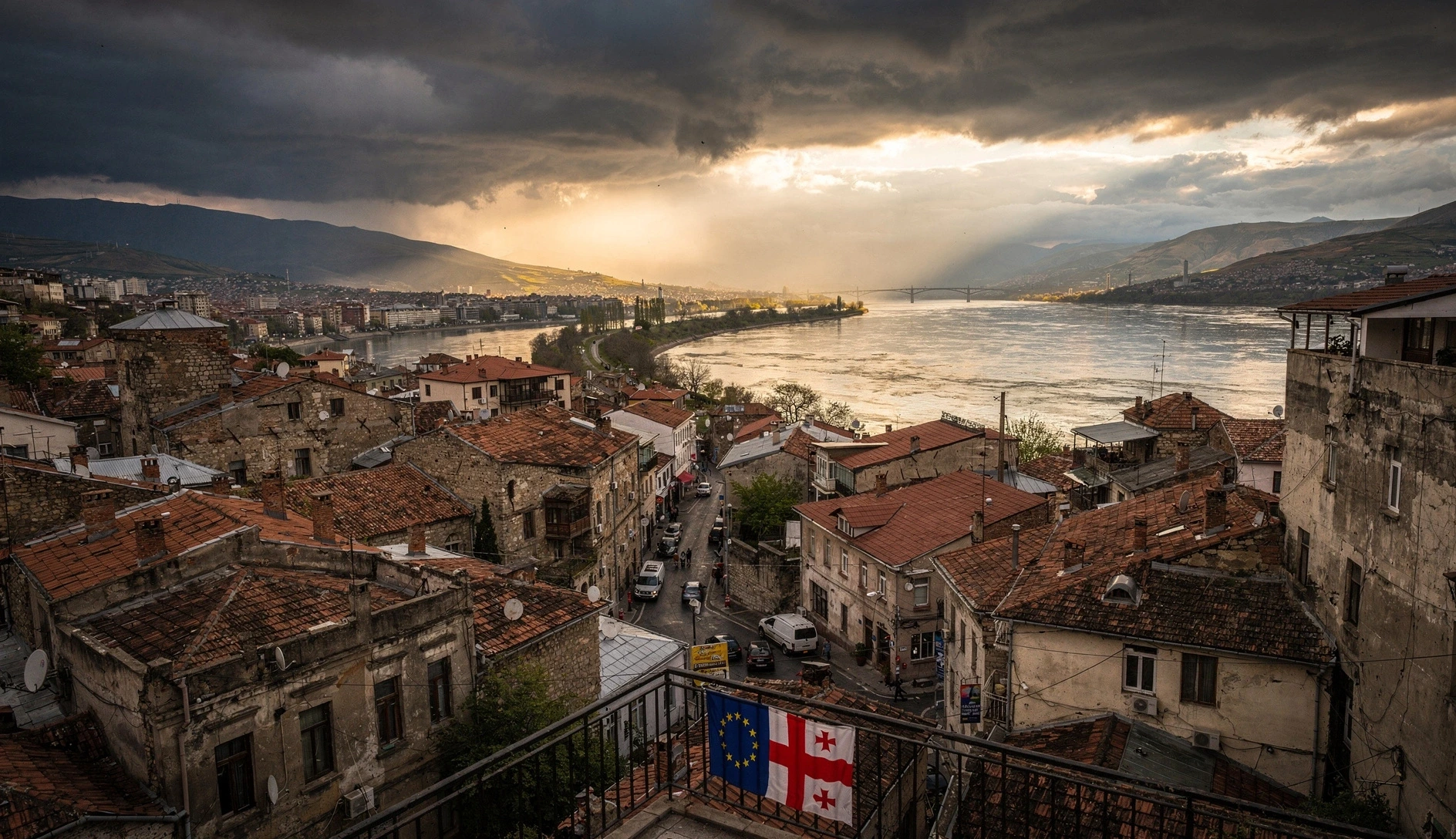
If you're researching Georgia as a place to live, work, or retire, you've probably seen some alarming headlines about the country's political situation. The coverage varies wildly depending on the source — Western media paints one picture, the Georgian government tells a different story, and the reality on the ground is more nuanced than either suggests.
This guide attempts to lay out what's happening as objectively as possible, present both sides of the key debates, and answer the question that matters most to you: what does this mean for my daily life, my business, my visa, and my safety?
We're not here to tell you which side is right. Georgia's political situation is genuinely complex, shaped by history, geography, and the competing interests of major powers. As an expat, understanding both perspectives will serve you better than picking a team.
The Context Most Coverage Misses
To understand Georgia's current situation, you need context that most international coverage skips entirely.
Georgia is a small country of 3.7 million people, wedged between Russia, Turkey, Armenia, and Azerbaijan. It lost 20% of its territory to Russian-backed separatist regions (South Ossetia and Abkhazia) after the 2008 war. It has no NATO membership, no EU membership, and no security guarantees from anyone. It lives in a tough neighbourhood, and its political choices reflect that reality.
Since independence in 1991, Georgia has been a recipient of enormous amounts of foreign funding from Western governments and institutions. Billions of dollars have flowed in through USAID, the National Endowment for Democracy (NED), EU funding programmes, and various European government-backed foundations. This money has funded NGOs, media organisations, political training programmes, civil society groups, and, critics argue, opposition political infrastructure.
This context matters because the current political debate doesn't exist in a vacuum. It's happening against a backdrop of:
- A 2003 "Rose Revolution" that toppled the previous government with significant Western backing
- A broader pattern of Western-supported "colour revolutions" across the former Soviet space
- An ongoing war in neighbouring Ukraine that has made questions of alignment between East and West existential
- A Georgian population that overwhelmingly wants EU integration, but is divided on how to get there and what compromises to accept along the way
What Happened: A Timeline
Here are the key events, presented without editorial framing:
| When | What |
|---|---|
| May 2024 | Parliament passes the "Foreign Influence Transparency" law, requiring organisations receiving more than 20% of their funding from abroad to register and disclose their funding sources. The government says it's about transparency; opponents call it a "Russian-style" law designed to silence civil society. Mass protests follow. |
| Oct 2024 | Parliamentary elections held. Georgian Dream wins. International observers report procedural concerns. The opposition disputes the results and calls them fraudulent. Georgian Dream says the elections were free and fair. |
| Nov 2024 | Government announces it will pause EU accession preparations until 2028, citing what it describes as the EU's politicised and unfair treatment of Georgia. Large protests erupt. |
| Dec 2024 | New president inaugurated. Outgoing President Zourabichvili refuses to recognise the new parliament or president, claiming to remain the legitimate head of state. |
| Jan 2025 | EU suspends visa-free travel for Georgian diplomatic passport holders. Only affects diplomats, not ordinary citizens. |
| Mar 2025 | Stricter "Foreign Agents Registration Act" passed, with criminal penalties for non-compliance. |
| Oct 2025 | Large rally in Tbilisi — approximately 20,000 people. Some clashes between demonstrators and police. |
| Feb 2026 | EU diplomatic visa suspension takes effect. EU warns it could extend to all Georgian citizens. |
Two Perspectives — Both Worth Understanding
As an expat, you'll encounter passionate advocates for both sides. Here's an honest attempt to represent each:
🔵 The Government's Position (Georgian Dream)
- • Georgia must maintain sovereignty and avoid being drawn into the conflict between Russia and the West. Becoming a "second front" would be catastrophic for a country that already lost territory to Russia.
- • The transparency law is modelled on similar legislation that exists in the US (FARA), France, Australia, Israel, and other democracies. Knowing who funds organisations that influence public policy is a reasonable democratic principle.
- • Billions of dollars of foreign funding — much of it from US government agencies like USAID and NED, which have documented histories of involvement in regime change — have created an ecosystem of NGOs, media outlets, and political groups that serve foreign interests rather than Georgia's.
- • The EU is applying a double standard to Georgia compared to other candidate countries, and EU accession conditions have become politicised tools of pressure rather than genuine reform benchmarks.
- • Georgian Dream won a democratic election and has a mandate to govern. The opposition's refusal to accept the results is itself anti-democratic.
- • Peace and stability are the top priorities. Georgia's economy has grown, tourism has boomed, and the country has avoided being pulled into a devastating regional conflict.
🟠 The Opposition & Civil Society's Position
- • The transparency law is not really about transparency — it's designed to stigmatise and silence independent media and NGOs that hold the government accountable. The "foreign agent" label carries Soviet-era connotations deliberately.
- • The October 2024 elections had significant irregularities, including voter intimidation, ballot-box stuffing allegations, and a compromised election commission. The results do not reflect the will of the people.
- • Georgian Dream, controlled by billionaire Bidzina Ivanishvili, is steering the country away from EU integration — which 80%+ of Georgians support — toward isolation or Russian influence.
- • Press freedom, judicial independence, and democratic institutions are being systematically weakened. The foreign agents law is one tool in a broader pattern of authoritarian consolidation.
- • The "sovereignty" argument is a cover for eliminating checks on government power. Many democracies have transparency laws, but Georgia's version includes criminal penalties and requires "foreign agent" labelling designed to discredit organisations.
- • Georgia's constitutional path is European integration. Abandoning it betrays both the constitution and the overwhelming will of the population.
The Russia Question
Is Georgia becoming "pro-Russian"? It depends on who you ask. Georgian Dream insists it's pursuing an independent, pragmatic foreign policy — not pro-Russian, but also not willing to sacrifice Georgia's security to serve Western geopolitical interests. The opposition says the government's actions (the foreign agents law, EU suspension, deepening economic ties with Russia) look a lot like alignment with Moscow, regardless of the rhetoric. The reality is probably somewhere in between: Georgian Dream appears to be hedging its bets, trying to maintain relations with both sides — a strategy that neither side finds acceptable. Most ordinary Georgians remain strongly pro-EU.
The Foreign Funding Question
This is the issue at the heart of the current debate, and it's worth understanding in more depth because it rarely gets honest coverage from either side.
Since the early 2000s, Western governments have funnelled substantial funding into Georgia through:
- USAID — the US government's development agency, which has spent hundreds of millions in Georgia on governance, civil society, and media programmes
- NED (National Endowment for Democracy) — a US government-funded organisation that finances democracy promotion worldwide, including direct grants to Georgian political parties, NGOs, and media
- EU-funded programmes — billions of euros in development aid, much of it channelled through NGOs
- Open Society Foundation and other private foundations with explicit political reform agendas
Georgian Dream argues this has created an unaccountable parallel power structure — a network of well-funded organisations that answer to foreign donors rather than Georgian citizens. Whether you see this as legitimate democracy support or as foreign interference depends largely on your political perspective.
What's less debatable is that transparency about funding sources is a principle that exists in many democracies. The US itself has the Foreign Agents Registration Act (FARA). The question is whether Georgia's implementation goes beyond transparency into stigmatisation and suppression — and on that, people genuinely disagree.
How This Affects Daily Expat Life
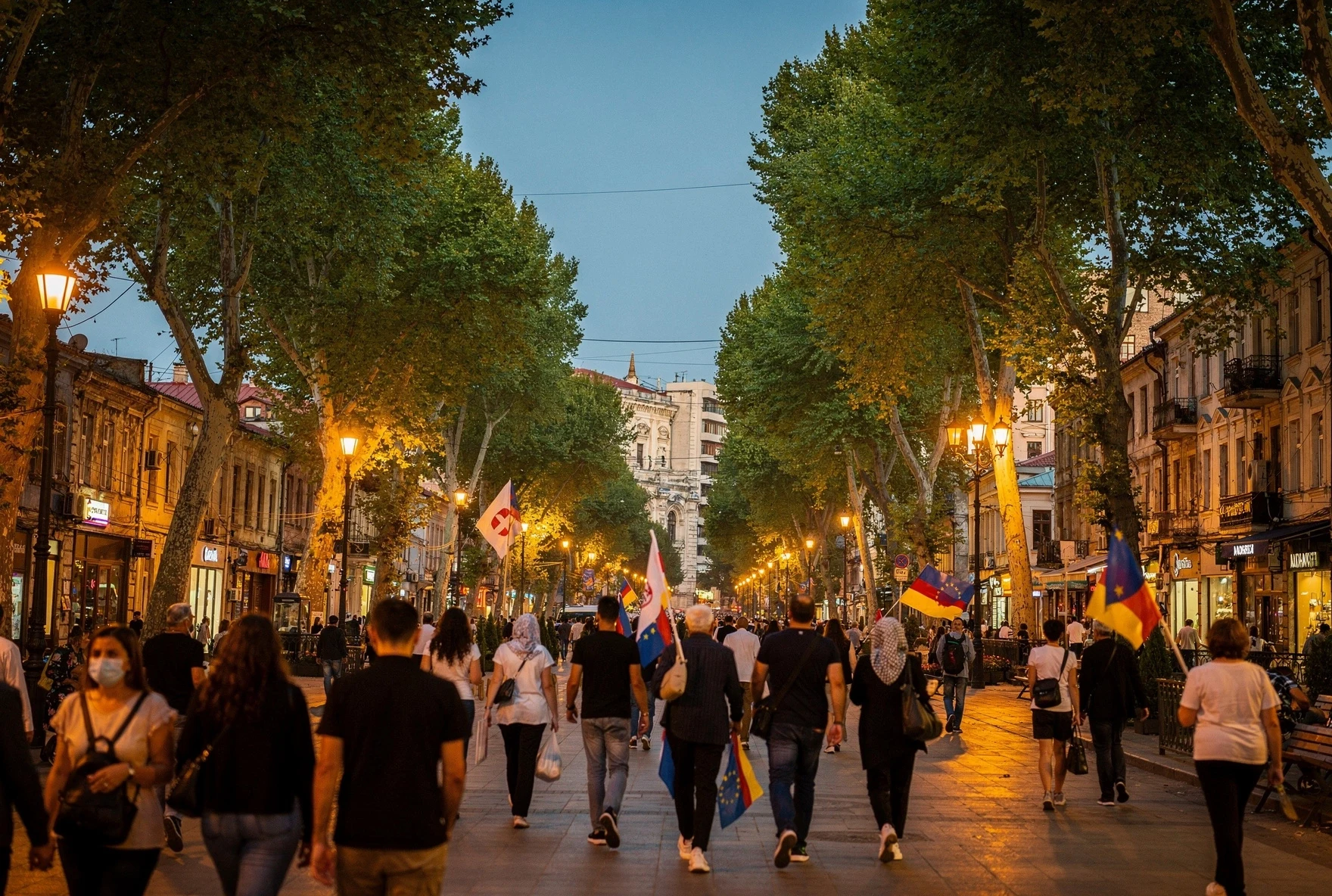
Here's the part you probably care about most. The honest answer: for the vast majority of expats, daily life in Tbilisi is essentially unchanged. Restaurants are open. The metro runs. Your bank accounts work. Businesses operate normally. Bolt arrives in four minutes. The coffee is still good.
| Area | Impact Level | Details |
|---|---|---|
| Personal safety | Low | No anti-foreigner sentiment. Protests are localised. If you stay away from Parliament area at night, you won't encounter unrest. |
| Visa / residency | None (so far) | Georgia's visa-free entry for 90+ countries is unchanged. Residence permits work as before. The EU visa suspension only affects Georgian citizens travelling to Europe. |
| Banking | Low | No international sanctions on Georgian banks (as of March 2026). SWIFT transfers work. Personal and business accounts are unaffected. |
| Business / IE | Low | The 1% IE regime, company registration, and tax system are unchanged. The new labour permit adds some complexity but applies regardless of the political situation. |
| Real estate | Low | Property prices in Tbilisi have continued rising. The market has been robust. |
| Social atmosphere | Medium | The political divide runs deep. Conversations about politics can be intense. The mood is noticeably more polarised than 2022-2023. |
The Protests: What You Need to Know
Protests have been a recurring feature of Tbilisi life since late 2024. Here's the practical reality:
Where They Happen
Almost exclusively on Rustaveli Avenue near Parliament. Sometimes Freedom Square or Republic Square. The rest of the city — including popular expat areas like Vake, Vera, Saburtalo, and the Old Town — is completely unaffected.
When They Happen
Primarily in the evenings, typically starting around 7-8 PM. Daytime Tbilisi functions completely normally. Larger actions usually happen on weekends or significant dates.
Are They Violent?
The vast majority have been peaceful. However, there have been clashes — particularly in December 2024 and October 2025. Police have used water cannons, tear gas, and rubber bullets in some instances. Protesters have occasionally used fireworks and barricades.
Risk to Foreigners
There is no anti-foreigner sentiment at protests. However, if things escalate, bystanders can be caught in tear gas or crowd surges. Avoid the Parliament area at night on protest days unless you understand the risks.
Practical Advice During Protests
Don't walk along Rustaveli Avenue between Republic Square and Freedom Square after 7 PM on protest days (check Tbilisi expat Telegram groups for real-time updates). If you accidentally find yourself near a protest, simply walk away — side streets are always calm. Keep a copy of your passport on you at night.
The Transparency Law: Does It Affect Expats?
Short answer: almost certainly not.
The law targets organisations that receive foreign funding and engage in political activities. Unless you're running an NGO, media outlet, or advocacy organisation that receives grants from foreign governments or international foundations, this law doesn't apply to you.
| Your Situation | Are You Affected? |
|---|---|
| Remote worker / digital nomad | No. |
| Running an IE / freelancing | No. |
| Operating a company (LLC) | No, unless your company receives foreign grants for political/advocacy purposes. |
| Working for an international NGO | Potentially yes. Your organisation may need to register and comply with reporting requirements. |
| Journalist / media professional | Potentially yes, if your outlet receives foreign funding. |
| Retiree / Student | No. |
EU Relations: What's Going On
Georgia received EU candidate status in December 2023. In late 2024, the government paused the accession process. The two sides tell very different stories about why:
Georgian Dream's View
The EU has been applying unfair double standards, using accession as political leverage, and effectively demanding Georgia adopt policies that would compromise its sovereignty and security. Georgia remains committed to eventual EU membership but will not be bullied into accepting unreasonable conditions. The EU can't simultaneously claim to promote democracy while punishing a democratically elected government.
The EU / Opposition View
The government has deliberately derailed EU integration by passing laws incompatible with European standards, cracking down on civil society, and abandoning democratic reforms. The conditions were clear and Georgia was making progress — until the government chose a different path. The pause was the government's choice, not the EU's.
What it means for you as an expat: The EU measures target Georgian citizens, not foreign nationals. If you hold a US, Canadian, Australian, or EU passport, your travel rights are determined by your citizenship, not where you live. Your Georgian residence permit doesn't change your EU access.
Current Travel Advisories
Most major countries maintain relatively moderate advisories for Georgia — the same level as many popular European destinations:
| Country | Advisory Level | Key Notes |
|---|---|---|
| United States | Level 1-2: Exercise Increased Caution | Same as France, Spain, Italy. "Do not travel" only for South Ossetia and Abkhazia. |
| United Kingdom | Advise against all travel to occupied territories only | Notes political demonstrations and recommends avoiding them. |
| Canada | Exercise a high degree of caution | Due to civil unrest and unpredictable security situation. |
| Australia | Exercise a high degree of caution | Mentions political tensions and demonstrations. |
No major country has issued a "do not travel" warning for Georgia (excluding the occupied territories, which have always been off-limits).
Business & Investment Implications
What Hasn't Changed
- • The 1% IE tax regime remains in effect
- • Company registration still takes one day at PSH
- • Banking services function normally
- • Property rights for foreigners are unchanged
- • No capital controls or currency restrictions
- • The GEL has remained relatively stable
- • Georgia's economy has performed well — GDP growth has been positive, tourism strong
What's Worth Watching
- • Regulatory changes can come with little warning (the labour permit law is one example)
- • The EU relationship — if it deteriorates further, it could affect investment sentiment
- • The direction of governance and institutional quality
- • Whether Western sanctions materialise or not
Should You Be Worried?
Depends on your time horizon and what you're doing here.
Short-term stay (months)
Low concern. Daily life is normal. Your visa, apartment, coworking space, bank account — all fine. Enjoy the food, the wine, and the absurdly low cost of living.
Medium-term (1-3 years)
Moderate concern. Track the political situation because it can affect the regulatory landscape. Have contingency plans, as you should when living in any developing country.
Long-term / settling down
Worth paying attention. If you're buying property or building a life here, the country's political direction matters — whether it's EU relations, institutional quality, or economic trajectory.
Retirees
Low concern. Your pension, healthcare access, and daily life aren't directly affected by political tensions.
Practical Advice for Expats
📱 Stay Informed
Follow multiple news sources — not just Western-funded English-language outlets. Join Tbilisi expat Telegram groups for real-time updates. Talk to Georgians from different backgrounds. Form your own opinions based on a range of perspectives.
🗺️ Know Protest Locations
Rustaveli Avenue near Parliament is the main protest zone. If you live or work nearby, check Telegram groups for advance notice of larger actions.
📋 Register with Your Embassy
If you haven't already, register with your home country's embassy in Tbilisi. This is prudent in any country where political tensions are elevated.
💼 Diversify Your Setup
Don't keep all your assets in any single country. Maintain bank accounts elsewhere. This is good practice anywhere, not specific to Georgia's current situation.
🤐 Be Thoughtful in Conversations
Georgian politics is deeply personal for locals. People have family and friends on different sides. As a foreigner, be careful about expressing strong political opinions — you're a guest in someone's country during a painful and polarised moment. Listen more than you speak. Understand that people you disagree with may have legitimate reasons for their position.
📄 Keep Documents in Order
Ensure your passport, residence permit, and any business registrations are up to date. Clean paperwork removes one variable from your life.
Should You Still Move to Georgia?
Georgia's core appeal hasn't disappeared. The 1-year visa-free stay, the 1% tax regime, the low cost of living, the food, the culture, the safety, the geographic beauty — all of this is still real. Tbilisi is still one of the most livable, affordable, and interesting cities in the world for expats and digital nomads.
The political picture adds uncertainty. Whether that uncertainty is a dealbreaker depends on your personal situation, risk tolerance, and timeline. Many expats are settling in, buying property, and building businesses. Others are taking a wait-and-see approach. Both are reasonable positions.
The practical question is about flexibility. If you're here for a year or two, the political situation is mostly background noise. If you're making a decades-long commitment, factor in the uncertainty — as you would in any country going through a period of political transition.
A Final Thought
Georgia has survived a lot — wars, economic crises, and multiple political upheavals. It's a remarkably resilient country with warm, hospitable people who care deeply about their future. The political debate, however uncomfortable, reflects a society that is engaged and passionate about its direction. Whatever your perspective on the politics, the fact that Georgians argue so passionately about their country's path is itself a sign of a living democracy — however imperfect.
Frequently Asked Questions
Is it safe for foreigners to live in Georgia right now?
Yes. Daily life for expats is essentially normal. There is no anti-foreigner sentiment. The political tensions are between domestic political factions and don't target foreign residents.
Does the transparency law affect expats?
Almost certainly not, unless you run an NGO or media organisation receiving foreign funding. Remote workers, freelancers, business owners, retirees, and students are not affected.
Will Georgia's political situation affect my visa-free entry?
No. Georgia's visa-free policy for 90+ countries is unchanged. The EU visa suspensions only affect Georgian citizens travelling to Europe.
Are the protests dangerous?
Most are peaceful. Clashes have occurred but are concentrated around Parliament. Simply avoiding that area at night on protest days keeps you safe. The rest of Tbilisi is unaffected.
Should I still invest in Georgia?
The business environment remains functional and the economy has performed well. Political uncertainty is a factor for long-term decisions, but many expats continue to invest and operate successfully.
Written by The Georgia Expats Team
Written by expats living in Georgia who have followed the political situation firsthand and spoken with Georgians on all sides of the debate.
Last updated: March 2026. Political situations evolve rapidly — follow multiple news sources for the latest.
Related Articles
Is Georgia Safe?
Crime stats, real dangers, scams, and honest safety advice from expats.
Georgia's New Labour Permit (2026)
Who needs it, how to apply, fees, exemptions, and what IE holders must do now.
Georgia Visa & Residency Guide
Everything about staying legally — visa-free entry, residence permits, and work permits.
Moving to Georgia: Relocation Checklist
Everything you need — visa, banking, apartment, business setup — in the order you'll need it.