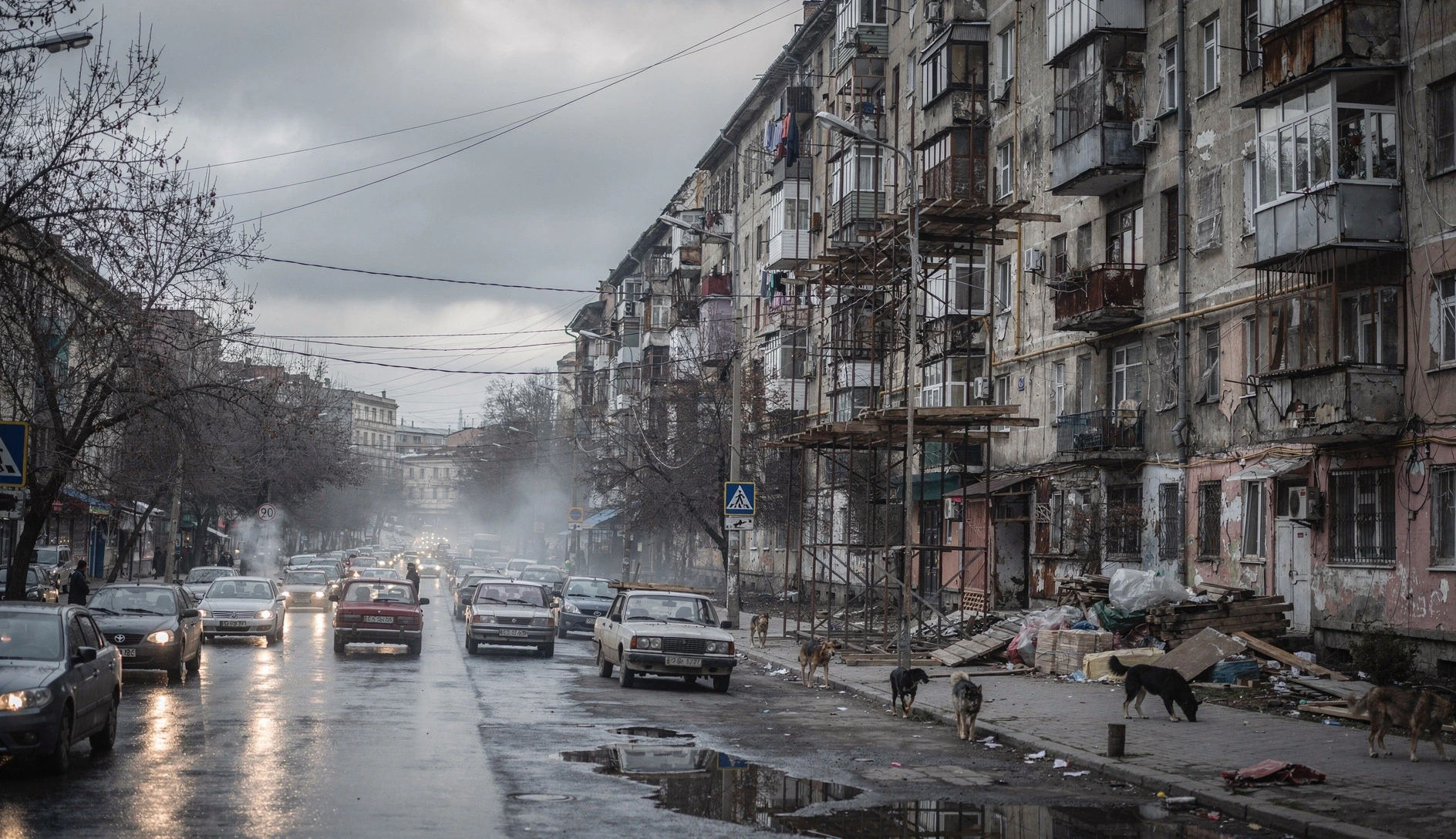
Every Georgia relocation guide reads the same way: cheap cost of living, amazing food, 1% taxes, friendly people, beautiful mountains. And all of that is true. We live here and we love it. But after years of actual daily life in Tbilisi, we've collected a very long list of things that are genuinely annoying, uncomfortable, or outright problematic — things the relocation influencers conveniently skip.
This isn't a hit piece. Georgia is a remarkable country and most expats who stay long-term are genuinely happy. But going in with rose-tinted glasses sets you up for a miserable first few months. Consider this the honest briefing your best friend would give you before you packed your bags.
Why This Article Exists
We write this as people who chose to stay in Georgia despite knowing all of this. The positives genuinely outweigh the negatives for us. But we wish someone had been honest about these things before we moved. Every downside here comes from lived experience, not secondhand research. If you can read this entire list and still want to come — you'll probably love it here.
Traffic & Driving: Genuinely Dangerous
This isn't an exaggeration or cultural misunderstanding. Georgia has one of the worst road safety records in Europe. The WHO and Georgia's own statistics put the road fatality rate at roughly 2-3 times the EU average. Every long-term expat has stories about near-misses, and most have personally witnessed serious accidents.
What you'll encounter daily:
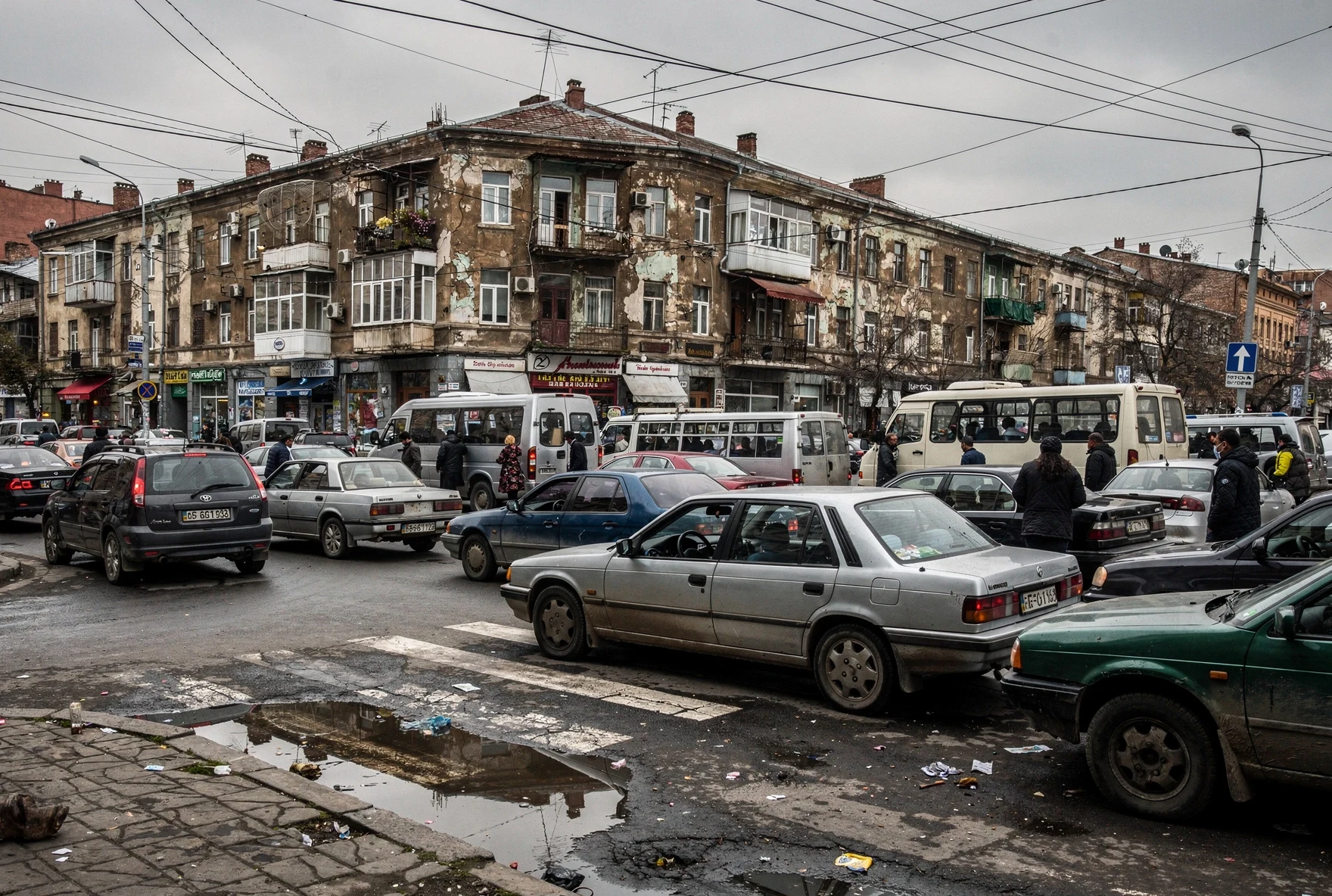
- Aggressive driving is the norm. Tailgating, cutting off, honking at green lights within 0.5 seconds — this isn't road rage, it's just Tuesday.
- Red lights are suggestions. Especially at smaller intersections and late at night. Look both ways even when you have the green.
- Pedestrians have theoretical right-of-way. In practice, cars do not stop at crosswalks reliably. Make eye contact with drivers before stepping out.
- Cars park everywhere. On sidewalks, in crosswalks, double-parked blocking entire lanes, on grass. Walking with a stroller or wheelchair is a daily obstacle course.
- Mountain roads are terrifying. Overtaking on blind mountain curves at 80+ km/h is normal behavior. If you're a nervous passenger, sit in the back and don't look.
- Seatbelt culture is improving but not universal. Front seat usage is now common in cities. Back seat usage remains rare. Children in car seats are becoming more common but far from standard.
| Driving Issue | Severity | Practical Response |
|---|---|---|
| Aggressive urban driving | High | Use Bolt/Yandex for daily transport. Cheaper than driving + parking. |
| Dangerous mountain roads | Very high | Hire experienced local drivers for mountain trips. Don't drive yourself until you're comfortable. |
| Sidewalk parking | Medium (daily annoyance) | Nothing you can do. Walk in the road like everyone else. Seriously. |
| Pedestrian crossings ignored | High | Wait for a gap, make eye contact with drivers, cross confidently but carefully. |
| Rush hour gridlock | Medium | Metro is fast and reliable. Avoid taxis during 8-10 AM and 5-7 PM. |
If You Plan to Drive
Get a Georgian driver's license (it's easy) and get comprehensive insurance. Drive defensively — assume everyone else will do the most aggressive thing possible. Dashcams are increasingly popular and genuinely useful for accident disputes. And seriously: avoid driving at night on rural roads. The combination of unlit roads, slow trucks, pedestrians in dark clothing, and livestock on the road is a recipe for disaster.
Air Quality: The Hidden Health Cost
Nobody talks about this in the relocation guides, but Tbilisi has a real air pollution problem — particularly from November through March. The city sits in a valley surrounded by hills, which traps pollutants. Old cars (Georgia has an aging vehicle fleet with weak emission standards), construction dust, and residential heating all contribute.
On bad winter days, the city has a visible haze and PM2.5 levels can exceed WHO safe limits by 3-5 times. If you have asthma or respiratory issues, this matters a lot. Even healthy people notice a difference between summer air (generally good) and winter air (noticeably poor).
| Season | Air Quality | Main Pollutants | Notes |
|---|---|---|---|
| Summer (Jun–Sep) | Good to moderate | Traffic emissions, occasional dust | Hills and elevation help. Generally fine. |
| Autumn (Oct–Nov) | Moderate | Construction dust, traffic | Gets worse as heating season starts. |
| Winter (Dec–Feb) | Poor to very poor | Heating emissions, traffic, valley inversion | Worst months. PM2.5 regularly above WHO limits. |
| Spring (Mar–May) | Moderate to good | Construction season, pollen | Improves quickly as heating stops and rain washes air. |
What You Can Do
Buy an air purifier with a HEPA filter for your apartment — this makes a noticeable difference in winter. Check IQAir or the Georgian Environment Ministry's air quality data before long outdoor activities in winter. If air quality is a dealbreaker, consider living in higher-elevation areas of Tbilisi (Vake, Turtle Lake area) where it's slightly better, or split your year — spend winters elsewhere.
Stray Dogs: Everywhere, Always
Tbilisi has an estimated 40,000-60,000 stray dogs. They're a permanent feature of the landscape — sleeping on sidewalks, roaming in packs, barking through the night, and occasionally acting territorial. The city runs a Trap-Neuter-Return (TNR) program, and most strays have yellow ear tags indicating they've been vaccinated and sterilized. This has improved things significantly, but it hasn't solved the problem.
Most strays are docile and will ignore you entirely. Some are quite friendly. But large packs can be intimidating, especially at night. Dogs can be territorial around "their" buildings or food sources. Bites happen — rarely to adults, more commonly to children. Rabies is controlled through the vaccination program but the risk isn't zero.
The Reality
- • Dogs barking at night — especially around 2-4 AM — is constant in most neighborhoods
- • Dog waste on sidewalks is unavoidable
- • Some parks feel overrun, especially Vake Park
- • Running and cycling can trigger chase instincts
- • Children may be nervous or scared
How to Deal With It
- • Don't run from territorial dogs — walk calmly, don't make eye contact
- • Carry a stick or umbrella on night walks if nervous (you won't need to use it)
- • Keep young children close in areas with dog packs
- • If bitten, go to any hospital ER for post-exposure prophylaxis immediately
- • White noise machines help with nighttime barking
The Language Barrier: Georgian Is Hard
Georgian (ქართული) is one of the most difficult languages for English speakers. It has its own unique alphabet (Mkhedruli), a completely unrelated grammar system, verb conjugation that makes Romance languages look simple, and a phonetic system with ejective consonants you've never made before. There are no shortcuts — Georgian isn't related to any major language family.
In central Tbilisi, English gets you through daily life. Young Georgians increasingly speak it, restaurants have English menus, and services like banking and government offices have English options. But step outside the expat bubble and you'll hit a wall.
| Situation | English Works? | Reality |
|---|---|---|
| Restaurants (Tbilisi center) | Usually | Most have English menus. Staff under 30 often speak some English. |
| Banks | Yes | Major banks have English-speaking staff and English app interfaces. |
| Government offices | Mostly | Public Service Hall has English. Revenue Service varies. Smaller offices — bring a translator. |
| Taxi drivers | Rarely | Use Bolt/Yandex with pin-dropped destinations. Verbal directions won't work. |
| Markets / bazaars | No | Point, gesture, use phone calculator for prices. Learn Georgian numbers early. |
| Landlords / plumbers / repairmen | Rarely | Google Translate is your friend. Or find a Georgian friend to help with calls. |
| Doctors | Often | Private clinic doctors usually speak English. State hospital — less likely. |
| Outside Tbilisi | Very rarely | Russian works better than English in most regional towns. Georgian is best. |
The real cost of not speaking Georgian isn't daily inconvenience — it's social isolation. You can survive in English, but you can't deeply connect with most Georgian people, understand their humor, or participate meaningfully in local culture. Many long-term expats describe a plateau where their social circle is entirely other foreigners, and they feel like permanent tourists in their own city.
Start Learning Before You Arrive
Even basic Georgian transforms your experience. Learning the alphabet (a few days), basic greetings, numbers, and market phrases makes daily life smoother and earns enormous respect from Georgians who are used to foreigners not trying. Check our guide to learning Georgian for resources. Russian is also widely spoken and easier to learn — it's a pragmatic bridge language while you work on Georgian.
Bureaucracy: Easy on Paper, Messy in Practice
Georgia ranks high on "ease of doing business" indexes, and for good reason — registering a company takes a day, getting an IE takes an hour, and the Public Service Hall is genuinely impressive. But this top-level efficiency hides layers of frustration that emerge as soon as you need anything non-standard.
What Works Well
- • Public Service Hall — genuinely efficient, English-speaking
- • Company/IE registration — fast and simple
- • Banking apps — world-class (TBC, BOG)
- • Online tax filing — functional
- • Property registration — straightforward
What Doesn't
- • Revenue Service — confusing for non-standard situations, inconsistent advice
- • Labour permit system — brand new, unclear, evolving
- • Utility companies — opaque billing, hard to reach
- • Police reports — slow, require Georgian
- • Healthcare billing/insurance — confusing claims process
The bigger issue is regulatory unpredictability. Rules change with little warning and enforcement is inconsistent. The 2026 labour permit requirement is a perfect example — announced in February, enforced in May, with a registration portal that launched with minimal documentation. You'll hear "this is normal in Georgia" constantly. It means: the system works, but not in the way you expect, and nobody can fully explain it.
Construction & Renovation: The Endless Soundtrack
Tbilisi is a city under perpetual construction. New apartment towers, road works, metro extensions, and — the most dreaded of all — apartment renovations in your building. Georgian buildings have thin walls, zero soundproofing, and a renovation culture that involves jackhammering concrete at 8 AM for weeks straight.
If you live in any area with new development (which is most of central Tbilisi), expect constant background construction noise. The Saburtalo, Vake, and Old Town areas are particularly affected. There are noise regulations (construction is supposed to stop by 10 PM and not start before 9 AM), but enforcement is weak.
Before Signing a Lease
Visit the apartment at different times of day. Check for active construction sites nearby. Ask the landlord if any neighbors are renovating. Look at the building's condition — if it's old and other apartments are being modernized, expect renovation noise. Upper floors in newer buildings are generally quieter, but nothing is guaranteed. Noise-canceling headphones are not optional in Tbilisi — they're essential equipment.
Winter: Greyer Than You Think
Tbilisi winters aren't brutally cold (average January temperature hovers around 2-4°C), but they're grey. Overcast skies, short days, drizzle, and the aforementioned air quality issues combine to create a genuinely depressing atmosphere from December through February. If you come from Scandinavia, you're used to this. If you pictured year-round Mediterranean sunshine, you'll be disappointed.
| Winter Issue | Details |
|---|---|
| Heating costs | Gas heating in a typical apartment runs 150-400 GEL/month in winter. Older buildings with poor insulation are worse. Some landlords have electric heating — even more expensive. |
| Insulation | Many Georgian buildings have terrible insulation. Soviet-era apartments and even some newer ones have single-pane windows and minimal wall insulation. You'll feel the cold seeping in. |
| Mold | Poor insulation + heating + humidity = mold. Especially in bathrooms without proper ventilation. Check for mold before signing a lease. Ask to see behind furniture. |
| Grey skies | December-February averages only 3-4 hours of sunshine per day. If you're prone to seasonal depression, invest in a light therapy lamp. |
| Sidewalk ice | When it does freeze, sidewalks become ice rinks. No salt, no clearing. Watch your step — broken arms from winter falls are common. |
The silver lining: ski resorts (Gudauri, Bakuriani) are 2-3 hours from Tbilisi, and escaping to Batumi or even a short flight to a sunny destination is cheap. Many expats who struggle with winter schedule a warm-weather trip in January or February.
Apartment Quality: Wildly Inconsistent
Georgian real estate listings look incredible on SS.ge — freshly renovated, modern kitchens, new furniture. The reality can be different. Beyond the cosmetic renovations, many apartments have fundamental issues that aren't visible in photos.
Common Problems
- • Terrible soundproofing — you'll hear neighbors' conversations, TV, and footsteps
- • Plumbing issues — low water pressure, slow drainage, occasional sewage smells
- • Electrical problems — old wiring, not enough outlets, power fluctuations
- • Elevator breakdowns in older buildings (sometimes for days)
- • Stairwells that look post-apocalyptic even in nice buildings
- • Hot water via electric boilers (limited capacity — 50-80L runs out fast)
How to Protect Yourself
- • Always visit in person before signing — photos lie
- • Check water pressure, flush toilets, test all appliances
- • Visit at night to assess noise from neighbors and street
- • Ask about heating system and estimated winter costs
- • Check for mold in bathrooms and behind wardrobes
- • Read our full renting guide before starting your search
Product Variety: You Will Miss Things
Georgian supermarkets have improved enormously in the last five years, but if you're used to a Western European or American grocery store, you'll notice gaps. Some things are simply unavailable or prohibitively expensive as imports.
| Category | Availability | Notes |
|---|---|---|
| Fresh produce | Excellent (seasonal) | Local fruits/vegetables are amazing in season. Limited variety in winter. |
| Cheese | Georgian: excellent. Western: limited | Sulguni, imeruli — great. Cheddar, gouda, brie — expensive imports at Spar/Carrefour. |
| Bread | Incredible | Shotis puri alone is worth moving here. Whole-grain options less common. |
| Asian/Mexican/Indian food | Very limited | Finding good soy sauce, curry paste, tortillas, or Thai ingredients is a quest. |
| Clothing | Limited mid-range | Fast fashion exists (Zara, H&M via Tbilisi Mall). Quality mid-range brands are scarce. |
| Electronics | Available but pricier | Apple products cost 10-20% more than EU. Selection is narrower. |
| Pet supplies | Basic | Specialty pet food and supplies are limited and expensive. |
| Online shopping | No Amazon equivalent | No Prime, no next-day delivery of everything. International shipping takes weeks. |
The Cargo Workaround
Many expats use cargo services (USA2Georgia, OnTyme, etc.) that provide a US or EU address, consolidate your packages, and ship them to Georgia by weight. It's cheaper than direct international shipping and opens up Amazon/EU online stores. Delivery takes 2-4 weeks. It's not instant gratification, but it fills most gaps.
Customer Service: A Different Standard
If you're used to the "customer is always right" mentality, prepare for an adjustment. Georgian customer service operates on different expectations — not rude exactly, but not what you're used to either.
- Indifference is common. Shop assistants may be on their phones, chatting with colleagues, or simply not interested in helping. This isn't hostility — it's just not a service-oriented retail culture in the Western sense.
- Returns and complaints are hard. Returning products is not standard practice. Many shops have "no returns" policies. Consumer protection laws exist but enforcement is minimal.
- Restaurants are slow. Georgian dining culture is leisurely. If you're in a hurry, you'll be frustrated. Meals take 1-2 hours minimum. Asking for the check requires flagging a waiter, sometimes multiple times.
- ISP/utility support is painful. Getting Magti or Silknet to fix an internet outage can involve multiple calls, long waits, and contradictory information. Same with gas and electric companies.
- Appointment culture is weak. You might make an appointment and still wait 30-60 minutes. Or the person doesn't show. Flexibility is survival.
Reframe Your Expectations
Georgian service isn't "bad" — it's just different. The flip side is that interactions are genuine. Nobody is performing corporate friendliness. When a Georgian goes out of their way to help you — and they often do, spectacularly — it's real. The generosity of individual Georgians regularly blows expats away. It just doesn't come from the retail employee at 4 PM on a Tuesday.
Accessibility: Almost Nonexistent
If you have mobility issues, use a wheelchair, push a stroller, or have any disability that affects movement, Georgia is extremely challenging. This is one of the country's most serious quality-of-life gaps.
- Sidewalks are broken, uneven, blocked by cars, or simply absent. Wheelchair navigation is nearly impossible in most areas.
- Ramps are rare and often built at unusable angles (too steep, too narrow).
- Elevators in older buildings are small, unreliable, or nonexistent. Even new buildings sometimes have elevator issues.
- Public transport — the metro has no wheelchair accessibility at most stations. Buses are a mixed bag.
- Buildings — most restaurants, shops, and offices are accessed via stairs. No ramp, no alternative entrance.
- With a stroller — manageable but frustrating. You'll be lifting the stroller over curbs, around parked cars, and through gaps in sidewalks constantly.
The situation is slowly improving — new buildings generally have better accessibility, and some metro stations are being upgraded. But "slowly" is the key word. If accessibility is critical for you, research specific neighborhoods carefully and visit before committing.
Social Life: The Expat Bubble Is Real
Making friends in Georgia follows a pattern almost every expat recognizes: you quickly make other expat friends (easy), you have wonderful surface-level interactions with Georgians (hospitality is real), but deep Georgian friendships are harder to build than you expect.
| Challenge | Why It Happens |
|---|---|
| Language barrier | Humor, nuance, and depth require shared language. Surface English isn't enough for real friendship. |
| Family-centered socializing | Georgians socialize primarily with family and childhood friends. Breaking into these circles takes years, not months. |
| Expat turnover | Many expats leave after 1-2 years. You'll make close friends who then move away. Repeatedly. |
| Cultural gap | Georgian social norms (gender roles, family expectations, political views) can differ significantly from Western ones. This creates invisible friction. |
| The hospitality trap | Georgian hospitality is legendary — but being treated well as a guest isn't the same as being a close friend. Don't confuse warmth with intimacy. |
Breaking Through
The expats who build genuine local friendships share common traits: they learn Georgian (even poorly), they participate in Georgian traditions (attend supras, respect toasts), they have Georgian colleagues or business partners, and most importantly — they stay. The first two years are the hardest. By year three, if you've invested in the community, doors start opening that you didn't know existed.
The Political Situation: A Cloud Over Everything
We have a full article on Georgia's political crisis, so we'll keep this brief. Since late 2024, the country has been in its most serious political crisis since independence. The ruling party has moved away from EU integration, passed restrictive laws targeting civil society, and faced sustained protests.
For daily expat life, the political situation is mostly background noise — you won't notice it at the grocery store. But it creates a pervasive anxiety, especially among Georgians, and it raises genuine questions about the country's trajectory. If you're planning to invest heavily, buy property, or settle permanently, the political uncertainty is a real factor that deserves serious consideration.
Minor But Persistent Annoyances
None of these are dealbreakers alone, but they accumulate:
| Annoyance | Details |
|---|---|
| Smoking | Indoor smoking is banned, but enforcement varies. Outdoor dining areas are often smoky. Georgia has high smoking rates. |
| Littering | Central Tbilisi is reasonably clean. Outside the center and on nature trails, litter is a genuine problem. Picnic spots are often trashed. |
| Water pressure | Drops in older buildings during peak hours. Occasional outages, usually with minimal warning. |
| Power outages | Rare in central Tbilisi but happen a few times a year. More frequent in outer areas and regional towns. |
| Internet reliability | Generally good in Tbilisi (fiber is available widely). Outages happen. Have a mobile hotspot backup if you work remotely. |
| Allergies | Spring pollen season (April-May) hits hard. Plane trees and grasses are the main culprits. |
| Summer heat | July-August regularly hits 35-40°C. Many apartments don't have AC. Invest in a portable unit or make sure your rental has one. |
| Noise in general | Georgia is loud. Car horns, music from restaurants, neighbors playing TV through paper walls, wedding celebrations that last until 3 AM. Earplugs for sleeping are not unreasonable. |
Gender & LGBTQ+ Issues
Georgia is a socially conservative country with a strong Orthodox Christian cultural foundation. This manifests in ways that matter:
- Gender roles are more traditional than Western Europe. They're evolving (especially in young, educated Tbilisi), but the expectation that women manage the household and men provide financially is still widespread.
- LGBTQ+ visibility is very limited. Tbilisi Pride has faced violent counter-protests. Same-sex relationships have no legal recognition. A 2024 constitutional amendment explicitly banned same-sex marriage. While Tbilisi has a small queer-friendly scene, public displays of same-sex affection are not safe outside that bubble.
- For women expats: Georgia is generally safe, but harassment (catcalling, unwanted attention) happens, particularly from older men. Our women's guide covers this in detail.
- For LGBTQ+ expats: Living in Tbilisi is entirely possible — many do — but it requires discretion outside of known safe spaces. Read our dating guide for the honest picture.
Healthcare: Good Doctors, Confusing System
Georgia has excellent individual doctors — many trained in Europe — but the healthcare system is frustrating. Our full healthcare guide covers this in depth, but here's the honest summary:
The Good
- • Private clinics (Evex, MediClub, National Center) are genuinely good
- • Doctors are well-trained and often speak English
- • Dental care is excellent and cheap
- • Specialist consultations cost $20-60 — no referral needed
- • Pharmacy access is easy (many meds available OTC)
The Bad
- • Insurance navigation is confusing and claims processes opaque
- • State hospitals can be overcrowded and under-resourced
- • Emergency rooms vary wildly in quality
- • For complex conditions, many expats fly to Turkey or Europe
- • Mental health services are limited (stigma + few English-speaking therapists)
So... Is It Worth It?
After listing all of that, you might wonder why anyone stays. The answer is simple: for most expats, the positives are that good.
| The Downsides | The Upsides That Outweigh Them |
|---|---|
| Dangerous traffic | Bolt rides cost $2. You barely need to drive. |
| Winter air quality | Stunning summers. Mountains 2 hours away. |
| Language barrier | Learning Georgian opens a unique, ancient culture that few foreigners ever access. |
| Bureaucratic frustration | 1% income tax. No capital gains. Company registration in a day. |
| Limited product variety | The best bread, cheese, wine, and produce you've ever had. |
| Construction noise | Rent a beautiful apartment for what a studio costs in Berlin. |
| Political uncertainty | A resilient, warm, deeply cultured society that doesn't give up. |
Georgia isn't a cheap Western Europe. It's not a tropical digital nomad paradise. It's a developing post-Soviet country with incredible food, genuinely warm people, jaw-dropping nature, and a cost of living that lets you build wealth while actually enjoying life. The downsides are real. So are the upsides. Go in with open eyes and you'll be fine.
The 6-Month Rule
Almost every expat goes through the same cycle: months 1-3 are the honeymoon (everything is amazing and cheap). Months 3-6 are the reality check (everything on this list starts bothering you). After month 6-12, you either leave or you find your rhythm. The ones who stay tend to be the happiest expats anywhere — because they chose this life with full knowledge of what it involves.
Frequently Asked Questions
What are the biggest problems with living in Georgia?
Traffic and driving danger, winter air pollution, stray dogs, the language barrier, construction noise, limited product variety, bureaucratic inconsistency, and the current political situation. Most expats learn to manage these because the positives outweigh them significantly.
Is air pollution bad in Tbilisi?
In winter (November-March), yes — the valley geography traps pollutants and PM2.5 regularly exceeds WHO limits. Summers are much better. An air purifier helps, and living at higher elevations is slightly better. If you have respiratory conditions, monitor IQAir data before outdoor activities in winter.
Is driving in Georgia dangerous?
Georgia has one of Europe's highest road fatality rates. Aggressive driving, speeding, and ignoring traffic rules are common. Many expats avoid driving entirely and use ride-hailing apps (Bolt, Yandex) and the metro instead. If you do drive, stay extremely alert, get a dashcam, and avoid rural roads at night.
Do expats get lonely in Tbilisi?
The expat community is active and welcoming, so making foreign friends is easy. Deep friendships with Georgians take longer due to language barriers and different social structures (Georgians socialize primarily in family groups). Learning Georgian, even badly, makes a huge difference. Most long-term expats find their people by year two.
Are stray dogs a problem?
Tbilisi has 40,000-60,000 strays. Most are vaccinated (ear-tagged) and non-aggressive, but they bark at night, produce waste on sidewalks, and can be intimidating in packs. The situation has improved with the TNR program but remains a constant feature of the city.
Is Georgia still worth moving to?
For most expats who try it, yes. The low cost of living, incredible food, 1% tax regime, visa-free entry, personal safety, and unique culture genuinely outweigh the downsides. The key is going in with realistic expectations — it's a developing country with real challenges, not a cheap version of Western Europe.
Written by The Georgia Expats Team
Written by expats who've lived through every item on this list — and chose to stay. We've broken down on mountain roads, argued with landlords in Google Translate, and learned to sleep through the 3 AM dog chorus. Georgia isn't perfect, but it's ours.
Last updated: March 2026.
Related Articles
Cost of Living in Tbilisi
Real monthly budgets, rent, groceries, transport — the upside of the equation.
Moving to Georgia: Relocation Checklist
Everything you need to do — visa, banking, apartment, business — in order.
Is Georgia Safe?
Crime stats, real dangers, scams, and honest safety advice from expats.
Georgia's Political Situation
What's happening, how it affects expats, and whether you should worry.