Tbilisi's transport system is cheap, surprisingly good in places, and completely baffling in others. The metro costs less than a stick of gum. Bolt rides across the city rarely break 10 lari. But then you'll spend 20 minutes at a bus stop with no idea whether your bus is coming or went extinct three years ago.
After years of navigating this city — the metro at rush hour, the marshrutkas to Didube, the Bolt drivers who take creative interpretations of one-way streets — here's the guide we wish someone had given us on day one.
This covers everything an expat actually needs: how to pay, which apps work, what each option costs, and the unwritten rules nobody tells you about.
The Metro: Your Best Friend
Tbilisi's metro is Soviet-built, two lines, and genuinely excellent for what it is. It runs from 6am to midnight, trains come every 2–5 minutes during rush hour, and the whole system costs 1 lari per ride. That's less than $0.40.
The Red Line (Akhmeteli–Varketili) runs roughly east-west and hits the most useful stations: Station Square (for the train station and Didube connection), Liberty Square (Old Town), Avlabari (Sameba Cathedral area), and 300 Aragveli (Isani/Varketili). The Green Line (Saburtalo) branches north from Station Square through Marjanishvili, Rustaveli, and up to Delisi/Vazha-Pshavela — basically covering Vake, Saburtalo, and the university area.
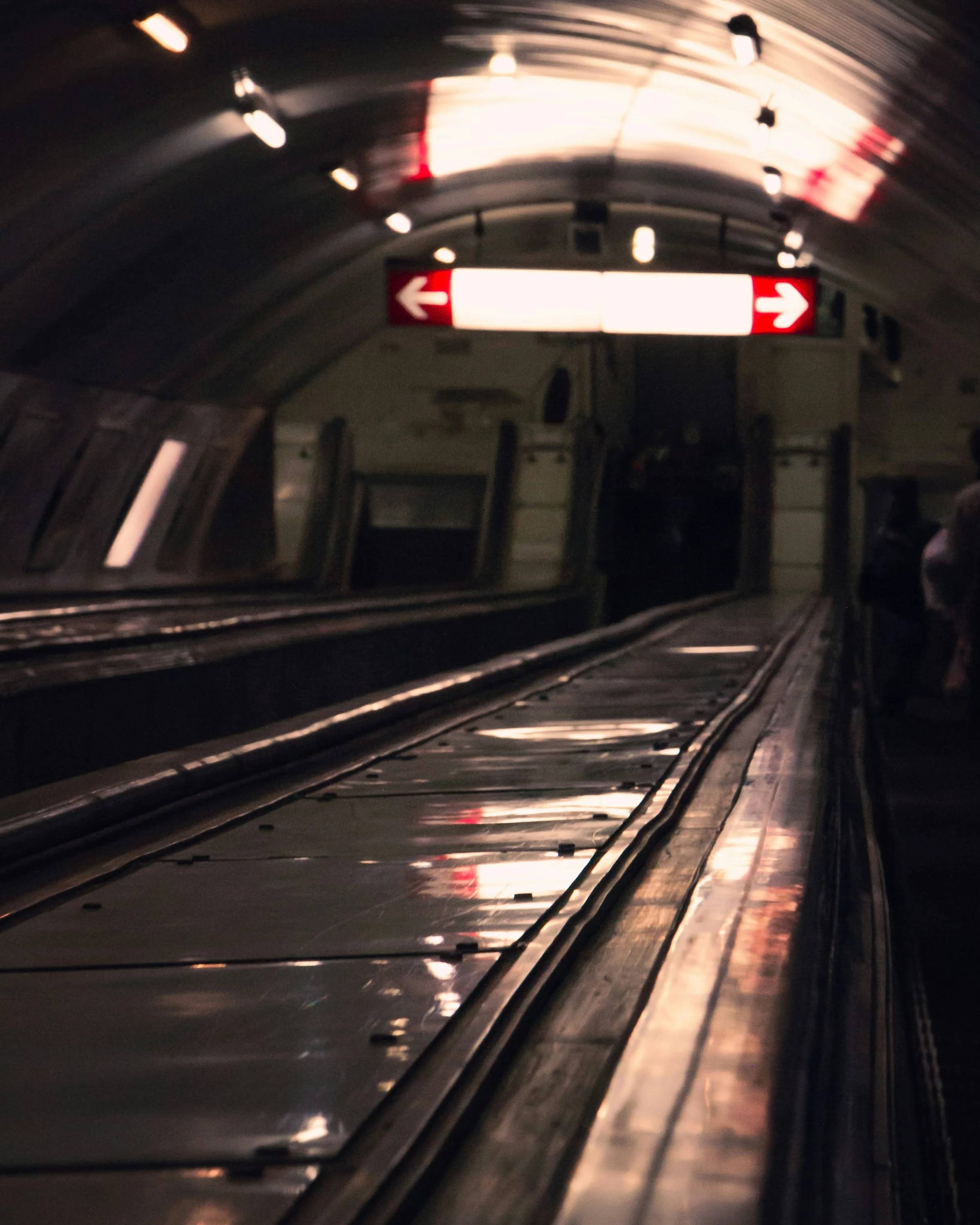
The stations are deep underground — some of the escalator rides take a full minute. The platforms have that imposing Soviet grandeur, all marble and chandeliers, which is atmospheric the first time and just another commute after a week.
| Station | Line | Useful For |
|---|---|---|
| Station Square | Both | Train station, transfer between lines, Didube buses |
| Liberty Square | Red | Old Town, Rustaveli Ave (bottom), restaurants |
| Rustaveli | Green | Main avenue, Parliament, theaters, cafés |
| Marjanishvili | Green | Fabrika, hipster neighborhood, cafés |
| Medical University | Green | Vake Park, university area, residential Vake |
| Delisi | Green | Upper Saburtalo, Axis Mall, Carrefour |
| Avlabari | Red | Sameba Cathedral, Rike Park, Peace Bridge |
| Didube | Red | Main bus station for intercity marshrutkas |
Free Transfers
Transfer between metro and bus (or bus to bus) within 90 minutes and you won't be charged again. Your MetroMoney card handles this automatically. This alone makes the card worth getting — pay once for your entire multi-leg commute.
How to Pay: MetroMoney, Travel Card & Bank Cards
Tbilisi's transport is fully cashless. No coins, no tokens, no buying tickets from the driver. You have three options:
MetroMoney Card (Recommended)
The white rechargeable card. Costs 2 ₾ (refundable within 30 days). Works on metro, buses, minibuses, and 3 of 4 cable cars. Fare: 1 ₾ per ride. Top up at orange Bank of Georgia paybox machines (everywhere) or metro cashier desks. Multiple people can share one card.
Blue Travel Card (Heavy Users)
Subscription-based card launched in 2022. Costs 2 ₾. Best for 4+ trips/day — options like 20 trips for 15 ₾ or monthly unlimited for 40 ₾. Buy at metro desks. Only worth it if you commute daily by public transport.
| Payment Method | Cost Per Ride | Free Transfers | Best For |
|---|---|---|---|
| MetroMoney Card | 1 ₾ | Yes (90 min) | Most expats — cheap and simple |
| Travel Card (subscription) | 0.75–1 ₾ | Yes (90 min) | Daily commuters (4+ rides/day) |
| Bank Card / Mobile Wallet | ~1.50 ₾ | No | Tourists, first few days |
Wise Works Perfectly
If you have a Wise card with a GEL balance, you can tap it directly on metro turnstiles and bus readers. No conversion fees, and it works immediately on arrival — great for your first trip from the airport before you buy a MetroMoney card.
City Buses: Good but Confusing
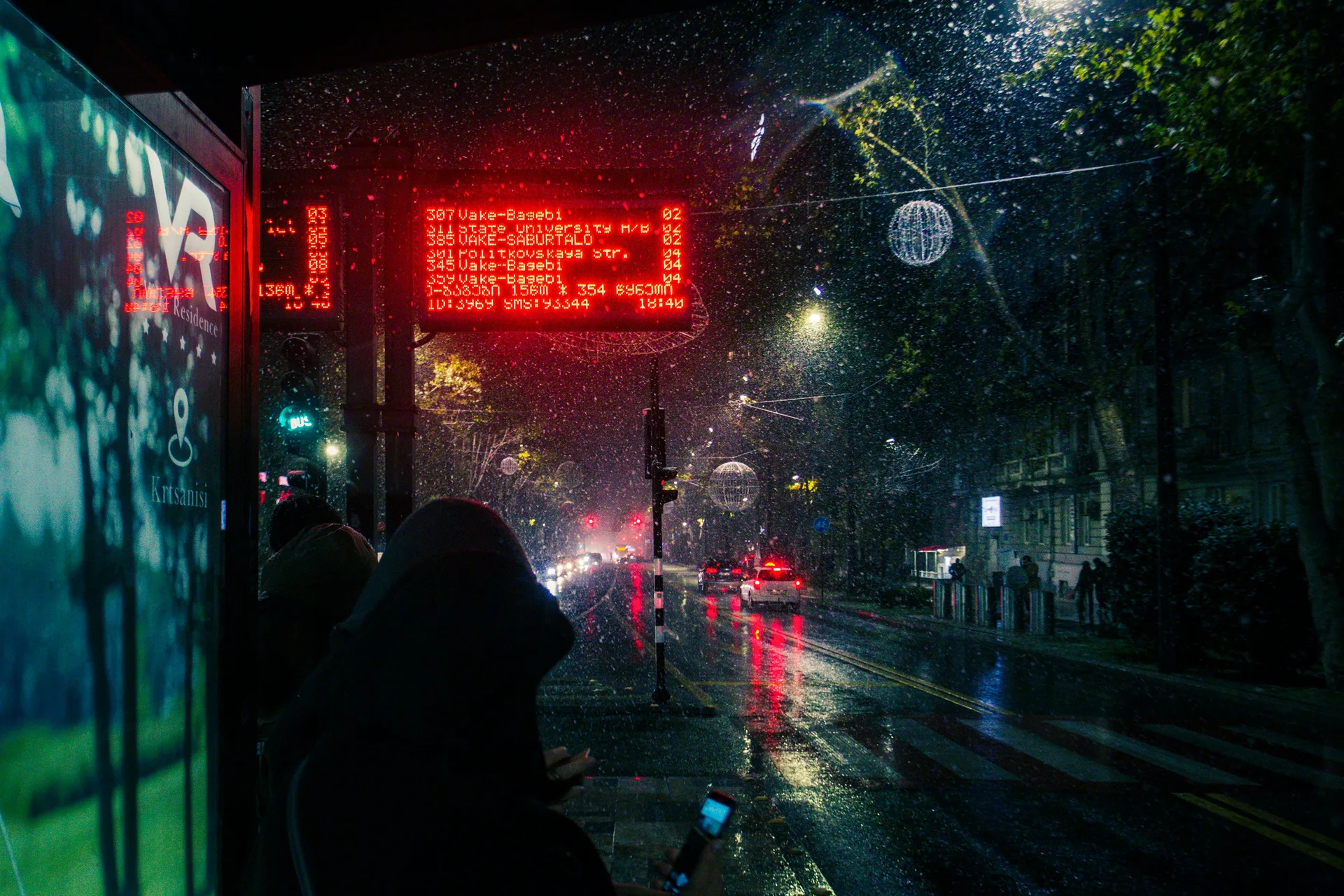
Tbilisi's bus network is extensive — there are routes reaching most parts of the city, and the newer buses are modern, air-conditioned, and have electronic route displays. The problem isn't the buses themselves. It's figuring out which bus goes where.
There's no single reliable English-language map of bus routes. Google Maps works for some routes but misses others entirely. The Tbilisi Transport Company app exists but is in Georgian only and is unreliable. Your best bet is asking locals or learning the numbers for your regular routes.
Key things to know:
- Fare: 1 ₾ with MetroMoney, tap the reader when boarding (front, middle, or back)
- Hours: Roughly 7am–midnight, but frequency drops sharply after 10pm
- Frequency: Major routes every 5–10 min during the day, every 15–20 min evenings
- Inspectors: Common at random stops — they'll ask you to tap your card on their handheld. No valid tap = 20 ₾ fine
- Children under 16: Free on all public transport
| Route | From → To | Why It's Useful |
|---|---|---|
| #337 | Airport → Liberty Square | Airport bus, 1 ₾, runs frequently |
| #307 | Vake → Bagebi | Covers residential Vake up to Turtle Lake area |
| #311 | State University loop | University area, Saburtalo, Vake |
| #61 | Station Square → Gldani | Northern suburbs |
| #71 | Didube → Varketili | Cross-city east-west |
Taxis & Bolt: The Expat Default
Let's be honest: most expats in Tbilisi use Bolt for almost everything. And why wouldn't you? A 15-minute ride across central Tbilisi costs 5–8 ₾ ($2–3). At those prices, you'll use taxis like public transport.
Bolt is the dominant ride-hailing app — Uber doesn't operate in Georgia. Bolt works exactly like you'd expect: set your pickup and destination, see the price upfront, pay by card or cash. Drivers are generally good, cars range from decent to suspiciously nice, and wait times in central Tbilisi are usually under 5 minutes.
| Ride | Typical Cost | Duration |
|---|---|---|
| Within one neighborhood | 3–5 ₾ | 5–10 min |
| Vake → Old Town | 5–8 ₾ | 10–15 min |
| Saburtalo → Avlabari | 7–12 ₾ | 15–20 min |
| City center → Airport | 20–30 ₾ | 20–30 min |
| Rush hour surcharge | 1.5–2× normal | Add 10–15 min |
Never Use Street Taxis
Street taxis — the random cars that honk at you — have no meters, no accountability, and will charge 3–5× the Bolt price. Some hang around tourist spots and outside clubs. Always use Bolt. If a driver offers you a ride on the street, the answer is no. The only exception: you're stranded somewhere with no signal at 3am. Even then, negotiate the price first.
Cable Cars & Funicular
Tbilisi has four cable car lines plus one funicular, and they're a mix of genuine transport and tourist attractions:
| Route | Cost | MetroMoney? | Notes |
|---|---|---|---|
| Rike Park → Narikala | 2.50 ₾ | Yes | Best views in the city, worth doing once |
| Vake → Turtle Lake | 1 ₾ | Yes | Actual transport — locals use it regularly |
| Bagebi cable car | 1 ₾ | Yes | Residential, connects upper Bagebi |
| Mtatsminda Funicular | 12 ₾ | No | Tourist attraction, amusement park at top |
Marshrutkas: The Minibus System
Marshrutkas are the yellow or white minibuses that fill the gap between city buses and intercity transport. Within Tbilisi, they run fixed routes at 1 ₾ per ride (MetroMoney works). For intercity travel, they're how most Georgians get between cities — they leave from Didube or Ortachala bus stations when they're full, not on a schedule.
For daily life as an expat, you'll mostly encounter marshrutkas if you need to reach areas the metro and regular buses don't cover well. They're not scary, but they're not comfortable either — expect tight seating, no air conditioning in summer, and drivers who view speed limits as gentle suggestions.
City Marshrutkas
Fixed routes within Tbilisi. 1 ₾ with MetroMoney. Tap the reader when boarding. Routes displayed on front and side. Mostly useful for areas poorly served by regular buses.
Intercity Marshrutkas
Leave from Didube (north/west destinations) or Ortachala (south/east). Pay the driver in cash. No fixed schedule — they leave when full. 5–25 ₾ depending on distance. Someone will shout the destination.
| Destination | Departs From | Cost | Duration |
|---|---|---|---|
| Mtskheta | Didube | 1–2 ₾ | 25 min |
| Kazbegi (Stepantsminda) | Didube | 15–20 ₾ | 3–4 hours |
| Kutaisi | Didube / Station Sq | 15–20 ₾ | 3.5–4 hours |
| Batumi | Didube / Ortachala | 25–30 ₾ | 5–6 hours |
| Sighnaghi | Samgori metro | 7–10 ₾ | 1.5–2 hours |
| Gori | Didube | 5–7 ₾ | 1.5 hours |
Driving in Tbilisi: The Honest Truth
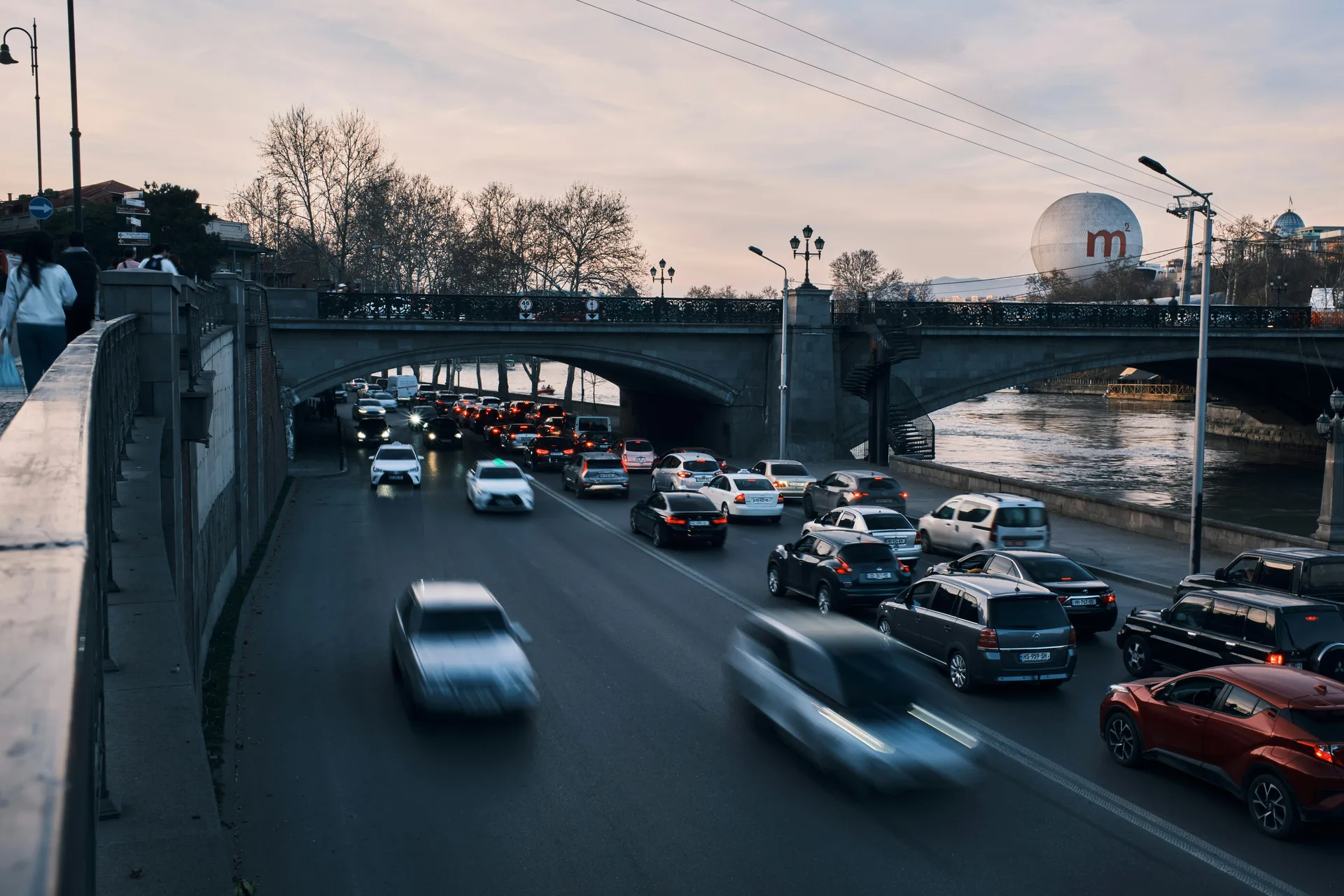
Georgian driving culture is its own category of human experience. Traffic lights are treated as suggestions. Lane markings are decorative. Right of way belongs to whoever is more aggressive. U-turns happen anywhere. And the horn is used more than the turn signal.
That said, it's not as anarchic as it first appears. There's an unwritten logic to it — drivers are actually quite skilled at reading each other's intentions, and the flow works despite looking like chaos. Serious accidents within the city are surprisingly rare because nobody's going very fast (traffic sees to that).
Should You Drive?
Within Tbilisi: probably not unless you have a specific reason (kids, suburbs, big grocery runs). Between cities: yes, renting a car is the best way to explore Georgia. The highways are decent and countryside driving is actually pleasant.
License Requirements
Foreign licenses are valid for 1 year from entry. After that, you need a Georgian license. The process is straightforward — a theory test (available in English) and a practical test. See our driver's license guide for the full walkthrough.
Parking in Tbilisi
Street parking in central Tbilisi is paid (1 ₾/hour in most areas, 2 ₾ in prime zones) via the parking.tbilisi.ge app or SMS. Double parking is so common it might as well be an official lane. Finding a spot in Vake or near Rustaveli after 6pm is a genuine challenge. Many newer buildings have underground parking. If you drive daily, the parking stress alone is a reason to reconsider.
Getting To & From the Airport
Shota Rustaveli Tbilisi International Airport is about 17km southeast of the city center. Here are your options, ranked by value:
| Option | Cost | Time | Notes |
|---|---|---|---|
| Bus #337 | 1 ₾ | 30–45 min | Runs frequently, stops at Liberty Square. Bank card accepted. |
| Bolt | 20–30 ₾ | 20–30 min | Best if you have luggage. Price fixed in app. |
| Airport taxi (official) | 40–50 ₾ | 20–30 min | Fixed price to central areas. Less hassle than random drivers. |
| Random taxi tout | 50–80 ₾ | 20–30 min | The guys who approach you in arrivals. Always overpriced. |
Late Night Arrivals
Bus #337 runs until around midnight. If your flight lands after that, Bolt is your best option — just make sure you have the app installed and a payment method set up before you land. The airport has free WiFi to download it if needed. Bolt drivers are available 24/7, even for 3am arrivals.
Essential Apps
| App | What It Does | Notes |
|---|---|---|
| Bolt | Ride-hailing (taxi) | Essential. Uber doesn't exist here. |
| Google Maps | Navigation, public transport routes | Works decently for bus routes, not perfect |
| Yandex Maps | Navigation, traffic | Often better than Google for driving directions |
| parking.tbilisi.ge | Paid street parking | Register your plate, pay by zone |
| Railway.ge | Train tickets | Book Tbilisi–Batumi, Tbilisi–Kutaisi trains online |
Trains: For Longer Trips
Georgian Railway connects Tbilisi to Batumi (5–5.5 hours, from 25 ₾), Kutaisi (5.5 hours, from 15 ₾), Borjomi (4 hours), Zugdidi (for Svaneti), and a few other routes. Trains are slower than driving but more comfortable, cheaper than Bolt, and the Tbilisi–Batumi overnight train is a genuinely pleasant experience.
Book tickets at railway.ge or at the station. The website has an English version. First class on the fast Tbilisi–Batumi train includes reclining seats, power outlets, and WiFi that sort of works.
| Route | Duration | Price (from) | Departures |
|---|---|---|---|
| Tbilisi → Batumi | 5–5.5 hours | 25 ₾ (2nd class) | 2–3 daily + overnight |
| Tbilisi → Kutaisi | 5.5 hours | 15 ₾ | 1–2 daily |
| Tbilisi → Borjomi | 4 hours | 10 ₾ | 1 daily |
| Tbilisi → Zugdidi | 6–7 hours | 24 ₾ | 1–2 daily (for Svaneti) |
Monthly Transport Costs
Public Transport Only
Bolt-Heavy Lifestyle
Rush Hour & When to Avoid
Tbilisi has two rush-hour windows that make transport significantly worse:
Morning: 8:30–10:00 AM
Worst on the Vake/Saburtalo corridors heading toward the center. Metro is packed but still fast. Bolt prices spike. Driving is miserable — what takes 10 minutes normally can take 30+.
Evening: 5:30–7:30 PM
Even worse than morning. The entire Chavchavadze–Pekini axis grinds to a halt. Metro is your best option. If you drive, avoid Rustaveli Avenue and the bridges — they're guaranteed bottlenecks.
Common Mistakes
Taking a taxi from the airport
The touts in arrivals will charge 50–80 ₾. Bolt is 20–30 ₾. The bus is 1 ₾. Walk outside, order Bolt, save 30+ lari.
Not getting a MetroMoney card
Using your bank card costs 50% more per ride and doesn't give you free transfers. The card is 2 ₾ and pays for itself in 4 rides.
Driving in central Tbilisi
Unless you need a car for work or kids, driving within the city is objectively worse than metro + Bolt. Parking alone will frustrate you into rethinking your choices.
Trusting Google Maps for buses
It works maybe 70% of the time. Routes change, buses get rerouted, and some routes simply aren't in the system. Double-check with the LED display at the stop or ask someone.
Forgetting to top up MetroMoney
Nothing worse than arriving at the metro turnstile with 0 balance and a train approaching. Keep at least 5 ₾ loaded. The orange paybox machines are everywhere.
Scheduling during rush hour
A Bolt that normally costs 6 ₾ can be 12–15 ₾ during peak hours, and take twice as long. Schedule meetings and social plans outside 8:30–10am and 5:30–7:30pm.
Frequently Asked Questions
Is Uber available in Georgia?
No. Uber doesn't operate here. Bolt is the dominant ride-hailing app and works exactly the same way. Download it before you arrive.
Can I use my foreign bank card on the metro?
Yes — tap most Visa/Mastercard debit and credit cards on turnstiles and bus readers. The fare is slightly higher (~1.50 ₾ vs 1 ₾ with MetroMoney) and you don't get free transfers.
How do I get from the airport to central Tbilisi?
Cheapest: bus #337 (1 ₾, runs to Liberty Square). Best value: Bolt (20–30 ₾). Avoid the taxi touts inside the terminal — they charge 50–80 ₾ for the same trip.
Is public transport safe at night?
Metro closes at midnight. Buses thin out after 10pm. Bolt is available 24/7 and safe at any hour. Tbilisi is generally a very safe city, even late at night.
Do I need a car in Tbilisi?
Most expats don't own one. Metro + buses + Bolt covers 95% of daily needs for under 200 ₾/month. Cars are mainly useful for families, regular countryside trips, or living in poorly-connected suburbs.
Written by The Georgia Expats Team
We've navigated Tbilisi by metro, bus, marshrutka, Bolt, bicycle, and occasionally on foot in frustration. After years of figuring out the quirks of Georgian transport, we wrote the guide we wish existed when we first got here.
Last updated: February 2026.
Related Articles
Cost of Living in Tbilisi
Rent, groceries, transport — real numbers and sample budgets.
Best Neighborhoods in Tbilisi
Where to live — rent prices, vibes, and pros/cons for each area.
Getting a Driver's License
Exchange your foreign license or take the test — the full process.
Daily Life in Tbilisi
Internet, SIM cards, groceries, transport, apps, and social life.