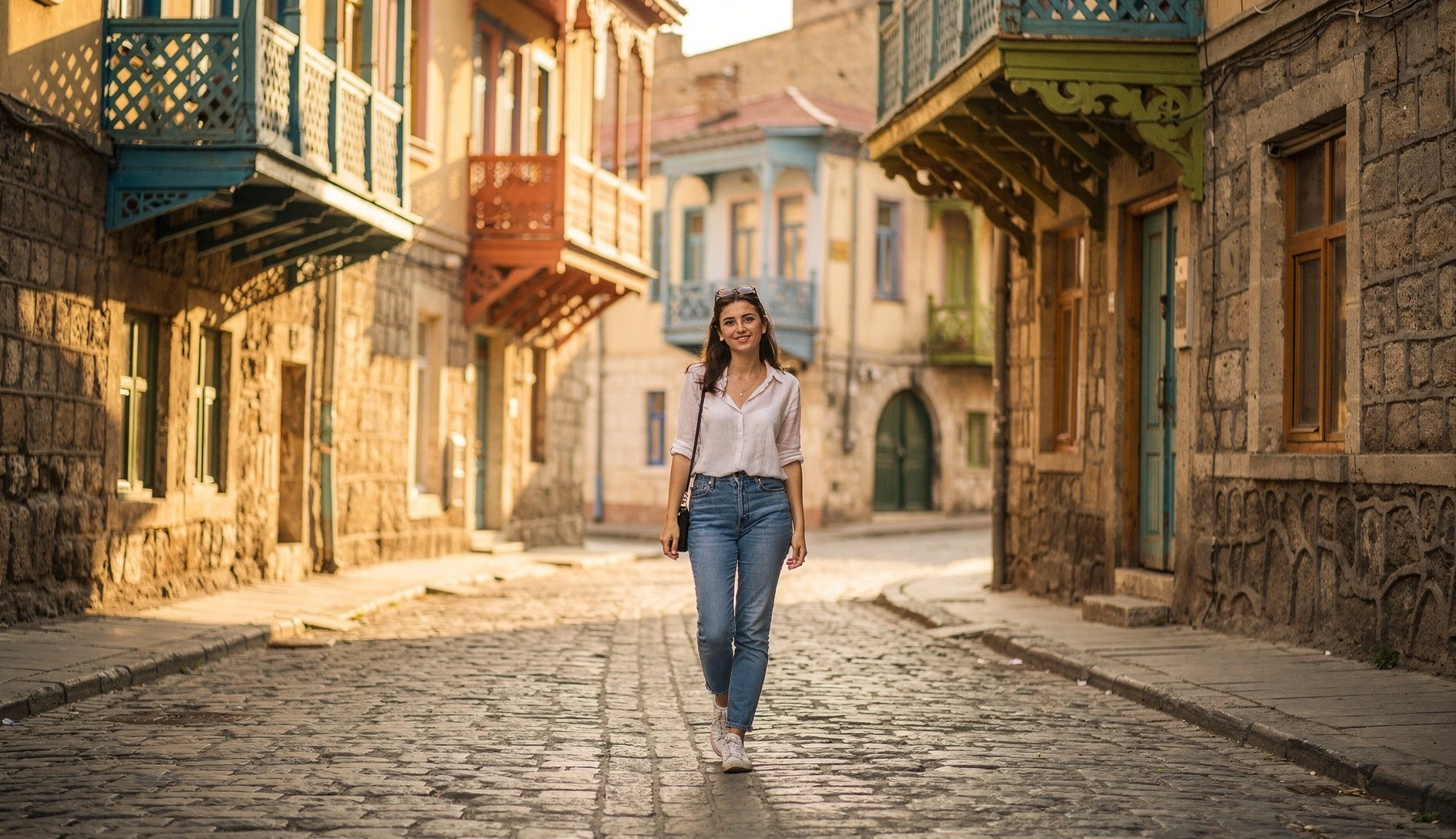
Most "is Georgia safe for women?" articles are written for tourists spending a week in Tbilisi. They'll tell you it's safe (it is, mostly), mention catcalling (it exists), and move on. But if you're actually planning to live here — not visit, but build a life — the picture is more complicated than a safety rating.
Georgia is a country of genuine contradictions when it comes to gender. The national symbol is literally a woman — Kartlis Deda, Mother Georgia — holding wine in one hand and a sword in the other. Georgian men will insist women are "respected" while simultaneously expecting their wife to do all the cooking. A Tbilisi café might feel like Berlin, but drive 30 minutes into the countryside and you'll meet families where women don't eat at the table with male guests.
This guide is written for women who are moving to Georgia or thinking about it. Not tourist tips — real talk about what daily life actually feels like, from street safety to dating to finding a gynecologist who won't judge you.
The Short Version
Tbilisi is generally safe and increasingly progressive. But Georgia remains a patriarchal society with strong traditional gender roles, especially outside the capital. Street harassment exists but is mostly verbal. Healthcare access is decent but reproductive rights are contested. Dating culture has its own unwritten rules. The expat bubble cushions you from a lot of this — but if you integrate deeper, you'll encounter it.
Street Safety — The Honest Picture
Let's start with what everyone wants to know: is Tbilisi safe for women? The short answer is yes — significantly safer than most European capitals in terms of violent crime. Pickpocketing is rare. Muggings are extremely uncommon. You can walk home at 2 AM through most central neighborhoods without fear of anything worse than an awkward encounter.
The longer answer requires some nuance.
What You'll Actually Experience
Staring. This is the most universal complaint from foreign women in Georgia. Georgian men stare. Not a quick glance — a prolonged, unblinking gaze that feels confrontational the first time you encounter it. It's partly cultural (personal space norms are different here), partly because foreign women genuinely stand out in many neighborhoods, and yes — partly because some men think it's flattering. It isn't. But it's rarely threatening. You'll learn to ignore it within a few weeks.
Verbal comments. Catcalling happens, though less aggressively than in many Mediterranean or Latin American countries. It's most common in non-touristy neighborhoods, from older men, and during summer. Typical range: "beautiful" muttered as you pass, honking from cars, or a longer attempt at conversation you didn't invite. Aggressive or threatening verbal harassment is genuinely rare in central Tbilisi.
Following. Some women report men following them for a block or two, usually trying to start a conversation. This is more unnerving than dangerous, but it does happen. It's most common late at night around nightlife areas like Bassiani, clubs on the left bank, or the area near Mtatsminda funicular.
| Situation | Risk Level | Notes |
|---|---|---|
| Walking in central Tbilisi (day) | Very low | Staring possible but no real threat |
| Walking in central Tbilisi (night) | Low | Stick to well-lit streets; Vera, Vake, Sololaki very safe |
| Public transport | Very low | Metro and buses are safe; crowded buses may have close contact |
| Taxis (Bolt/Yandex) | Very low | App-based taxis are tracked; avoid unmarked street taxis |
| Nightlife areas | Low-moderate | Normal nightlife precautions apply; drink spiking rare but reported |
| Rural Georgia alone | Low | Very safe physically; more conservative social expectations |
| Hiking solo | Low-moderate | Terrain risk > personal safety risk; tell someone your route |
Neighborhoods by Safety Feel
Not all of Tbilisi feels the same. The central, gentrified neighborhoods where most expats live are genuinely comfortable for women at any hour. The further you go from the center, the more traditional (and male-dominated) the street culture becomes.
Most Comfortable
Vera, Vake, Sololaki, Mtatsminda. These are the expat-heavy, café-dense neighborhoods where you'll feel at ease walking alone at midnight. Young, international crowd. Women dining solo, running, walking dogs at all hours. Closest to a Western European vibe.
Comfortable
Saburtalo, Marjanishvili, Didube (main streets). Busy residential areas with mixed demographics. Safe but more traditional. You might get more stares but nothing threatening. Saburtalo has a lot of universities, so it skews younger.
Fine but More Attention
Isani, Samgori, Gldani, Varketili. Working-class outer neighborhoods. Safe in terms of crime, but more conservative street culture. A foreign woman will stand out more. Avoid walking alone late at night in poorly lit areas — not because of specific danger, but because the environment feels more isolated.
Exercise Caution
Areas around Eliava market, some parts of the left bank at night. Not dangerous per se, but dimly lit, industrial, male-dominated spaces where you'd feel conspicuous alone after dark. Use Bolt instead of walking.
Practical Tip
Download Bolt (ride-hailing app) before you arrive. A ride across central Tbilisi costs 5-8 GEL ($2-3). If you ever feel uncomfortable — a guy won't leave you alone, you're in an unfamiliar area at night — just order a car. It's cheap insurance.
Understanding Georgian Gender Culture
Georgia is a country where a progressive Tbilisi barista with a nose ring and a village grandmother who's never left her region coexist — and both consider themselves deeply Georgian. The gender culture reflects this split. What you experience depends entirely on which Georgia you're interacting with.
The Traditional Layer
Georgian society is fundamentally patriarchal. This isn't a relic — it's the living, breathing default for much of the country. The traditional framework looks like this:
- Men provide, women nurture. The man earns money and makes "big decisions." The woman manages the home, raises children, and — critically — feeds everyone. Cooking is central to a Georgian woman's identity in traditional families.
- Respect through protection. Georgian men genuinely believe they "respect" women by protecting and providing for them. This isn't performed — they mean it. But "respect" in this framework doesn't include equality in decision-making or division of labor.
- Family honor. A woman's behavior reflects on her entire family. This is especially true in rural areas and among older generations. Daughters are expected to be modest, and a woman's sexual history is considered relevant to her family's reputation.
- The mother-in-law dynamic. In traditional Georgian families, the mother-in-law holds enormous power in the household. Young wives often move into the husband's family home and are expected to defer to his mother — particularly in cooking, childcare, and domestic decisions.
The Modern Layer
Tbilisi's younger generation — roughly under 35, educated, English-speaking — is visibly different. Women work in tech, start businesses, live independently, and date freely. The feminist movement is small but vocal. The gender gap is narrowing in urban professional settings.
But even in "progressive" Tbilisi, traditional expectations lurk beneath the surface. A Georgian boyfriend who seems liberal might still expect you to cook when his parents visit. A female colleague might be passed over for promotion for reasons nobody states openly. A Georgian friend might judge you (silently or not) for living with a partner you're not married to.
The contradiction isn't hypocrisy — it's a society in transition. Georgia is caught between its deeply conservative Orthodox roots and its European aspirations, and gender dynamics are one of the fault lines.

Dating & Relationships
If you're a woman dating in Georgia — whether you're interested in Georgian men, other expats, or just curious about the landscape — there are things worth knowing upfront.
Dating Georgian Men
Georgian men are known for being intensely romantic. Grand gestures, constant compliments, paying for everything, opening every door. This can feel wonderful or overwhelming, depending on your frame of reference and the individual man.
What to expect:
- He will pay. Always. Insisting on splitting will often be met with genuine confusion or mild offense. This isn't about control for most Georgian men — it's about identity. A man who doesn't pay is considered cheap, and his friends will tease him about it.
- Speed of commitment. Georgian dating culture moves fast by Western standards. "I love you" on the third date isn't unusual. Introducing you to his family within weeks is considered normal. Marriage conversations happen early. If you're used to the casual, slow-burn dating of Northern Europe or North America, this intensity can feel like a lot.
- Jealousy and possessiveness. Georgian men tend to be jealous — sometimes charmingly, sometimes problematically. Your male friends may be viewed with suspicion. Going out with mixed-gender groups without him can cause friction. This isn't universal, but it's common enough to mention.
- The family factor. Dating a Georgian man means dating his family. His mother's opinion of you matters enormously. If she doesn't approve, life gets complicated. Learning to cook a few Georgian dishes earns you more points than you might expect.
- The generational split. A 25-year-old Georgian man who's traveled and speaks English is a very different dating experience from a 35-year-old who's never left the country. Age, education, and exposure to the world are the biggest predictors of how traditional his expectations will be.
A Necessary Warning
Domestic violence is a real problem in Georgia. The Public Defender's Office reports thousands of cases annually, and many go unreported due to social stigma. If a relationship becomes controlling or violent, know that Georgia has legal protections: restraining orders exist, the emergency number is 112, and the national hotline for domestic violence victims is 116 006. The Women's Fund in Georgia and UNFPA Georgia both offer support services.
Dating Apps
| App | Who's On It | Best For |
|---|---|---|
| Tinder | Mix of locals and expats; largest user base | Casual dating, meeting both Georgians and internationals |
| Bumble | More expats and educated locals; smaller pool | Women who prefer making the first move |
| Hinge | Mainly expats; very small user base in Tbilisi | Serious dating among internationals |
| Mamba | Russian-speaking community; many locals | If you speak Russian and want to meet locals |
A word about Tinder in Tbilisi: the pool is small. If you're swiping actively, you'll see the same faces recycling within days. Many Georgian men use dating apps differently than you might expect — some are genuinely looking for marriage material, not hookups. Be clear about your intentions early.
Expat Dating Scene
The expat dating pool is active but compact. The Tbilisi foreign community is roughly 20,000-30,000 people, and the "datable" segment is much smaller. The same faces appear at every event. This can be great (easy to meet people) or exhausting (everyone knows everyone's business). Coworking spaces, language exchange meetups, and the handful of expat-friendly bars in Vera and Sololaki are where most connections start.
Reproductive Healthcare
Healthcare in Georgia is generally good and affordable, but reproductive healthcare for women deserves its own section because the cultural attitudes bleed into the medical system.
Finding a Gynecologist
Good gynecologists exist in Tbilisi, including several who speak excellent English. The main chains — Evex/MediClub, American Medical Center, National Center for Disease Control-affiliated clinics — all have OB/GYN departments. Expect to pay 80-150 GEL ($30-55) for a consultation.
The quality of care is generally professional. But you may encounter a cultural clash: some Georgian doctors are more conservative than what you're used to. Specifically:
- Questions about marriage. Don't be surprised if a gynecologist asks whether you're married when you seek contraception or discuss sexual health. This is culturally normal here, not a refusal of service.
- Judgmental attitudes. Some (not all) doctors may be subtly judgmental about unmarried sexual activity or multiple partners. If this bothers you, ask the expat community for recommendations — there are modern, non-judgmental practitioners.
- STI testing. Available and affordable. Synevo and MediClub both offer comprehensive panels. Less stigma in expat-facing clinics than in neighborhood polyclinics.
Contraception
| Method | Availability | Approximate Cost |
|---|---|---|
| Birth control pills | OTC at any pharmacy, no prescription needed | 15-40 GEL/month ($6-15) |
| Emergency contraception (Plan B) | OTC at pharmacies | 15-25 GEL ($6-10) |
| Condoms | Pharmacies and some supermarkets | 5-15 GEL ($2-6) |
| IUD (hormonal or copper) | Available through gynecologists | 200-500 GEL ($75-185) including insertion |
| Implant (Nexplanon) | Available but less common; may need to request | 400-700 GEL ($150-260) |
The good news: birth control pills are available over the counter at any pharmacy without a prescription. You can walk into GPC, PSP, or Aversi and buy them. Common brands like Yasmin, Diane-35, and various generics are stocked. The bad news: the pill selection is more limited than in Western Europe, and not every brand you're used to will be available. If you're on a specific pill, bring a few months' supply and the generic name so a pharmacist can find an equivalent.
Pregnancy & Prenatal Care
If you're pregnant or planning to be, Georgia has decent prenatal care at private clinics. English-speaking OB/GYNs are available at Evex, National Medical Center, and several private practices. Prenatal scans (NT, anomaly, etc.) are standard and affordable (80-200 GEL per scan). The full guide to having a baby in Georgia covers this in depth.
Abortion
Abortion is legal in Georgia up to 12 weeks on request, and up to 22 weeks on medical grounds. There's a mandatory 5-day waiting period after the initial consultation — designed to "allow reflection," but experienced by many women as an unnecessary hurdle. The procedure is available at private clinics and costs approximately 300-800 GEL ($110-295) depending on the method and facility.
Attitudes vary. Urban, private-clinic doctors tend to be professional and non-judgmental. But there's active political pressure from the Orthodox Church and conservative groups to restrict access, so the legal landscape could shift. As of early 2026, the law hasn't changed, but it's worth monitoring.
Women in the Workplace
If you're working for a Georgian company (rather than remotely for a foreign employer), you'll encounter a workplace culture that's catching up but hasn't arrived yet.
The Progress
Georgian women are well-represented in banking, tech, hospitality, and education. Many companies — especially those with international clients — have modern HR practices. Tbilisi's startup scene is gender-diverse. Female entrepreneurs are visible and respected.
The Reality
The gender pay gap is significant — women earn roughly 35% less than men on average. Senior leadership at traditional Georgian companies is overwhelmingly male. "Office culture" in many firms still includes comments about women's appearance that would be HR complaints in Western countries.
If you're a remote worker or freelancer — which most expat women in Georgia are — none of this directly affects you. But it shapes the society you're living in. Your Georgian female friends working local jobs navigate a different professional reality than you do.
Maternity Leave (If You Work Locally)
Georgian labor law provides 126 calendar days of maternity leave (183 for complications or twins), with the employer paying the equivalent of the employee's salary for that period, capped at a government maximum. It's not generous by Nordic standards, but it exists. Paternity leave is technically available but almost never used — culturally, it's still considered the woman's domain.
What to Wear (and Not Wear)
Tbilisi is fashion-forward. You can wear whatever you want in central neighborhoods — shorts, crop tops, revealing dresses, none of it will get you arrested or even commented on in Vera or Vake. Georgian women in Tbilisi dress up more than in most European cities — heels, makeup, and styled outfits for a trip to the grocery store aren't unusual.
But context matters:
| Location | What's Normal | What Draws Attention |
|---|---|---|
| Central Tbilisi (Vera, Vake) | Anything goes — same as any European city | Nothing really; very cosmopolitan |
| Outer neighborhoods | Casual but modest preferred | Very short shorts, crop tops in summer |
| Churches & monasteries | Head covering, long skirt/pants, covered shoulders | You won't be let in without modest dress |
| Rural Georgia | Conservative casual — no need for hijab-level coverage but be respectful | Revealing clothing gets stares and potentially unwanted attention |
| Batumi beach | Bikinis totally fine on the beach | Walking through town in swimwear is tacky but not unsafe |
Church Dress Code
Georgian Orthodox churches require women to cover their heads and wear long skirts (below the knee). Most churches have wraps and skirts available at the entrance for tourists, but they're often one-size-fits-nobody. Carry a scarf in your bag if you plan to visit churches. Pants are technically not allowed, though enforcement varies — some churches won't care, others will turn you away.
LGBTQ+ Women in Georgia
This needs to be said plainly: Georgia is not a safe or comfortable place to be openly LGBTQ+. The 2023 anti-LGBTQ+ law (officially the "Family Values" law) banned same-sex marriage, adoption by same-sex couples, gender-affirming medical procedures, and public displays of "propaganda" relating to non-heterosexual relationships. Public Pride events have been violently attacked by mobs in past years.
For queer women specifically:
- Tbilisi has a small but existing queer scene. It's underground, word-of-mouth, and private. Certain clubs and bars are known as queer-friendly spaces, but they don't advertise as such.
- Holding hands or showing affection in public with a same-sex partner will attract negative attention and potentially aggression, especially from men. This is true even in central Tbilisi.
- Housing. Landlords may refuse to rent to same-sex couples, and there's no legal protection against this.
- The expat bubble is more accepting. Within international circles, being out is generally fine. The risk comes from the broader Georgian society.
If you're a queer woman considering Georgia, go in with open eyes. The country has many wonderful qualities, but LGBTQ+ acceptance isn't one of them. Organizations like Tbilisi Pride (operating online and through private events) and the Women's Initiatives Supporting Group (WISG) are the main support resources.
Women's Communities & Support
Building a female support network in Tbilisi is easier than you might think. The expat community is social and welcoming, and several groups specifically cater to women.
Expat Women Groups
Facebook groups like "Women in Tbilisi" and "Expat Women Georgia" are active with meetup announcements, recommendations, and support threads. Regular brunch meetups, hiking groups, and professional networking events happen monthly. These are genuinely useful for newcomers — people share honest experiences and practical advice.
Fitness & Wellness
Yoga studios (Yoga House, Prana, Bikram), CrossFit boxes, running groups, and dance classes all have strong female participation. These are excellent for meeting both Georgian and international women in a relaxed setting. Tbilisi's fitness scene is surprisingly good.
Coworking Spaces
Spaces like Impact Hub, Terminal, and various café-coworking spots have mixed gender communities where women feel welcome. These are natural places to meet other professional women, both local and international. Check our coworking guide for details.
Emergency Resources
Emergency: 112. Domestic violence hotline: 116 006 (24/7). Women's Fund Georgia: legal aid and psychological support. UNFPA Georgia: reproductive health services. Sapari: women's rights organization with crisis support. Your embassy: for consular assistance in emergencies.
Practical Tips from Women Who Live Here
These aren't theoretical — they're collected from real conversations with women who've lived in Tbilisi for years.
1. Learn "ara, madloba" (no, thanks)
The single most useful phrase for unwanted attention. Firm "no" in Georgian signals you live here, not that you're a lost tourist. Most men back off immediately when they realize you're not just visiting.
2. A fake wedding ring works
In more traditional settings — village homestays, rural marshrutkas, neighborhood shops — wearing a ring significantly reduces unwanted attention. It's not about deception; marriage is deeply respected, and a married woman is "off limits" in traditional culture. Many long-term female expats use this trick selectively.
3. Don't engage with persistent men
Politeness can be misread as interest. If someone won't leave you alone, firm disengagement works better than being nice about it. Walk into a shop, call someone, or get a Bolt. Engaging in conversation — even to say "I have a boyfriend" — often prolongs the interaction.
4. Georgian women are your best allies
If you're uncomfortable, Georgian women will help you. Ask a woman at a bus stop, a shop clerk, a café barista — they understand the dynamics and will back you up. Georgian female solidarity is strong, even toward strangers.
5. Traveling outside Tbilisi? Adjust expectations
Svaneti, Kakheti, Tusheti — these are stunning and worth visiting. But the gender dynamics are more traditional. You'll get more attention, more questions about your husband, and more unsolicited help (which is usually genuinely kind, not threatening). Roll with it. A smile and a "madloba" goes a long way.
6. Choose your gynecologist carefully
Ask the expat community for recommendations. English-speaking doctors at Evex, AMC, and the better private clinics tend to be more modern in their approach. Avoid random neighborhood clinics for sensitive health issues — the quality and attitude variance is high.
If You're in a Relationship with a Georgian
Intercultural relationships come with their own dynamics anywhere. In Georgia, a few things are worth knowing:
| Expectation | Georgian Norm | What This Means in Practice |
|---|---|---|
| Meeting the family | Expected within weeks/months | Refusing or delaying is seen as a red flag about your intentions |
| Family involvement | High — family opinions matter | Decisions about where to live, wedding plans, children — family weighs in |
| Living together | Becoming acceptable in Tbilisi; still taboo outside | His family may pressure for marriage if you cohabitate |
| Cooking | Women cook, period | Even progressive Georgian men often don't cook — set boundaries early |
| Hosting | Women serve guests; men lead the supra | When his friends visit, you may be expected to prepare food and hover |
| Children | Expected — and the sooner the better | Not wanting kids can be a dealbreaker for many Georgian men and their families |
None of this means you can't have a wonderful relationship with a Georgian partner. Many expat women do. But the cultural expectations exist, and pretending they don't leads to frustration. The key is communication — early, direct, and ongoing. Georgian culture rewards directness less than many Western cultures, but in a cross-cultural relationship, clarity is essential.
If you're thinking about getting married in Georgia, our dedicated guide covers the legal process, costs, and what to expect.
The Honest Bottom Line
Georgia is not Scandinavia. It's not going to be. The patriarchal underpinnings are real, and they affect daily life in ways both obvious and subtle.
But it's also not the unsafe, oppressive environment that some nervous Googling might suggest. Tbilisi is genuinely pleasant to live in as a woman. The city is walkable, affordable, beautiful, and has a social scene that's easy to plug into. Most Georgian men are respectful — even the traditional ones — and the small minority who aren't are easily avoided. The expat community offers a built-in support network. Healthcare is accessible and affordable.
The women who thrive here long-term tend to share a few traits: they're confident, they set clear boundaries, they take the time to understand Georgian culture without trying to change it, and they build networks of both Georgian and international women.
Georgia isn't perfect. But for a country that costs a fraction of Western Europe and offers stunning quality of life, it's one of the better options for women looking to live abroad — as long as you come in with realistic expectations and keep your eyes open.
Frequently Asked Questions
Is Tbilisi safe for women walking alone at night?
Central neighborhoods like Vera, Vake, and Sololaki are very safe at night. Outer neighborhoods are safe in terms of crime but may feel less comfortable. Bolt rides across town cost $2-3 — use them freely when in doubt.
Is street harassment a problem in Georgia?
Staring is common; verbal catcalling exists but is generally less aggressive than in many countries. It's most prevalent in non-touristy neighborhoods and from older men. Aggressive harassment is rare in central Tbilisi.
Can I get birth control easily in Georgia?
Yes — pills are available over the counter at any pharmacy without a prescription (15-40 GEL/month). Emergency contraception is also OTC. IUDs and implants are available through gynecologists.
How is dating different in Georgia?
Faster pace — early declarations of love, quick family introductions. Men insist on paying. Jealousy is more common than in Western culture. Dating apps exist but the pool is small.
What should I wear in Georgia?
In central Tbilisi, anything goes. For churches, cover head and shoulders, wear long skirts. In rural areas, modest casual is respectful. Carry a scarf in your bag for spontaneous church visits.
Is Georgia safe for LGBTQ+ women?
Honestly, no — not for open expression. The 2023 law restricts public LGBTQ+ visibility. A small underground scene exists in Tbilisi, and expat circles are accepting, but the broader society is hostile to public displays of same-sex affection.
Written by The Georgia Expats Team
This guide draws on years of lived experience in Tbilisi and conversations with dozens of women — Georgian, expat, and everything in between — who navigate this country's gender dynamics daily.
Last updated: March 2026.
Related Articles
Safety in Georgia
Crime rates, scams, neighborhoods to know, and the full picture of personal safety.
Social Life & Making Friends
Where to meet people, the best expat communities, and the unfiltered truth about building a social life.
Healthcare in Georgia
Hospitals, clinics, insurance, costs, and navigating the Georgian healthcare system.
Georgian Culture & Etiquette
Unwritten rules, social norms, and cultural expectations every expat should understand.