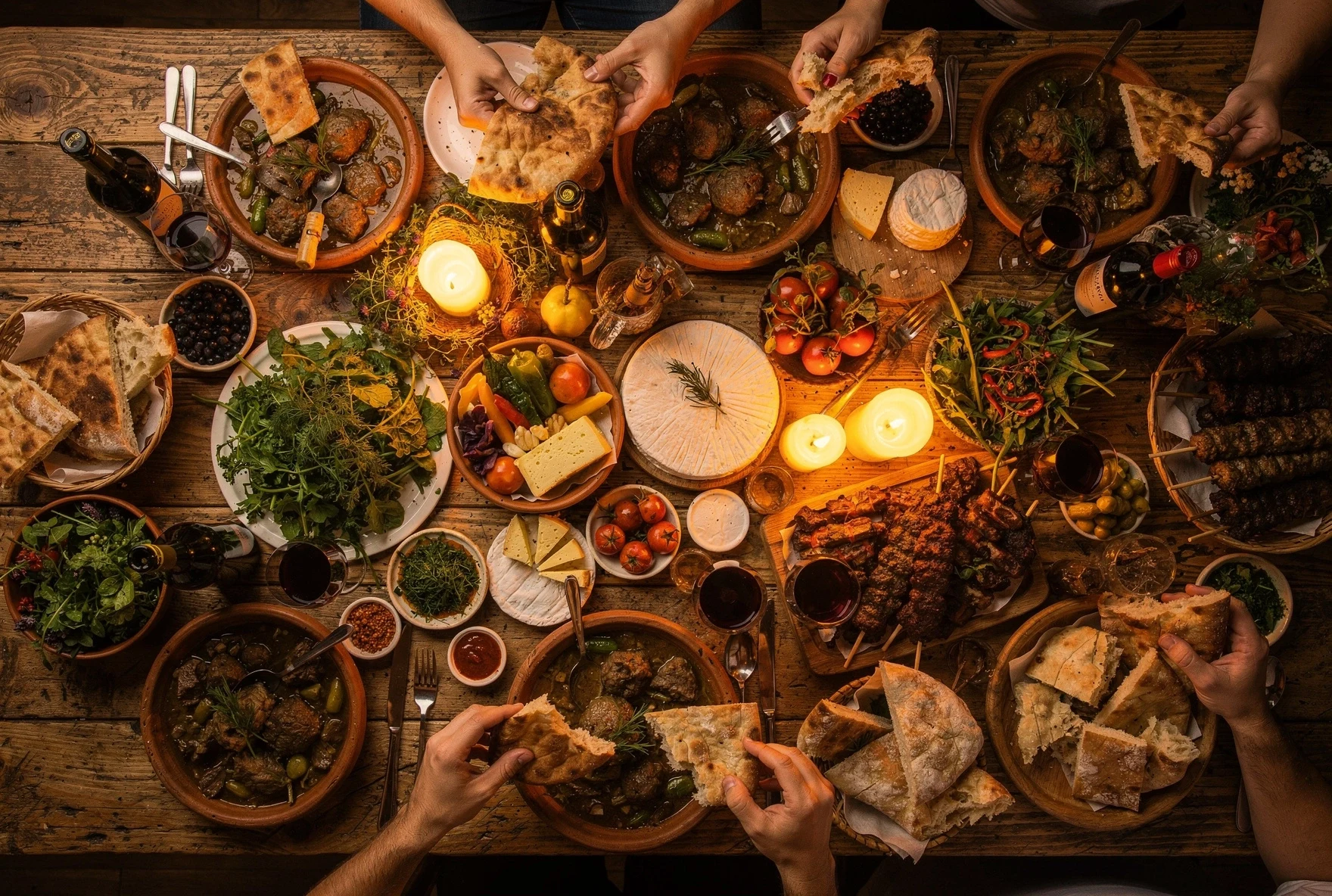
You've been in Georgia for a week. Maybe two. A colleague invites you to dinner. "Just a small gathering," they say. You arrive at 7 PM. By 9 PM, you've consumed a half-liter of wine, eaten enough food for three people, toasted the memories of several ancestors you've never met, and you're only on course four. Welcome to the supra — Georgia's most sacred social institution, and one of the most intense dining experiences on earth.
The supra isn't just a meal. It's a structured ritual with rules that go back centuries, a designated toastmaster running the show, and an unspoken social contract that makes "I'll just have a small glass" the most futile sentence in the Georgian language. Understanding how it works — and how to navigate it without offending anyone or destroying your liver — is one of the most useful skills you'll develop as an expat here.
This guide covers everything: the tamada's role, the toast sequence, what to eat and when, how to decline wine without causing a diplomatic incident, what to bring as a guest, and how the modern supra differs from the traditional one. Consider it your field manual.
What Is a Supra, Really?
The word "supra" (სუფრა) literally means "tablecloth" — but in Georgian culture, it refers to the entire feast. It's the closest thing Georgia has to a national pastime, more important than football, more universal than the Orthodox Church, and more deeply embedded in daily life than the 1% tax rate is in expat conversations.
At its core, a supra is a communal feast governed by a tamada (toastmaster) who leads a structured sequence of toasts. Everyone drinks together, eats together, and — in theory — bonds together through shared wine and words. It happens at weddings, funerals, baptisms, birthdays, business meetings, holidays, and whenever a Georgian decides "let's have some people over."
The supra is not a dinner party. The food is secondary (though plentiful and excellent). The wine is not sipped — it's consumed in toasts. The conversation follows a ritualized pattern led by the tamada. You don't leave when you're full. You leave when the tamada decides the supra is over, or when your body physically refuses to continue.
Two Types of Supra
There are two categories: the keipi (ქეიფი) — a joyful celebration supra for weddings, holidays, and good times — and the kelekhi (ქელეხი) — a funeral or memorial supra. The kelekhi follows a more somber toast structure and the mood is reflective, but the mechanics are similar: a tamada leads, everyone drinks, food is abundant. Both types are sacred, and both involve significant quantities of wine.
The Tamada: Master of Ceremonies
The tamada is the most important person at any supra. Not the host, not the guest of honor, not the person who cooked — the tamada. Understanding this role is key to understanding everything else about the supra.
The tamada is elected or appointed (often it's the most articulate, respected, or charismatic person present) and serves as a combination of emcee, philosopher, comedian, and drill sergeant. They decide the order and topic of every toast, control the pace of drinking, manage the emotional arc of the evening, and ensure that the supra has meaning — not just consumption.
| Tamada's Role | What It Means in Practice |
|---|---|
| Sets the toast topic | Nobody drinks until the tamada proposes a toast. Random drinking is considered rude. |
| Controls the pace | A good tamada reads the room — slowing down when people are flagging, speeding up when energy is high. |
| Speaks first, longest | The tamada's toast is often a 2–5 minute speech. Others follow with shorter additions on the same theme. |
| Invites others to speak | After the tamada's toast, guests may add their own words. This is called alaverdi (passing the toast). |
| Decides when to end | The supra ends when the tamada says it ends. Leaving early is noticed and not ideal. |
| Stays (relatively) sober | A tamada who gets too drunk to lead is considered a failure. The best ones drink heavily but maintain composure. |
The Alaverdi
After the tamada finishes a toast, they may pass the floor to someone else — this is the alaverdi (ალავერდი). If you receive an alaverdi, you're expected to add your own words to the tamada's theme, then drink. You don't need to match the tamada's eloquence — a few sincere sentences are enough. If you're an expat, saying something about how grateful you are to be in Georgia usually goes over very well.
The Toast Sequence: What to Expect
Traditional supras follow a loose but recognizable toast sequence. The tamada has some flexibility, but certain toasts are considered essential and tend to come in a predictable order. Here's the typical structure:
| # | Toast Theme | Notes |
|---|---|---|
| 1 | God / higher power | Nearly always first. Even secular Georgians observe this. Short and respectful. |
| 2 | The reason for gathering | The occasion — birthday, holiday, welcoming a guest, business success, or just friendship. |
| 3 | Georgia / the homeland | A toast to საქართველო (Sakartvelo). Can be emotional. Themes of history, resilience, beauty. |
| 4 | Parents / family | Deeply important. Georgian culture is intensely family-oriented. This toast is always heartfelt. |
| 5 | The departed | A moment of silence, then you drink. Do NOT clink glasses for this toast. Mandatory in every supra. |
| 6 | Peace | Often references Georgia's occupied territories, historical conflicts, and hope for the future. |
| 7 | Friends / those present | Individual guests may be singled out and praised. If you're the foreigner, expect extra attention here. |
| 8 | Children / the future | A toast to the next generation. Hopeful and forward-looking. |
| 9 | Love / women | Can be romantic or broadly appreciative. In traditional supras, somewhat gendered. Modern ones less so. |
| 10+ | Free toasts | After the core sequence, the tamada has freedom. Humor, philosophy, current events, individual guests. |
The Toast to the Departed
This is the most important etiquette rule at any supra: do not clink glasses during the toast to the departed. Everyone drinks, but glasses are raised silently and set down. Clinking during this toast is one of the few things that will genuinely upset Georgians. It's considered deeply disrespectful. Watch what others do and follow.
Drinking Rules: The Unwritten Code
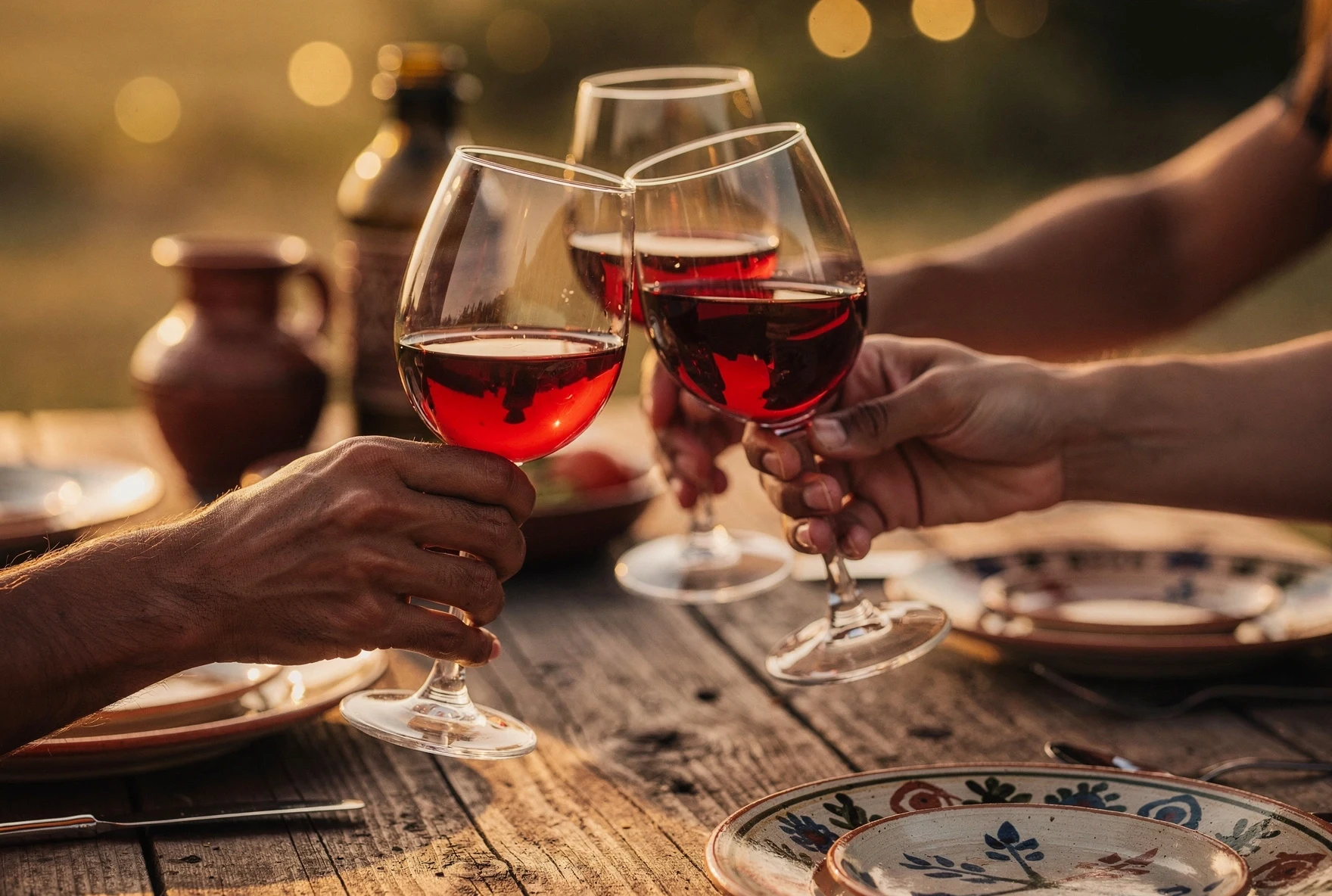
Wine is the lifeblood of the supra. Not beer, not spirits (though chacha — Georgian grape brandy — may appear later). Georgian wine, preferably homemade, preferably from the host's family or village. The drinking at a supra follows strict rules that no one will explain to you but everyone will notice if you break.
🍷 When to Drink
- • Only after a toast — sipping between toasts is frowned upon
- • Drain your glass (or most of it) for each toast
- • "Gaumarjos!" (გაუმარჯოს) = "Victory!" — the standard exclamation after each toast
- • Clink glasses with eye contact for celebratory toasts
- • No clinking for the toast to the departed — ever
🚫 What Not to Do
- • Don't start drinking before the tamada's toast
- • Don't propose a toast without the tamada's permission
- • Don't leave wine in your glass and put it down (implies the toast wasn't worthy)
- • Don't drink water from your wine glass
- • Don't switch to beer mid-supra (considered low-class)
The Kantsi (Drinking Horn)
At traditional or celebratory supras, a kantsi (ყანწი) — a drinking horn made from a bull or ram's horn — may be passed around. The horn has no flat bottom, which means you can't set it down until it's empty. This is by design. A large kantsi can hold 0.5–1 liter of wine. If it's passed to you, you're expected to drink the whole thing.
This sounds terrifying, and it can be. But a few things in your favor: the wine at most supras is homemade, relatively low in alcohol (10–12%), and the food is plentiful enough to absorb a lot of it. Also, the kantsi usually appears later in the supra when everyone is already well-lubricated, so the social pressure to drain it is weighed against the group's collective amusement at watching you try.
The Food: What Appears and When
Georgian supra food is not served in courses the way Western meals are. Instead, the table is pre-loaded with an overwhelming spread of cold dishes before anyone sits down, and hot dishes arrive in waves throughout the evening. The table is never empty — dishes are replaced and replenished as the supra progresses.
| Stage | Typical Dishes | Practical Notes |
|---|---|---|
| Pre-set (on table before you sit) | Pkhali (walnut-herb pâté), badrijani (eggplant rolls), sulguni cheese, fresh herbs, tomato-cucumber salad, pickles, lobio (bean stew), bread | Pace yourself here. This is just the opening act. |
| First hot wave | Khachapuri (cheese bread), kupati (sausages), fried potatoes, ajapsandali (vegetable stew) | The khachapuri is the crowd favorite. Eat it fresh — it hardens fast. |
| Main course | Mtsvadi (grilled meat/kebabs), chicken tabaka, satsivi (walnut-chicken), chakhokhbili, or whole roasted pig for big occasions | Arrives 1–2 hours in. By this point you think you're full. You're not done. |
| Late arrivals | Khinkali (dumplings), more bread, seasonal dishes | Khinkali is a skill — eat incorrectly and you'll be gently corrected by every Georgian present. |
| Sweet / end | Fruit, churchkhela (candle-shaped nut candy), gozinaki (honey walnuts, holidays only), cake | Dessert is understated. The supra ends with fruit and coffee, not elaborate pastry. |
How to Eat Khinkali (Without Embarrassing Yourself)
Hold the dumpling by its top knot (the twisted dough handle). Turn it slightly and bite a small hole in the side. Sip the broth inside. Then eat the dumpling. Leave the top knot on your plate — nobody eats the knot (it's tough dough). The number of knots on your plate is the traditional way Georgians count how many you've eaten. Using a fork or cutting a khinkali with a knife is the Georgian equivalent of eating sushi with a spoon.
How to Drink Less (Without Offending Anyone)
This is the section most expats actually need. A traditional supra with 15–20 toasts, each requiring a full glass, can mean consuming 2–3 liters of wine in an evening. That's not a typo. Here's how to survive:
✅ Strategies That Work
- • "Health reasons" — the most respected excuse. Say you're on medication.
- • Half-fill your glass before each toast. Nobody will stop you.
- • Sip, don't drain — at modern/casual supras, this is increasingly accepted.
- • Eat aggressively — Georgian food absorbs wine remarkably well. The bread is your friend.
- • "I'm driving" — universally understood. Even Georgians respect this one.
- • Declare early — say "I drink slowly" at the beginning. It's easier than explaining toast by toast.
❌ Strategies That Don't Work
- • "I don't drink" — will be challenged repeatedly. Prepare for a long evening of deflection.
- • Switching to water mid-supra — noticed and commented on.
- • Quietly not drinking — someone will notice and call you out cheerfully.
- • Leaving early — possible but difficult. Better to plan your exit around a natural pause.
- • Matching Georgian drinking pace — unless you've trained for this, you will lose.
The Honest Truth About Not Drinking
If you genuinely don't drink alcohol, you can absolutely attend and enjoy a supra. You'll face social pressure — mostly good-natured — but firm, consistent refusal is eventually accepted. The key is to be warm and engaged with the toasts even if you're not drinking wine. Raise your water glass, say "Gaumarjos!" with genuine enthusiasm, and participate in the conversation. The social bonding matters more than the alcohol. Most Georgians will respect your choice once they're convinced it's not just politeness.
What to Bring When You're Invited
If a Georgian invites you to their home for a supra — and they will — arriving empty-handed is not the worst sin (Georgian hospitality doesn't keep score), but bringing something shows respect. Here's what works:
🎁 Good Gifts
- • Wine — a good bottle from a wine shop (not homemade, that's the host's domain)
- • Flowers — for the host's wife. Always odd numbers (even = funerals).
- • Sweets/chocolate — from a nice bakery or imported brand
- • Something from your home country — always appreciated and gives the host a conversation topic
- • Fruit or nuts — practical and never unwelcome
👎 Avoid
- • Even numbers of flowers — only for funerals. This is taken seriously.
- • Cheap wine — better to bring chocolate than bottom-shelf wine
- • Nothing at all for a formal supra — casual dinners are more forgiving
- • Offering to cook/help — the host has it covered. Your job is to be a guest.
Types of Supras You'll Encounter
Not all supras are created equal. The intensity, formality, and expectations vary dramatically based on the occasion.
| Type | Formality | Duration | What to Expect |
|---|---|---|---|
| Wedding supra | Very formal | 6–12 hours | 200+ guests, professional tamada, enormous quantities of food and wine. Expect to dance. |
| Funeral supra (kelekhi) | Formal, somber | 2–4 hours | Toasts to the deceased, no clinking, no music, no laughing. Leave when you feel it's right. |
| Birthday supra | Semi-formal | 3–6 hours | Guest of honor receives extensive personal toasts. Multiple courses. Cake at the end. |
| Holiday supra | Semi-formal | 4–8 hours | New Year's and Easter supras are the biggest. Seasonal dishes dominate. |
| Business supra | Moderate | 2–4 hours | Happens at restaurants. Shorter toast sequence but same structure. Deals get done here. |
| Casual home supra | Relaxed | 2–5 hours | Friends gathering. Tamada may be informal. More flexibility on drinking. Most likely for expats. |
| Rural/village supra | Traditional | 4–8+ hours | The most authentic experience. Homemade wine, garden-fresh food, stricter etiquette, maximum hospitality. |
Regional Differences
Supras vary significantly by region. If you travel outside Tbilisi (and you should), the supra culture shifts:
🍇 Kakheti (Wine Country)
The most intense supras. Kakheti is the heart of Georgian wine culture, and they take it seriously. Expect homemade qvevri wine (from clay vessels), longer evenings, more toasts, and the kantsi (horn) making regular appearances. Refusing wine here is harder than anywhere else in Georgia.
🏔️ Svaneti (Mountains)
Hearty mountain food — kubdari (meat pie), potatoes, strong flavors. Araqi (local vodka-like spirit) is more common than in eastern Georgia. Fewer courses but more substance. Hospitality is fierce — you may be physically prevented from leaving too early.
🌊 Adjara (Batumi/Coast)
Adjaran cuisine features more dairy and corn-based dishes — sinori, achma, borano, elarji. Adjarian khachapuri (the boat-shaped one with an egg) is the regional star. Supras tend to be slightly less wine-heavy, with more emphasis on food variety.
🏙️ Tbilisi (City)
The most relaxed version. Urban supras are shorter, more casual, and more accommodating of non-drinkers. Restaurant supras are common and don't require the same endurance as village ones. The tamada role may be informal or rotated among friends.
The Modern Supra: How It's Evolving
The supra isn't frozen in time. Younger Georgians, especially in Tbilisi, are adapting the tradition to modern life. Here's what's changing:
📱 What's Changed
- • Drinking pressure is decreasing — younger Georgians are more accepting of moderate drinking
- • Restaurant supras are replacing home supras in Tbilisi for casual occasions
- • Shorter supras — 2–3 hours instead of 6+ for weeknight gatherings
- • Women as tamada — still rare but happening, especially in progressive circles
- • Beer and cocktails appearing alongside wine at younger gatherings
🏛️ What Hasn't Changed
- • The tamada is still central — every gathering beyond a casual hangout has one
- • Toast to the departed — still sacred, still no clinking
- • Family supras remain highly traditional, especially in regions
- • Weddings and funerals follow the full traditional format
- • The supra as business tool — deals are still sealed over wine and toasts
The Business Supra: Deals Over Wine
If you're doing business in Georgia, you will eventually find yourself at a business supra. This is not optional. Georgian business culture considers sharing a table and wine as essential to building trust. Contracts may be signed in offices, but relationships are built at supras.
Business Supra Rules
Business supras follow the same toast structure but are typically held at restaurants. The host pays — always. Trying to split the bill is offensive. If you're the guest, plan to reciprocate by hosting a return supra at a later date. Don't discuss numbers or negotiations during the supra itself — it's about relationship-building, not deal-closing. The actual business talk happens before or after. Show genuine interest in the toasts, praise Georgia, and demonstrate that you value the relationship. This carries more weight than any PowerPoint presentation.
Essential Supra Phrases
You don't need to speak Georgian to survive a supra, but knowing a few key phrases will earn you enormous goodwill — and probably an extra toast in your honor.
| Georgian | Transliteration | Meaning | When to Use |
|---|---|---|---|
| გაუმარჯოს! | Gaumarjos! | "Victory!" / "Cheers!" | After every toast. The essential supra word. |
| ალავერდი | Alaverdi | "I pass the toast to you" | When passing the speaking role to someone else. |
| მრავალჟამიერ! | Mravaljamier! | "Many happy returns!" | After a toast — an alternative to Gaumarjos. |
| ბოლომდე! | Bolomde! | "To the bottom!" (Drain it) | Encouraging someone to finish their glass. You'll hear this directed at you. |
| მადლობა | Madloba | "Thank you" | After personal toasts made in your honor. |
| საქართველოს გაუმარჯოს! | Sakartvelos Gaumarjos! | "Victory to Georgia!" | During the toast to Georgia. Will get applause from the whole table. |
The Wine: What You're Drinking
Georgia is the world's oldest wine-producing country — 8,000 years of continuous viticulture. The wine at a supra, especially a home supra, is likely quite different from what you're used to.
🏺 Qvevri Wine
Traditional Georgian wine is made in qvevri — large clay vessels buried in the ground. The grape juice ferments with the skins, seeds, and stems, producing "amber wine" (white grapes) or rich, tannic reds. Qvevri wine tastes different from European wine — earthier, more textured, sometimes funky. Don't expect Bordeaux.
🏠 Homemade Wine
Many Georgian families make their own wine. Quality ranges from excellent to genuinely terrible. Homemade wine is typically lower in alcohol (10–12%) but can be unpredictable. The host will be very proud of it regardless. Taste it with genuine interest. If it's bad, eat more bread.
Key Georgian Grape Varieties
Saperavi — Georgia's signature red grape. Deep, full-bodied, tannic. The most common red at supras. Rkatsiteli — the workhorse white grape. Makes both conventional and amber wines. Kisi — increasingly popular white, aromatic and elegant. Mtsvane — aromatic white, often blended with Rkatsiteli. Georgia has over 500 indigenous grape varieties, but these four dominate supra tables.
Chacha: The After-Party
Just when you think the supra is winding down, someone produces a bottle of chacha (ჭაჭა) — Georgian grape brandy (or more accurately, pomace spirit). It's typically 50–65% alcohol and tastes like a cross between grappa and paint thinner. Or, if it's well-made, like a smooth, fragrant digestif.
Chacha appears at the end of the supra, usually when the wine has been exhausted and the conversation has gotten philosophical. A small glass is expected. You don't need to drink much — a sip shows respect. The best chacha comes from Kakheti and is aged in oak barrels. The worst comes from someone's garage and will make you question your life choices the next morning.
Chacha Warning
Homemade chacha is unregulated and the alcohol content is often a guess. It can be genuinely dangerous in large quantities, especially after a full evening of wine. One or two small glasses are fine. Don't try to keep up with someone who's been drinking chacha since the Soviet era. Your liver is not built for this.
Common Mistakes Expats Make at Supras
🥂 Clinking During Departed Toast
The #1 mistake. When the tamada says the toast is for those who've passed, raise your glass silently. No clink. No "cheers." Watch the locals and follow.
🍽️ Eating the Khinkali Top
The doughy twisted knot is not food — it's a handle. Eating it marks you as a tourist. Leave it on your plate. Count your knots with pride.
🍷 Sipping Between Toasts
Wine is consumed with toasts, not between them. Casual sipping is for Tbilisi wine bars, not supras. Wait for the tamada.
🗣️ Proposing Unsolicited Toasts
The tamada controls the toast sequence. Wait for them to invite you. Interrupting the flow is like grabbing the microphone at someone else's wedding.
🏃 Leaving Too Early
Leaving before the tamada wraps up is noticed. If you must leave, find a natural pause, thank the host and tamada personally, and make it clear you wish you could stay.
🍞 Not Eating Enough
Going light on food at a supra is a tactical error. The food absorbs the wine. Eat the bread, cheese, and salads steadily throughout. Your stomach will thank you.
Frequently Asked Questions
How much wine should I expect to drink at a supra?
At a traditional supra with 15–20 toasts, you could drink 1.5–3 liters of wine if you drain your glass each time. At a modern Tbilisi gathering, it's more like 0.5–1 liter. Use the strategies above to manage your intake — nobody is actually counting your milliliters.
Can I attend a supra if I don't drink alcohol?
Yes. You'll face social pressure, but firm, warm refusal is ultimately respected. Participate enthusiastically in the toasts with water or lemonade. Being a great conversationalist and engaged guest matters far more than what's in your glass.
What if I'm asked to be tamada?
It's unlikely as a foreigner, but if asked, it's an enormous honor. You can politely decline by saying you're not experienced enough — this is perfectly acceptable and even expected. If you accept, follow the basic toast sequence, keep toasts short and sincere, and let more experienced Georgians help guide you.
What should I do when I receive an alaverdi?
Stand up (if others are standing), add a few words to the tamada's toast theme, then drink. You don't need to be eloquent — sincerity beats poetry. "I want to add that since coming to Georgia, I've experienced incredible hospitality, and I'm grateful to be at this table tonight" works perfectly. Say "Gaumarjos!" and drink.
Is it OK to bring a friend or partner uninvited?
Generally yes — Georgian hospitality is expansive and an unexpected guest is welcome. But for more formal occasions (weddings, business supras), check with the host first. "The more the merrier" is a genuine Georgian value, not just a saying.
How do I thank the host properly?
Before leaving, thank the tamada and the host personally. Compliment the food specifically (mentioning a particular dish shows you were paying attention). Follow up the next day with a message or call. Offer to host a return supra — even a small one — when you can. Reciprocity matters in Georgian culture.
Written by The Georgia Expats Team
We've attended dozens of supras — from intimate Tbilisi dinners to multi-day village celebrations in Kakheti. We've been tamada'd, alaverdi'd, and kantsi'd. We've made most of the mistakes in this guide. The knowledge here was earned the hard way: one glass at a time.
Last updated: March 2026.
Related Articles
Culture & Etiquette Guide
The unwritten rules, social norms, and cultural patterns of daily life in Georgia.
Eating Out in Tbilisi
Restaurant prices, tipping, and the honest dining guide for expats.
Nightlife & Bars Guide
Wine bars, techno clubs, and where to meet people in Tbilisi.
Social Life & Making Friends
Expat meetups, coworking as a social strategy, and making Georgian friends.