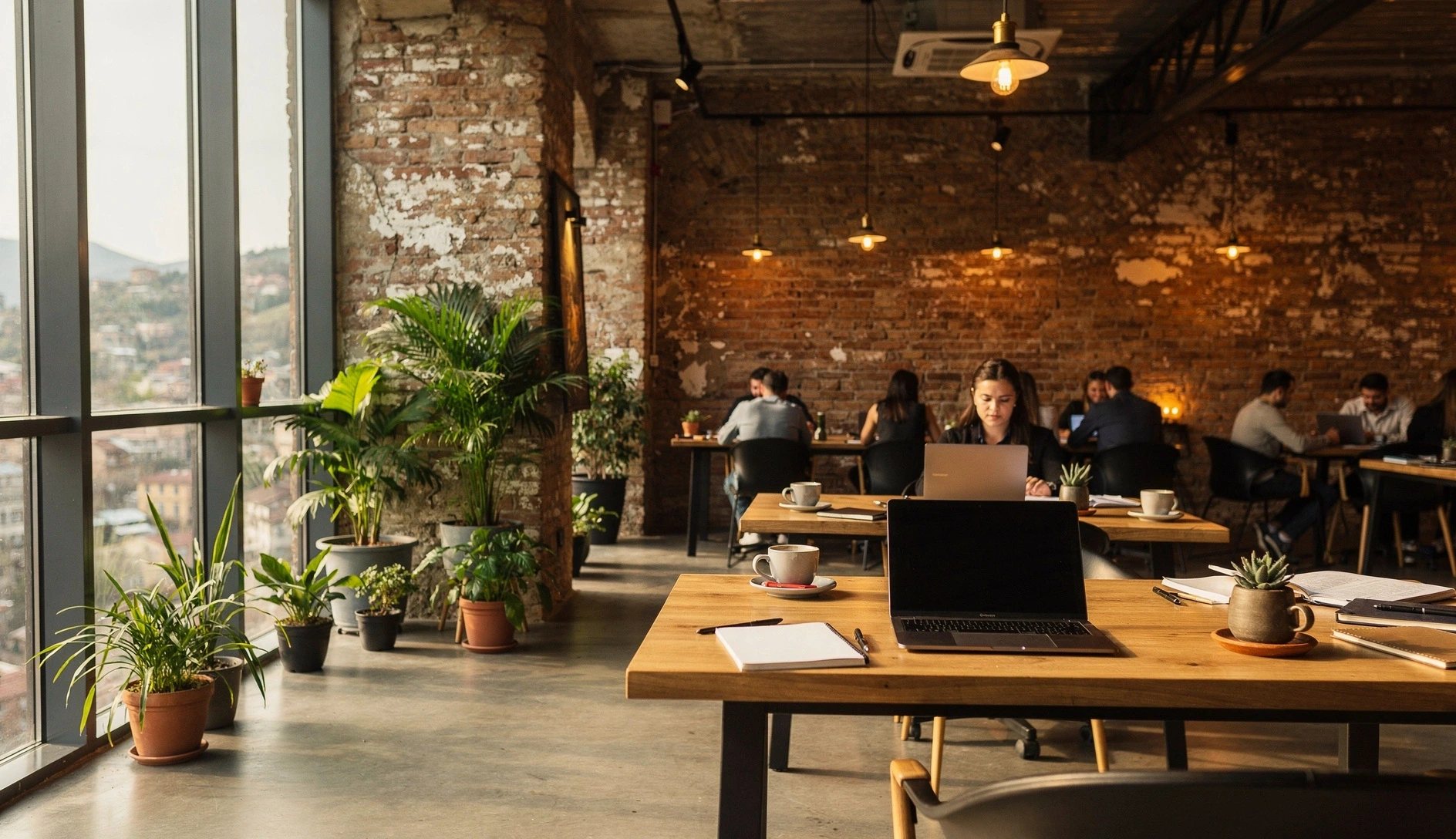
Tbilisi's coworking scene has exploded in the last three years. What used to be "Impact Hub and… that's about it" is now a proper ecosystem of workspaces ranging from sleek corporate offices to laid-back community hubs. But most online lists are just sponsored content dressed up as reviews, or they were written by someone who spent a single afternoon in each place.
This guide covers every serious coworking space in Tbilisi plus the cafés where you can actually get work done — with honest assessments of WiFi speeds, noise levels, pricing, and the stuff that matters when you're trying to hit a deadline at 3 PM on a Tuesday.
The Quick Version
- • Best all-around: Terminal (5 locations, 24/7, serious work environment)
- • Best community: Lokal (warm, social, great events, coliving option)
- • Best premium: D Block at Stamba Hotel (stunning space, La Marzocco coffee)
- • Best budget: Cafés in Vera and Vake (2-4 GEL coffee, free WiFi, no time pressure)
- • Day pass range: 25–50 GEL ($9–18). Monthly: 250–450 GEL ($90–165)
- • Skip: Fabrika courtyard (not a coworking space, just a courtyard with WiFi)
Do You Even Need a Coworking Space?
Honest answer: maybe not. Plenty of long-term remote workers in Tbilisi work from home full-time. Home fiber internet is 80–200 Mbps for 35–60 GEL/month, apartments are spacious, and nobody's going to judge you for wearing sweatpants at noon.
But there are real reasons to get a coworking membership:
✅ Get a Coworking Space If…
- • You're new and want to meet people fast
- • You need meeting rooms for client calls
- • Working from home kills your productivity
- • You want a legal business address
- • Power outages in your building are common
🏠 Work From Home If…
- • You're disciplined and self-motivated
- • Your apartment has reliable internet
- • You already have a social circle in Tbilisi
- • Budget is tight (saves 250+ GEL/month)
- • Your work hours don't overlap with Georgia's daytime
The most common pattern among long-term expats: work from home most days, buy a 10-day or flex pass for when you need a change of scenery or have meetings. Full monthly memberships make sense in your first 2-3 months when you're building a social network.
Coworking Spaces: The Complete Breakdown
Here's every serious coworking space in Tbilisi, compared honestly. Prices are current as of early 2026 but check websites — they adjust seasonally.
| Space | Area | Day Pass | Monthly | Hours | Best For |
|---|---|---|---|---|---|
| Terminal (5 locations) | Vake / Vera / Saburtalo / Marjanishvili | 30 GEL | 350–425 GEL | 24/7 | Serious, professional work |
| D Block (Stamba) | Vera | 40 GEL | 400–500 GEL | 24/7 (members) | Premium design, networking |
| Impact Hub | Marjanishvili (Fabrika) | 40 GEL | 300–450 GEL | 24/7 (members) | Community, events, startups |
| Lokal | Vera (Petriashvili) | 25 GEL | 250–400 GEL | 9am–10pm (M–F) | Social, community, coliving |
| Collider | Vake | 30 GEL | 300–400 GEL | 9am–9pm | Creative types, industrial vibe |
| Regus (Freedom Square) | City Center | Quote-based | Contract-based | 9am–6pm (reception) | Corporate clients, business address |
Terminal — The Reliable Workhorse
Terminal is the closest thing Tbilisi has to a WeWork — and that's a compliment. Five locations across the city, all open 24/7, all with fast internet, meeting rooms, and a professional atmosphere that actually makes you feel like working. This is where serious people get serious things done.
The Abashidze branch (Vake) is the flagship — spacious, corporate-feeling, the quietest of the bunch. Khorava (Vera) is the smallest and warmest, with a neighborhood café feel despite being a proper coworking space. Towers (Axis Towers) is the most impressive physically — floor-to-ceiling windows, city views, and every amenity you'd expect from a premium space. Marjanishvili (Agmashenebeli) opened more recently and sits in one of Tbilisi's most vibrant neighborhoods.
One genuinely useful perk: monthly members get a discount card for restaurants, gyms, shops, and tours around Tbilisi. And on Fridays, members can bring a non-member friend for free — a nice social touch.
Terminal Pro Tip
A monthly pass works at ALL Terminal locations. So you can switch based on your mood — Khorava when you want cozy, Towers when you need to impress someone in a meeting room, Abashidze when you need dead silence. That multi-location flexibility alone justifies the price over cheaper single-location spaces.
| Terminal Location | Neighborhood | Size | Vibe | Best Feature |
|---|---|---|---|---|
| Abashidze | Vake | Large | Corporate, quiet | Flagship — most options |
| Khorava | Vera | Small | Homey, friendly | Community feel, great chairs |
| Towers | Saburtalo (Axis) | Very large | Premium, impressive | City views, gym in building |
| Marjanishvili | Marjanishvili | Medium | Lively neighborhood | Walkable to everything |
| Pekini | Saburtalo | Medium | Residential area, quieter | Less crowded |
D Block — The Premium Play
D Block lives inside the grounds of Stamba Hotel, one of Tbilisi's most architecturally stunning buildings (a converted Soviet-era printing house). The Adjara Group built this space across three floors and it shows — the ground-floor reception has giant chandeliers, the first floor has floor-to-ceiling bookshelves giving library vibes, and the second floor is a proper bright office environment.
The standout: a La Marzocco espresso machine that members use freely (staff will teach you if you don't know how). There's also a bar inside the space, meeting rooms with Logitech smart boards, and terrace access to Stamba's courtyard. Box offices for small teams are available, and the "After Hours" package (7 PM–9 AM weekdays, full weekend access) is clever for anyone working US/Americas hours.
Everything is digitized — no keys, no cards, just an app to open doors and manage your membership. It's the kind of slick operation that makes other spaces feel amateur. The downside? It's the most expensive option in the city, and the first-floor dim lighting isn't for everyone.
Impact Hub — The Social Hub
Located inside Fabrika (the converted Soviet sewing factory that's become Tbilisi's unofficial social headquarters), Impact Hub is part of a global network of coworking spaces. The actual workspace is separate from Fabrika's bustling courtyard — quieter than you'd expect given the location.
Impact Hub's biggest draw is community. They host regular events, workshops, and networking sessions. The crowd leans startup/social enterprise, and you'll meet a genuine mix of locals and internationals. Unlimited tea and coffee included. The space itself is basic compared to D Block or Terminal — functional furniture, decent lighting, gets the job done.
Day pass holders get 9 AM–6 PM access; monthly members get 24/7. If you're building a startup or want regular events, this is your spot. If you just need a quiet desk, Terminal is better value.
Lokal — Best for Making Friends
Lokal is the warmest coworking space in Tbilisi, hands down. It's smaller and more intimate than the corporate options, with an outdoor area, free tea and coffee, and an event calendar that actually fills up — board game nights, crypto meetups, Georgian language lessons, movie screenings.
The first Friday of each month is free — try before you buy. The coliving option (rent a bedroom in the same building) is popular with newer arrivals who want instant community. The crowd skews younger and more social than Terminal.
Downsides: weekday-only hours (no weekends), smaller space means it can feel crowded when events are happening, and the internet isn't as rock-solid as Terminal's. But if your main goal is building a social network alongside getting work done, nothing beats Lokal.
The Social Network Strategy
Many expats start at Lokal or Impact Hub for 2–3 months to build their friend group, then switch to Terminal or working from home once they have an established social life. Smart move — you're paying for community, not just a desk.
Collider — The Creative Corner
Collider is a mid-size space in Vake with an industrial aesthetic — think neon signs, lots of plants, and that "we're a startup changing the world" energy. It's positioned as a community for professionals rather than just desk space, and they put effort into creating a networking-forward environment.
Good for creative freelancers, designers, and people who draw energy from a more visually stimulating environment. The vibe is more curated than Terminal but less corporate than D Block. Not 24/7 though, so night owls should look elsewhere.
Regus — The Corporate Fallback
Regus is an international chain, and the Tbilisi Freedom Square branch delivers exactly what you'd expect: professional, quiet, zero personality. Their pricing is contract-based (not transparent), and the vibe is "multinational office" rather than "Tbilisi coworking community."
The real reason to consider Regus: if you need a prestigious business address or access to their global network (3,000+ locations worldwide, airport lounges, etc.). For actual daily coworking, Terminal is better and cheaper. Monthly packages come with a Golden Card for Regus spaces worldwide — useful if you travel frequently.
Our Picks: Who Should Go Where
🎯 Just Arrived, Building a Network
Go to Lokal. The events, coliving option, and warm community will get you connected faster than any other space. Supplement with Impact Hub events.
💻 Serious Daily Worker
Go to Terminal. 24/7 access, multiple locations, reliable internet, professional environment. It's boring in the best way — you'll actually get work done.
💼 Running a Startup / Small Team
Go to D Block or Terminal. Both offer private offices. D Block's meeting rooms and smart boards are better for client presentations.
💰 Budget-Conscious
Work from home + café rotation. Home fiber for ~40 GEL/month beats any coworking membership. Buy Lokal day passes or café-hop when you need a change of scenery.
Work-Friendly Cafés: The Free Alternative
Let's be real: at least half the remote workers in Tbilisi skip coworking entirely and work from cafés. The café culture here is perfect for it — you can nurse a 5 GEL latte for three hours and nobody blinks. Most places have WiFi (10–30 Mbps, occasionally faster), power outlets are increasingly common, and many cafés seem to have designed their interiors specifically for laptop workers.

The key is knowing which neighborhoods and specific cafés work best. Not every pretty café has reliable WiFi or outlets.
Café-Working by Neighborhood
| Neighborhood | Work-Friendly Rating | WiFi Quality | Coffee Price | Notes |
|---|---|---|---|---|
| Vera | ⭐⭐⭐⭐⭐ | Good–Great | 5–8 GEL | Highest density of laptop-friendly cafés |
| Vake | ⭐⭐⭐⭐ | Good | 6–10 GEL | Larger spaces, more seating, slightly pricier |
| Marjanishvili | ⭐⭐⭐⭐ | Decent–Good | 5–8 GEL | Trendy, social, Fabrika courtyard nearby |
| Sololaki / Old Town | ⭐⭐ | Spotty | 6–12 GEL | Tourist-oriented, bad WiFi, limited outlets |
| Saburtalo | ⭐⭐⭐ | Decent | 4–7 GEL | Cheaper, fewer options, university area |
Café Etiquette in Georgia
Georgian cafés are remarkably chill about laptop campers. Nobody will ask you to leave or give you the stink eye after two hours with one coffee. But basic courtesy: order something every couple of hours, don't take a four-person table if you're solo during peak lunch, and tip 10–15% if you've been there all afternoon. It's called being a decent human.
What to Look For in a Work Café
Not all cafés are created equal for actual work. Before you settle in, check:
| Factor | What to Look For | Red Flag |
|---|---|---|
| WiFi | 15+ Mbps, no captive portal | Password changes daily, no speed test |
| Power outlets | European Type C/F at tables | Only one outlet behind the counter |
| Seating | Proper chairs with back support | Only bar stools or low sofas |
| Noise level | Background hum, no screaming kids | Next to a hookah lounge or playground |
| Lighting | Natural light or bright enough to read | Moody candlelit "atmosphere" |
| Hours | Open by 9 AM, closes after 8 PM | Opens at noon, turns into a bar at 6 |
The Third-Wave Coffee Scene
Tbilisi has developed a surprisingly strong specialty coffee culture. The third-wave cafés tend to be the most work-friendly because they attract the laptop crowd. Coffee quality is genuinely excellent — roasted locally, often single-origin, and baristas who know what they're doing. A flat white or pour-over runs 6–10 GEL ($2–4), which is cheap by any Western standard.
The scene clusters in Vera and Vake. Most places use local roasters, and the quality is high enough that coffee snobs from Berlin or Melbourne would approve. The Georgian coffee culture has moved well beyond Nescafé and Turkish coffee — though you'll still find both in traditional cafés.
The Internet Reality Check
Before you plan your entire work life around café WiFi, here's the honest truth about internet speeds across different work settings:
| Setting | Download Speed | Upload Speed | Video Calls? | Reliability |
|---|---|---|---|---|
| Home fiber | 80–200 Mbps | 40–100 Mbps | Flawless | 99%+ uptime |
| Coworking space | 50–150 Mbps | 20–80 Mbps | No issues | Very reliable |
| Good café | 15–40 Mbps | 5–15 Mbps | Usually fine | Can drop during peak hours |
| Average café | 5–15 Mbps | 2–5 Mbps | Risky | Unpredictable |
| Mobile 4G hotspot | 30–80 Mbps | 10–30 Mbps | Solid backup | Good in center |
The Backup Plan
Never rely solely on café WiFi for important calls. Get an unlimited mobile data plan from Magticom or Geocell (~25 GEL/month) and keep your phone ready to hotspot. Café WiFi dies at the worst moments — usually right when you're screen-sharing with a client.
Monthly Costs Compared
🏠 Work From Home
🏢 Coworking Space
☕ Café Hopper
The math is clear: working from home is by far the cheapest option. Café-hopping costs about the same as a mid-range coworking membership but with more variety and worse WiFi. Coworking makes the most financial sense if you value the social benefits, meeting rooms, and reliable infrastructure.
Best Neighborhoods for Remote Work
Where you live determines your daily work options. Here's how each area stacks up for remote workers specifically:
🏆 Vera
The remote worker's paradise. Terminal Khorava, Lokal, and D Block are all here or walking distance. Highest concentration of work-friendly cafés in the city. Quiet residential streets but walkable to everything. If you could only pick one neighborhood, this is it.
Vake
Terminal Abashidze and Collider are here. Larger, more upscale cafés with more seating. Green spaces for walking breaks (Vake Park). Slightly more expensive area but more spacious apartments. Good for people who want a quieter, greener environment.
Marjanishvili
Impact Hub / Fabrika and Terminal Marjanishvili. The most vibrant social scene — streets full of bars, restaurants, and street food. Great if you want to work and socialize in the same neighborhood. Can be noisy if you're sensitive to that.
Saburtalo
Terminal Towers (Axis) and Terminal Pekini. More residential, cheaper apartments, fewer café options. Good if budget is your primary concern and you plan to cowork rather than café-hop. University area, so some student energy.
Seasonal Considerations
| Season | Coworking Impact | Café Impact | Tip |
|---|---|---|---|
| Spring (Mar–May) | Normal occupancy | Terrace season opens | Best time — mild weather, outdoor seating |
| Summer (Jun–Aug) | Lower occupancy (many leave Tbilisi) | Hot — seek AC | Negotiate monthly discounts; some expats go to Bakuriani or Batumi |
| Autumn (Sep–Nov) | Peak — everyone returns | Perfect weather for terraces | Best month: October. Lock in your spot early. |
| Winter (Dec–Feb) | Steady — indoor work is the only option | Indoor-only, some get stuffy | Coworking value highest — warm, reliable, social |
Common Mistakes
❌ Committing to Annual Plans Day One
Try day passes at 3–4 spaces before signing up anywhere. Your ideal workspace depends on your work style, and you won't know until you've tested them. Most spaces offer trials or first-day-free deals.
❌ Confusing Fabrika with a Coworking Space
Fabrika's courtyard has WiFi and you can technically work there. But it's an outdoor social space, not a workplace. Impact Hub (inside Fabrika) is the actual coworking space. Don't plan your work day around courtyard tables.
❌ Skipping the Mobile Hotspot Backup
Café WiFi will fail during your most important call. Guaranteed. An unlimited Magticom data plan costs 25 GEL/month and has saved countless presentations. Treat it as essential work infrastructure, not optional.
❌ Only Working in Old Town
Old Town is beautiful but terrible for work. Tourist-oriented cafés, unreliable WiFi, steep cobblestone streets, and limited outlets. It's a neighborhood for exploring on weekends, not grinding through your to-do list on Tuesday.
❌ Paying for Coworking You Don't Use
Track your actual usage the first month. If you go fewer than 15 days/month, day passes or a flex plan are cheaper. Monthly memberships only make sense if you use the space most workdays.
❌ Ignoring Ergonomics
Working from a beautiful café looks great on Instagram. Your back disagrees after week three. If you're café-working regularly, invest in a portable laptop stand (sold at most electronics shops) and pick cafés with proper chairs, not couches.
Frequently Asked Questions
Can I use a coworking space address for my business registration?
Yes — Terminal, Regus, and D Block all offer virtual office / business address services. This is common for IE registrations. Terminal and Regus explicitly market this service. Expect to pay 50–100 GEL/month on top of your coworking membership.
Are coworking spaces open on weekends?
Terminal is 24/7 including weekends. D Block's "After Hours" package covers weekends. Impact Hub's monthly members get 24/7 access. Lokal is weekdays only. If weekend work is important to you, make sure your space covers it — or just café-hop on Saturdays.
Do any spaces offer dedicated desks (not just hot desks)?
Terminal offers dedicated desks at a premium (~425 GEL/month). D Block's "Box" offices function similarly for teams. Most other spaces are hot-desk only. If leaving your setup overnight matters to you, ask about dedicated desk options specifically.
Is the coffee in Tbilisi cafés actually good?
Surprisingly, yes. Tbilisi has a strong third-wave coffee scene with local roasters producing excellent single-origin beans. The specialty cafés in Vera and Vake rival anything you'd find in Berlin or Melbourne. Expect to pay 5–8 GEL ($2–3) for a well-made flat white or pour-over. The days of Nescafé being the only option are long gone.
How do Tbilisi coworking prices compare to other cities?
Very competitive. A monthly hot desk that costs 300–400 GEL ($110–145) in Tbilisi would run $200–350 in Lisbon, $300–500 in Bangkok's premium spaces, and $400–700 in Berlin. The value for money is excellent — you're getting professional infrastructure at a fraction of Western European prices.
Written by The Georgia Expats Team
We've tested every major coworking space in Tbilisi and spent countless hours in cafés across the city — sometimes for research, sometimes just because we needed decent WiFi and a flat white. This guide reflects years of daily experience, not a weekend visit.
Last updated: February 2026.
Related Articles
Working Remotely from Georgia
Visas, 1% tax, internet speeds, timezone strategy, and the full digital nomad setup.
Tbilisi Neighborhoods Guide
Where to live in Tbilisi — every neighborhood compared for expats.
Internet & Phone in Georgia
Home fiber, mobile data, SIM cards, and staying connected.
Cost of Living in Tbilisi
Real monthly budgets for every spending level.