A power of attorney in Georgia is one of those documents you barely think about until you really need it. Then suddenly it becomes the hinge that decides whether you can close your IE from abroad, buy property without flying in, let someone collect documents for you, or deal with a bank that insists on original signatures. The document itself is usually not the hard part. The hard part is getting the chain right: who is authorized, how narrow or broad the authority should be, whether it needs a notary, whether it needs apostille, and whether Georgia needs a translation before anybody will touch it.
That is where people waste time. They sign something too vague. Or too broad. Or they notarize it in the wrong country and forget apostille. Or they translate first when the real bottleneck is authentication. Or they hand a general power of attorney to someone they mostly trust and only later realize just how much authority they gave away.
This guide is the blunt version: when a Georgian power of attorney is useful, when it is overkill, how to do it inside Georgia, how to do it from abroad, and how to keep it tight enough that it solves the problem without creating a bigger one.
Fast Summary
- • A power of attorney lets someone act for you in Georgia for a specific task or a wider set of legal acts
- • For most expats, a specific PoA is safer than a general one
- • If signed in Georgia, you usually handle it through a Georgian notary
- • If signed abroad, it often needs notarization, apostille or legalization, then Georgian translation
- • The document is commonly used for bank work, property deals, IE/LLC admin, police certificates, and closing things after you leave
- • The most common failure is not the wording itself but the document chain around it
What a power of attorney actually is
A power of attorney is a legal authorization allowing one person to act on behalf of another. In practice, it means you appoint a representative to sign, submit, collect, request, or manage something for you.
That sounds simple, but in Georgia the use cases spread across a lot of high-friction admin work: property transfers, business registration, company changes, bank paperwork, police certificates, apostille chains, document pickup, and post-exit cleanup after you have already left the country.
The key point: a power of attorney is not magical. It does not override every in-person requirement. It cannot replace biometric checks where the law requires your face, fingerprints, or physical presence. But for many boring legal and administrative actions, it is the difference between solving a problem in a day and flying back to Tbilisi for something stupid.
Important distinction
A power of attorney gives authority to act. It does not guarantee the underlying institution will accept a badly drafted, badly authenticated, expired, or overbroad document. Banks, registries, and notaries care about form as much as substance.
When expats in Georgia usually need one
Most foreigners do not need a power of attorney in their first month. They need one later, when life gets more complex or more remote.
| Use Case | Why People Use PoA | Typical Risk |
|---|---|---|
| Closing an IE or LLC from abroad | Lets a lawyer or trusted person handle House of Justice filings for you | Wrong authentication chain delays closure |
| Property purchase or sale | Useful when buyer or seller is not physically in Georgia | Authority drafted too broadly or too vaguely |
| Bank account opening or bank admin | Some banks accept PoA for remote handling, especially business matters | Bank-specific wording requirements |
| Police certificate or document retrieval | Lets someone in Georgia apply and collect documents for you | Proxy chain takes longer than the document itself |
| Company setup from abroad | Allows a local representative to register or amend structures | Corporate scope not precise enough |
| General admin pickup and filing | Saves you pointless in-person visits for routine submissions | Using PoA where a simple authorization would do |
Brutal truth: the document becomes most valuable exactly when you are tired, abroad, or on a deadline. Which is why you should think about it before the crisis, not after.

Specific vs general PoA: almost everyone should choose specific
This is the biggest judgment call. A general power of attorney gives very broad authority. A specific power of attorney authorizes a clearly defined task or limited set of tasks.
Most expats should default to specific. Not because Georgia is uniquely dangerous, but because broad authority is almost never necessary for routine admin.
Specific PoA
Best for closing an IE, collecting a certificate, opening a defined bank account, signing a property document, or filing one named application. Safer, cleaner, easier to justify.
General PoA
Potentially useful for spouses, long-term counsel, or complex business affairs. Also the fastest way to give away more authority than you intended.
If the real task is “close my IE and collect the confirmation,” then write that. If the task is “represent me before the bank regarding account opening and related account documents,” then write that. If the task is “handle all my affairs in Georgia,” stop and ask yourself why you are doing that.
The sensible rule
Give the smallest authority that still solves the problem. You can always issue a second PoA later. Undoing a badly drafted broad one is the more annoying path.
What should actually be written in it
A usable power of attorney is not just “I authorize X to act for me.” Good ones answer the questions a cautious clerk, bank officer, or notary will immediately ask.
| Element | Why It Matters | Practical Note |
|---|---|---|
| Your full legal details | Identity must match passport exactly | Use the same spelling as your passport transliteration |
| Representative details | The authority attaches to a specific person | Include passport or ID details if possible |
| Exact scope of authority | This is what institutions actually read | Name the task, office, and type of document where possible |
| Right to sign / submit / collect | Many disputes come from missing verbs | If they need to sign forms or receive originals, say so clearly |
| Validity period | Helps control risk and reassure institutions | A shorter practical window is often better than open-ended authority |
| Notarial/authentication layer | Makes the paper usable in the real world | This is what often gets missed abroad |
If a bank, law firm, or registrar has its own preferred wording, use it. There is no medal for composing your own elegant legal prose if the receiving side rejects it for not mentioning the exact action they require.
How to do it in Georgia
If you are physically in Georgia, the process is usually pretty manageable. You go to a Georgian notary, prove identity with your passport, confirm what authority you are granting, and sign before the notary.
This is often the cleanest route because the document is born inside the legal system where you plan to use it. That cuts out a lot of cross-border nonsense.
Step 1: Define the task first
Step 2: Bring the right identity documents
Step 3: Sign before the notary
The easiest places for foreigners are usually notaries around or inside Public Service Hall in Tbilisi, because they are used to dealing with expat paperwork and adjacent translation needs. For English speakers, this is usually the least painful route.
How to do it from abroad
This is where the document stops being simple and becomes a chain-management exercise. If you are outside Georgia, the core logic is usually:
- prepare the right text, ideally based on the receiving institution's requirement,
- sign it before a notary in your current country,
- get apostille or legalization if required there,
- courier it to Georgia if originals are needed,
- translate into Georgian and notarize the translation if Georgia-side use requires it.
That is the broad pattern. The exact order can shift based on what the receiving authority wants, but the big mistake is treating notarization and apostille like interchangeable decorations. They are not.
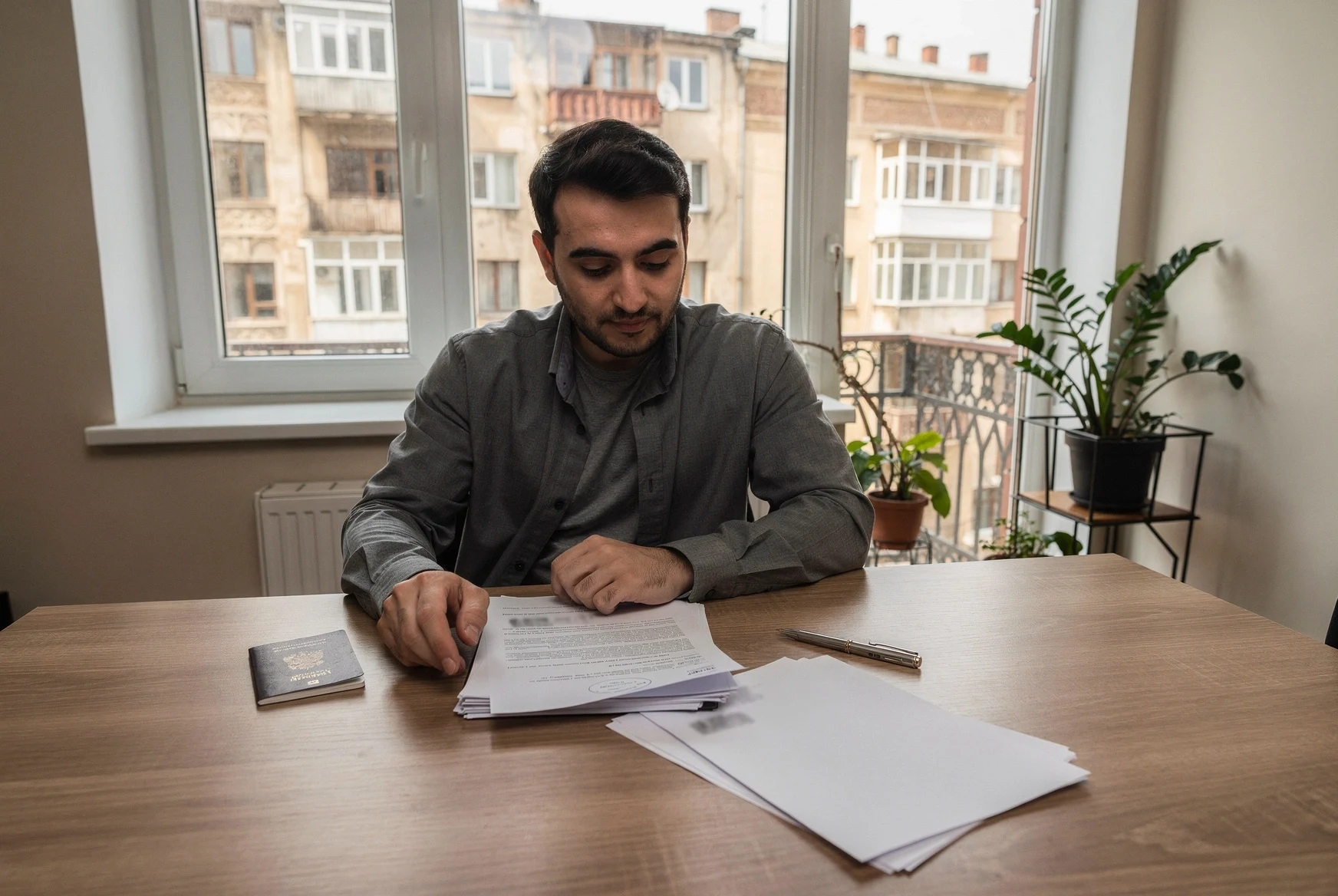
If you are abroad, the real deadline starts earlier
Do not count only the Georgian processing time. Count notary booking, apostille waiting time in your country, courier transit, Georgian translation, and the chance the receiving side asks for a corrected draft.
Apostille, translation, and legalization: the order that trips people up
This is the part people hate because it feels needlessly procedural. Unfortunately, the procedure is the whole point.
If you sign a power of attorney abroad and plan to use it in Georgia, Georgia will usually care that the foreign notarial act is properly authenticated for use there. In many cases that means apostille in the country where the notarization happened. After that, Georgia may require a Georgian translation, and that translation may itself need notarial handling locally.
If the country is outside the apostille framework or the relevant use case involves legalization instead, the chain changes. That is exactly why you should confirm the end-package requirement before you start spending money.
| Situation | Usually Sensible Order | What Goes Wrong |
|---|---|---|
| PoA signed in Georgia for use in Georgia | Georgian notary, then direct use | Bad drafting, wrong scope, wrong person |
| PoA signed abroad for use in Georgia | Foreign notarization, apostille/legalization if needed, then Georgian translation | Skipping authentication or translating the wrong draft |
| PoA tied to broader document chain | Match the receiving office's exact demand | Assuming one universal sequence works everywhere |
If you are already dealing with document authentication, read the full apostille guide. The PoA itself is often easy. The authentication chain is what turns it into a week.
How much it usually costs
The cost depends on where the document is made, how urgently you need it, whether you need translation, and whether a lawyer is drafting or just a notary is certifying a prepared text.
| Cost Layer | Typical Reality | Comment |
|---|---|---|
| Georgian notary fee | Usually modest for routine PoA work | Varies by scope and whether drafting help is needed |
| Translation + notarized translation | Additional Georgia-side cost | Commonly needed for foreign-origin paperwork |
| Foreign notary + apostille | Country-dependent and often the bigger cost | Can easily outweigh the Georgia-side fee |
| Lawyer or service-company handling | Case-dependent | Worth it when the transaction value is high or timing is tight |
| Courier | Often forgotten | Originals still matter in many workflows |
If you are buying property, restructuring a company, or authorizing bank access, the expensive part is rarely the notary stamp itself. The expensive part is doing the whole thing twice because the first draft was wrong.
When it is worth paying a lawyer for the drafting
Not every PoA needs lawyer involvement. A simple certificate pickup or standard administrative filing usually does not justify legal theater.
But some cases do:
- high-value property transactions,
- company ownership changes,
- broad bank authority,
- cross-border closure of an IE or LLC with tax consequences,
- anything where a rejected filing would cost more than the drafting fee.
The right way to think about it is not “can I save money by avoiding a lawyer?” The right question is “what is the downside if the wording fails?” On a small document pickup, who cares. On a property sale or company matter, save the false economy for another day.
DIY is usually fine
Document collection, basic filings, one-off admin tasks, narrow representation where the receiving office can provide template wording.
Pay for help
Property, company law, banking authority, or anything cross-border where rejection would create real delay or financial exposure.
Five mistakes that cause most PoA problems
- Making it too broad. People sign a general PoA because it sounds convenient, then regret the scope later.
- Making it too vague. The representative is named, but the powers are not specific enough for the receiving institution.
- Using the wrong identity details. One spelling mismatch can start stupid arguments.
- Skipping the authentication chain abroad. A notarized foreign document is not automatically usable in Georgia.
- Starting too late. Courier time and apostille time are real time, not theoretical time.
The safest workflow
Ask the receiving institution what exact authority and form they want. Then draft around that. Not around generic internet advice, and not around whatever random old template a friend used for another problem.
Most common real-world scenarios
Closing your IE or LLC after leaving Georgia
This is the classic expat case. You already left. Revenue Service and House of Justice still need attention. A narrow PoA naming closure, filing, and document collection powers is usually the right move. Pair it with our Leaving Georgia guide so you handle the tax and bank side in the right order.
Getting a Georgian police certificate from abroad
Very common. The certificate can be fast, but the PoA can become the real bottleneck. If that is your use case, also read the police clearance certificate guide.
Buying or selling property remotely
This is where you stop improvising. Property PoAs need proper drafting and careful limits. Do not hand this one to a half-organized acquaintance and hope for the best.
Remote banking or company setup
Possible in some cases, but banks and corporate registries can be picky. Always check the exact wording they want before you notarize anything.
A practical checklist before you sign
Before signing in Georgia or abroad
Quick FAQ
Can someone do everything for me in Georgia with a PoA?
No. Some actions still require your personal presence or biometric data. A PoA solves many legal-admin tasks, not every task.
Is a general PoA better because it covers more?
Usually no. Broader is not automatically better. Specific is safer and often more acceptable because the purpose is obvious.
If I notarize it abroad, can I immediately use it in Georgia?
Often not. You may still need apostille or legalization in the country where it was notarized, and then Georgian translation for Georgia-side use.
Do I need a lawyer?
Not always. For narrow admin tasks, often no. For property, company law, bank authority, or high-value remote work, often yes.
Final word
A power of attorney in Georgia is not complicated in theory. It gets complicated when people try to be too broad, too cheap, too late, or too casual about the authentication chain. If you keep the authority narrow, match the wording to the task, and respect the notary-apostille-translation sequence where required, the document does its job well.
The trick is not to treat it as generic paperwork. Treat it as a task-specific tool. Done that way, it saves flights, delays, and a lot of pointless stress.
Written by The Georgia Expats Team
We have spent enough time in Georgian notary offices, Public Service Hall queues, and cross-border document chains to know that the paper itself is rarely the real issue. This guide is built around the failure points expats actually hit.
Last updated: March 2026.
Related Articles
Bureaucracy & Documents
Public Service Hall, notaries, apostilles, and the wider admin machine.
Apostille in Georgia
How the authentication chain works when a document needs to travel.
Leaving Georgia
How to close businesses, accounts, and residency without loose ends.
Police Clearance Certificate
A common from-abroad use case where PoA is often the real bottleneck.