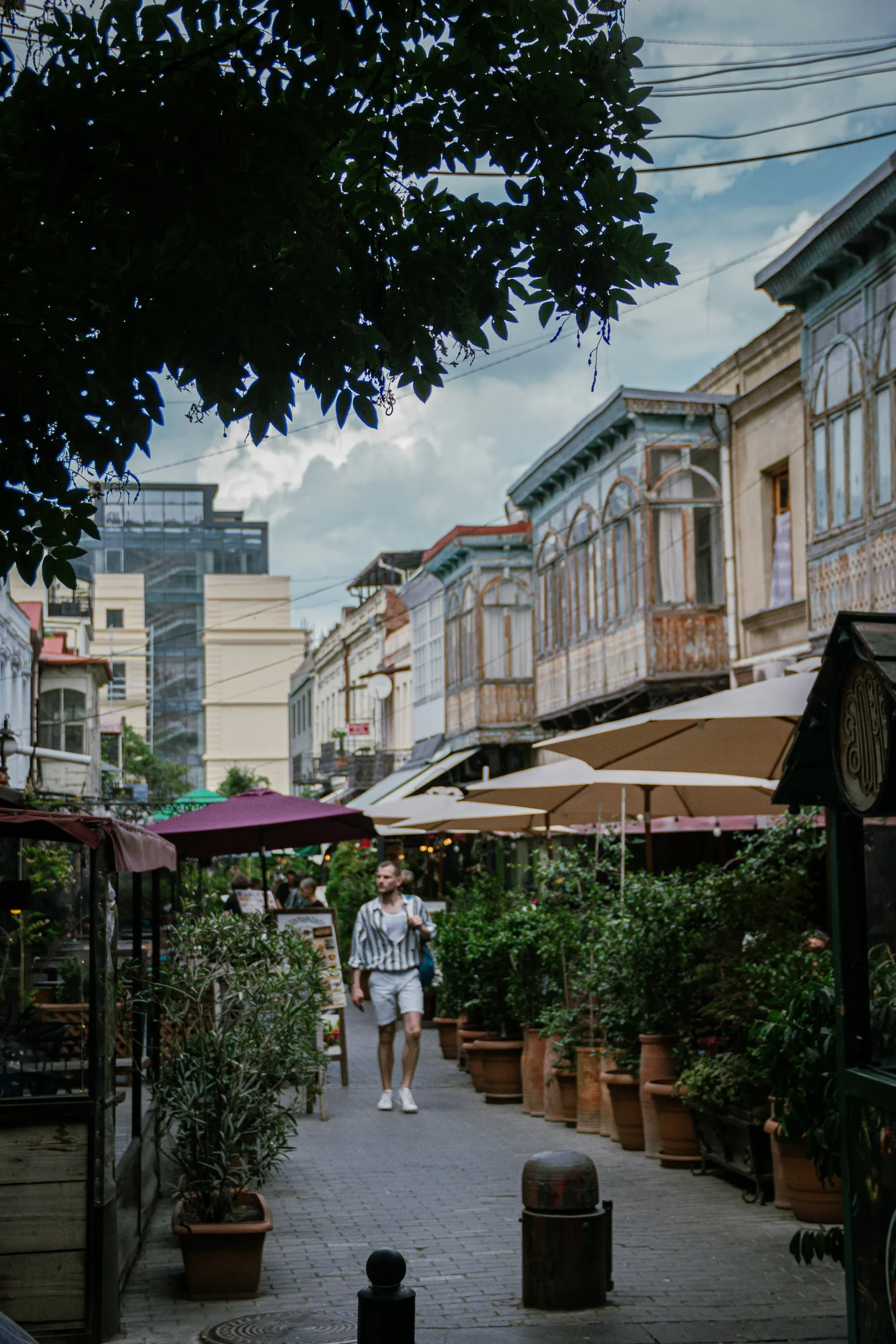
"Is Georgia safe?" is probably the most-googled question about this country, right after "Is Georgia in Europe or Asia?" (answer: both, sort of, depending on who you ask at a dinner party). And the short answer is: yes, Georgia is remarkably safe — safer than most Western European capitals by the numbers. But that doesn't mean there's nothing to watch out for.
After years of living in Tbilisi, my sense of personal safety here is higher than anywhere else I've lived. I walk home at 2 AM without thinking about it. I leave my laptop at a café table to use the bathroom. I've never been pickpocketed, mugged, or scammed. But Georgia has its own set of risks that don't show up in crime statistics — chaotic traffic, stray dogs, occasional political unrest, and a drinking culture that can catch newcomers off guard.
This guide isn't a sanitized "Georgia is so safe and wonderful!" pitch. It's an honest breakdown of what's actually dangerous, what's overhyped, and what you should genuinely worry about.
Crime: The Numbers vs. Reality
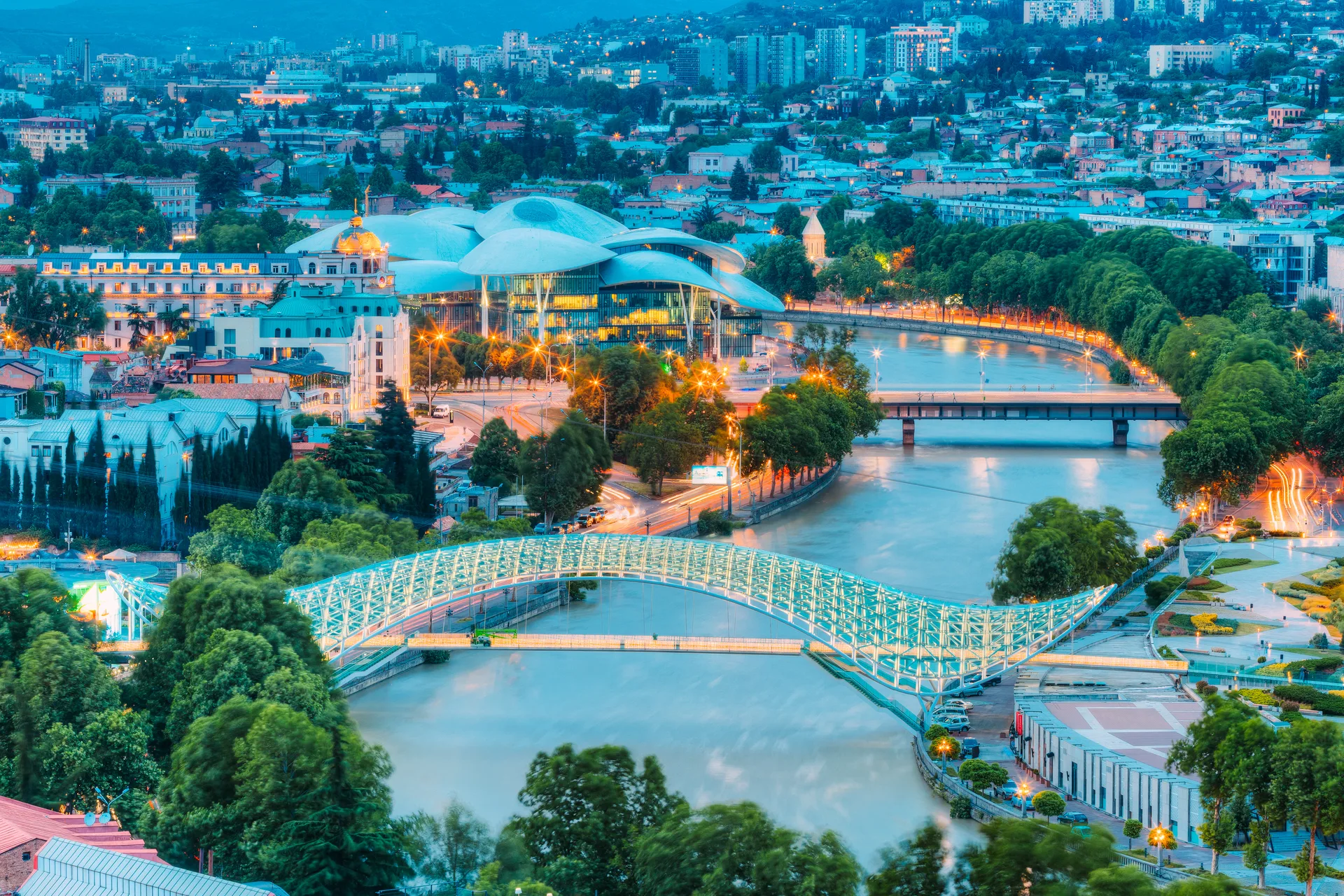
Let's start with data. According to Numbeo's 2026 Crime Index, Georgia ranks among the top 25 safest countries globally. Tbilisi's safety index of 74.5 puts it ahead of cities like Berlin, Paris, Rome, and Barcelona. Violent crime is genuinely rare — muggings, armed robbery, and assault happen at rates that would make most European capital cities envious.
Petty crime exists but is lower than you'd expect for a country at Georgia's income level. Pickpocketing is uncommon even in tourist-heavy areas like Old Tbilisi. Home burglaries happen but are rare in apartment buildings with concierges (most Soviet-era and new builds have them). Car theft has dropped dramatically since the early 2000s when Georgia cracked down on organized crime.
| Crime Category | Numbeo Rating | Level |
|---|---|---|
| Overall crime | 23.5 | Low |
| Violent crime (assault, robbery) | 22.8 | Low |
| Mugging / robbery risk | 21.8 | Low |
| Property crimes (vandalism, theft) | 30.7 | Low |
| Car theft | 15.2 | Very Low |
| Corruption & bribery | 35.9 | Low |
| Drug-related problems | 32.5 | Low |
| Hate crime risk (race, gender, religion) | 26.1 | Low |
The honest caveat: Crime has been perceived as increasing over the past 5 years (Numbeo: 54.3, "Moderate"). This tracks with anecdotal experience — Tbilisi's rapid growth as a digital nomad hub has brought more petty crime, particularly in tourist areas. It's still very safe by any reasonable standard, but the Georgia of 2018 was even safer than the Georgia of 2026.
For Context
Georgia's crime index (23.5) is lower than Portugal (30.3), Italy (46.2), France (52.8), and the UK (46.1). It's comparable to Japan (22.0) and Switzerland (21.7). Source: Numbeo, February 2026.
What's Actually Dangerous in Georgia
Here's the thing most safety guides won't tell you: the biggest risks in Georgia aren't crime. They're traffic, alcohol, and geography. Let me rank the actual threats by how likely they are to affect you.
| Risk | Threat Level | Notes |
|---|---|---|
| Traffic & driving | High | By far the #1 actual danger for expats |
| Stray dogs | Moderate | Generally friendly but pack behavior can be unpredictable |
| Alcohol culture | Moderate | Social pressure to drink heavily at supras |
| Natural hazards (earthquakes, floods) | Low-Moderate | Seismic zone; flash floods in spring |
| Petty crime | Low | Increasing but still uncommon |
| Violent crime | Very Low | Rare; almost never targets foreigners |
| Terrorism | Very Low | No significant history |
Traffic: Georgia's Real Killer
I'm not being dramatic. Traffic is the single most dangerous thing you'll encounter in Georgia. The country has one of the highest road fatality rates in Europe — roughly 10-12 deaths per 100,000 people annually, compared to 3-4 in Western Europe. The WHO has flagged Georgia's road safety as a serious public health issue.
Why is it so bad? A combination of factors: aggressive driving culture, poorly maintained roads outside Tbilisi, limited enforcement of traffic laws, a car fleet full of old vehicles with questionable safety ratings, and — let's be honest — a cultural attitude toward rules that is, shall we say, flexible.
As a Pedestrian
Cars don't reliably stop at crosswalks. Assume every car will run the light. Look both ways on one-way streets (yes, really). Sidewalks are often broken, blocked by parked cars, or nonexistent. Walking on roads is sometimes unavoidable.
As a Driver
Expect overtaking on blind corners, cars driving at you on your side of the road, cows in the highway, and a general attitude that lane markings are decorative. Mountain roads are narrow and often lack guardrails. Night driving outside cities is genuinely hazardous.
Practical Tip
Use Bolt (ride-hailing) for city transport. It's cheap ($1-3 for most trips in Tbilisi) and removes the stress of navigating Georgian traffic yourself. For road trips, hire a local driver — they know the roads, the hazards, and the unwritten rules. Budget around $50-80/day for a driver + car.
Scams & Petty Crime
Georgia is refreshingly low on tourist scams compared to, say, Istanbul, Barcelona, or Bangkok. There's no "friendship bracelet" scam, no one's slipping drugs into your drink (well, not in any systematic way), and taxi drivers generally won't take you on a "scenic route." But a few things are worth knowing:
| Scam / Risk | How It Works | How to Avoid |
|---|---|---|
| Taxi overcharging | Street-hail taxis quote inflated prices to foreigners, especially at the airport | Always use Bolt or Yandex Go — prices are fixed and metered |
| Currency confusion | Shops/restaurants "accidentally" charge in the wrong denomination or give wrong change | Learn to recognize GEL bills, count your change, pay by card where possible |
| Rental scams | Fake apartment listings on social media or classifieds; requests for deposits before viewing | Never send money before seeing the apartment. Use established platforms or agents |
| ATM skimming | Rare but reported at standalone ATMs in tourist areas | Use ATMs inside bank branches. Prefer Bank of Georgia and TBC machines |
| Overpriced restaurants | A few tourist-trap restaurants near Abanotubani charge 3-4x normal prices | Check Google reviews. If a restaurant in Old Town has no prices on the menu, walk out |
| Wine bar hustle | Friendly locals invite you to a specific bar where drinks are wildly overpriced | Very rare in Georgia (more common in Turkey/Eastern Europe). If it feels off, trust your gut |
The bottom line on scams: They exist but are unsophisticated and easy to avoid. If you've travelled in Southeast Asia, Latin America, or Southern Europe, Georgia will feel like easy mode.
Neighborhoods: Where's Safe, Where's Less Safe
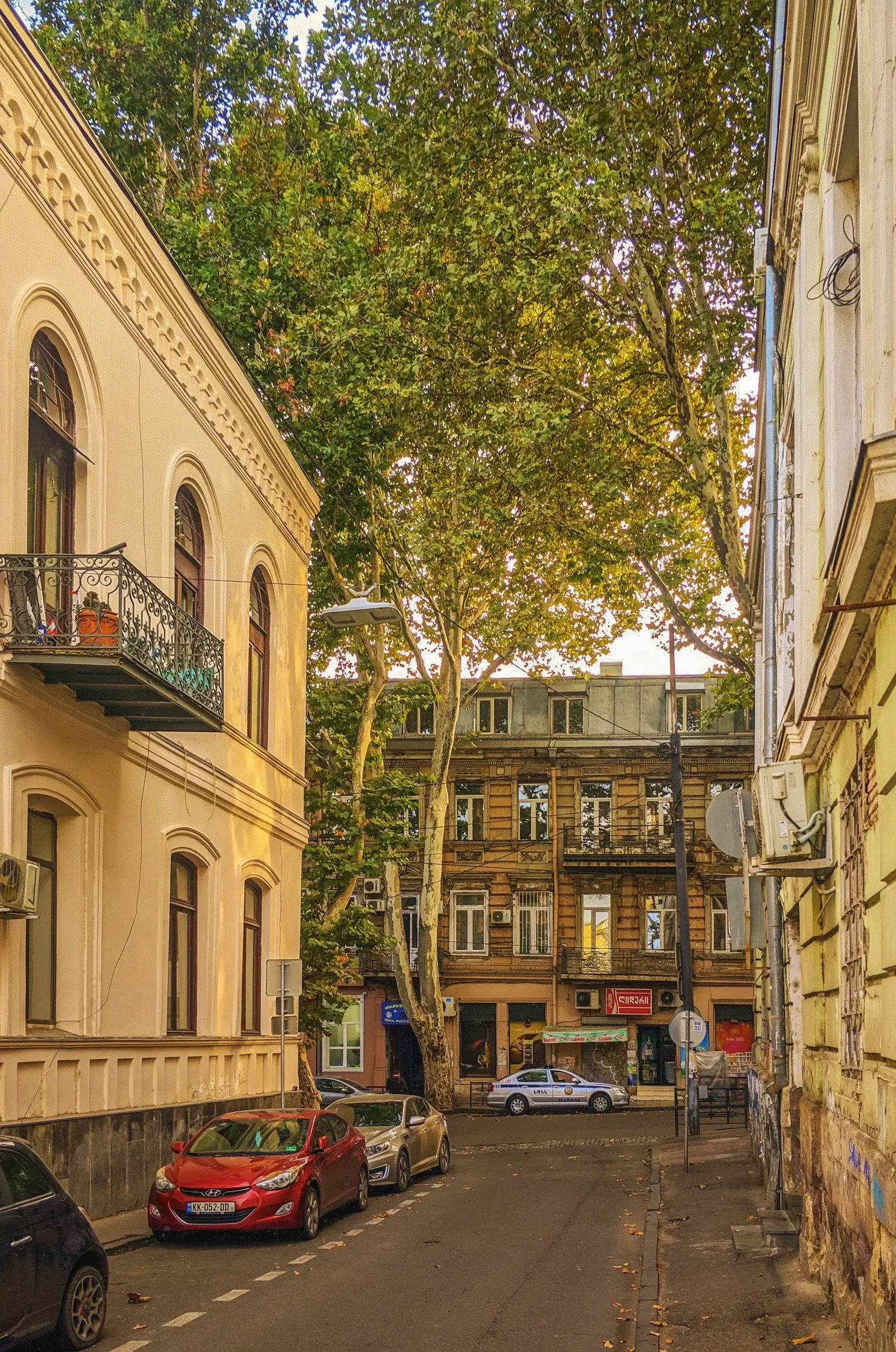
Tbilisi doesn't have "dangerous neighborhoods" in the way that many Western cities do. There are no areas where you'll be told "don't go there after dark." That said, some areas are rougher around the edges, and a few spots warrant extra awareness.
| Area | Safety Level | Notes |
|---|---|---|
| Vake / Vera / Saburtalo | Very safe | Residential, well-lit, where most expats live |
| Old Tbilisi / Sololaki | Very safe | Tourist area, well-patrolled, vibrant day and night |
| Rustaveli / Liberty Square | Safe (note below) | Main avenue; protest area near Parliament — avoid gatherings at night |
| Marjanishvili / Aghmashenebeli | Safe | Increasingly trendy, good restaurants, some rougher side streets |
| Didube / Station Square | Moderate | Transport hubs — busier, grittier, keep valuables close |
| Gldani / Varketili / outskirts | Moderate | Soviet-era suburbs; safe but less polished, fewer English speakers |
Night Safety
Tbilisi is genuinely safe at night by global standards. Central areas like Vake, Old Tbilisi, and Rustaveli (away from protests) are well-lit and busy late into the evening. The biggest nighttime risk is tripping on broken sidewalks in the dark, not crime. That said, basic common sense applies: don't wave cash around, don't walk through unlit parks alone at 3 AM, and keep your phone secure in crowded areas.
Political Situation & Protests
Georgia has been in international headlines since late 2024 due to ongoing political protests. If you're following the news, you might be wondering whether it's safe to be here. The short answer: yes, with one specific precaution.
Protests have been a regular feature of Georgian political life for decades. The current demonstrations — centered around Rustaveli Avenue near Parliament — take place almost exclusively at night. During the day, Tbilisi functions completely normally. Shops are open, restaurants are full, public transport runs on schedule.
What to Know
Protests are confined to the area around Parliament on Rustaveli Avenue, typically after dark. They've been largely peaceful since the initial days in late 2024. Tourist areas, restaurants, and daily life are unaffected. No travel advisories have issued "do not travel" warnings.
What to Do
Avoid Rustaveli Avenue near Parliament after dark if you want to stay completely clear. Don't photograph individual protesters or police without permission. Follow your country's travel advisory for updates. There is zero anti-foreigner sentiment — tourists are welcomed warmly.
Most embassies maintain a "Level 1: Exercise Normal Precautions" or "Level 2: Exercise Increased Caution" advisory for Georgia — the same level as countries like France, Spain, and Italy. The U.S. State Department specifically notes the occupied regions (South Ossetia and Abkhazia) as off-limits, which applies to everyone regardless of the political situation.
Safety for Women & Solo Travelers
Georgia is generally very safe for women and solo travelers — consistently ranked among the safest options in the region. Street harassment is less common than in many Mediterranean or Middle Eastern countries. Georgian culture places a high value on hospitality and respect for guests.
That said, Georgia is still a socially conservative country in many ways. A few things women and solo travelers should be aware of:
Generally Positive
- • Walking alone at night in central Tbilisi is safe
- • Georgian hospitality extends strongly to foreign women
- • Catcalling is less common than Southern Europe
- • Large solo female traveler community in Tbilisi
- • Bolt rides are safe and trackable
Be Aware Of
- • Unwanted attention can happen, especially outside Tbilisi
- • "Friendliness" from men can be persistence in disguise
- • Cover shoulders in churches (scarves often provided)
- • Rural areas are more conservative than Tbilisi
- • Drink spiking is rare but not unheard of in nightlife
Practical Tip
If someone's attention is unwelcome and they won't take the hint, mentioning that your "husband" is nearby usually works instantly. Georgian men tend to respect the concept of a woman "belonging to" another man — problematic as that framing is, it's an effective tool when you need it. In nightlife venues, staff are generally helpful if you feel uncomfortable.
LGBTQ+ Safety
This is the one area where Georgia's safety record gets complicated. Georgian society is deeply conservative on LGBTQ+ issues, heavily influenced by the Orthodox Church. While homosexuality is legal and anti-discrimination laws exist on paper, the social reality is different.
In 2021, counter-protesters violently disrupted a planned Pride march in Tbilisi, attacking journalists and activists. This was an extreme event, but it reflected broader societal attitudes. Public displays of affection between same-sex couples can attract unwanted attention, particularly outside Tbilisi.
| Aspect | Reality |
|---|---|
| Legal status | Homosexuality is legal; anti-discrimination protections exist |
| Same-sex marriage | Not recognized; constitutional ban passed in 2024 |
| Social acceptance | Low overall; Tbilisi's creative/nightlife scene is more accepting |
| Safety for tourists | Discreet couples won't face issues; open PDA may attract negative attention |
| Nightlife | Several LGBTQ+-friendly bars and clubs exist in Tbilisi (Bassiani, Café Gallery, etc.) |
The honest assessment: LGBTQ+ travelers can visit and live in Georgia safely, but discretion is advisable. Tbilisi's underground nightlife scene (especially around techno clubs) is welcoming, and many young Georgians hold progressive views. But this is not Amsterdam or Berlin, and the gap between urban and rural attitudes is significant.
Stray Dogs
You'll notice them within your first hour in Georgia: stray dogs are everywhere. Tbilisi has an estimated 40,000-60,000 street dogs. The city runs a catch-neuter-release program (look for ear tags), and most strays are well-fed by locals, restaurants, and shops. Georgians generally love their street dogs.
Most strays are genuinely docile and friendly — many have basically become community pets. But they're still animals with territorial instincts, and a few situations warrant caution:
Low Risk
- • Daytime in urban areas (dogs are used to people)
- • Dogs with ear tags (vaccinated, neutered)
- • Individual dogs lying in the shade
- • Dogs near restaurants (well-fed, calm)
Higher Risk
- • Packs at night (especially outskirts, construction sites)
- • Dogs guarding territory (junkyards, rural properties)
- • Mountain trail dogs (shepherd dogs protecting livestock)
- • Running or cycling past a sleeping pack
If a Dog Approaches Aggressively
Don't run — it triggers chase instinct. Stand still, avoid eye contact, let the dog sniff and lose interest. If a pack is blocking your path, calmly change direction. Picking up a rock (or pretending to) works — Georgian strays have learned to associate the gesture with danger. Consider a rabies pre-exposure vaccine if you plan to hike in rural areas.
Natural Hazards
Georgia sits in a seismically active zone. Earthquakes happen regularly, though major ones are rare. The last significant quake affecting Tbilisi was in 2002 (magnitude 4.8). The city is built to moderate earthquake standards, but older Soviet buildings weren't designed with modern seismic codes in mind.
| Hazard | Risk Level | When / Where |
|---|---|---|
| Earthquakes | Low-Moderate | Minor tremors occasionally; major ones rare |
| Flash floods | Moderate | Spring/summer; the 2015 Tbilisi flood killed 20+ people |
| Landslides | Low-Moderate | Mountain roads in spring; can block highways |
| Extreme cold | Low | Tbilisi winters are mild (-5°C worst); mountain regions much colder |
| Extreme heat | Low-Moderate | July-August in Tbilisi: 35-40°C, high humidity |
Occupied Territories: South Ossetia & Abkhazia
Georgia has two Russian-occupied breakaway regions: South Ossetia and Abkhazia. These areas have been outside Georgian government control since the wars in the early 1990s and 2008. This is a real security consideration, but one that's easy to manage: just don't go there.
Hard Rule
Do not enter South Ossetia or Abkhazia from the Russian side. Georgian law considers this illegal border crossing. Even entering from the Georgian side is risky and not recommended. These areas are outside the reach of your embassy, your insurance, and your phone network. The "borderization" line — where Russian forces have placed barbed wire and signs — occasionally shifts, creating a real risk for hikers near the boundary.
For 99.9% of expats, this has zero impact on daily life. The occupied territories are far from Tbilisi and off all tourist routes. The only practical concern is if you're planning to hike in regions bordering South Ossetia (near Gori or in Truso Valley), where you should stay on marked trails and be aware of your proximity to the occupation line.
Drugs & Georgian Law
Georgia's drug laws deserve a special mention because they can catch expats off guard. The country has strict anti-drug legislation, and enforcement is inconsistent but sometimes severe.
| Substance | Legal Status | Penalty |
|---|---|---|
| Marijuana | Personal use decriminalized (2018) | No penalty for personal consumption; sale/cultivation is criminal |
| Other drugs | Illegal | Fines to imprisonment; repeat offenses: 5-12 years |
| Drug testing | Police can order tests | Testing positive can result in fines (~$300-500) even without possession |
The key gotcha: While marijuana use was decriminalized by the Constitutional Court in 2018, the legal situation is murkier than it appears. Police can still stop you and request a drug test, and testing positive for anything beyond marijuana can lead to administrative fines or criminal charges. The nightlife scene (especially around clubs like Bassiani) has an active drug culture, but enforcement actions do happen. As a foreigner, being caught up in a drug charge is a fast track to deportation and a ban on re-entry.
Emergency Contacts & Practical Resources
For a comprehensive breakdown of what to do in specific emergency scenarios — medical, legal, natural disasters, and more — see our dedicated emergencies guide.
| Service | Number | Notes |
|---|---|---|
| General emergency | 112 | Works for police, fire, ambulance; operators speak English |
| Police | 022 241 41 41 | Non-emergency; also 112 |
| Ambulance | 112 or 103 | Response time: 10-20 min in Tbilisi, longer outside |
| Tourist police | +995 32 242 42 42 | English-speaking; helpful with theft reports, lost documents |
| Patrol police | Flag down any patrol car | Generally professional and helpful with foreigners |
Georgian Police
Georgia's police force was completely reformed after 2003 and is now one of the least corrupt in the region. Traffic police and patrol officers are generally professional. Tourist police officers speak English and are genuinely helpful. If you need to file a report, visit a Public Service Hall — the process is surprisingly efficient.
Insurance & Hospitals
As of January 2026, medical insurance is mandatory for visitors to Georgia. For expats, both local (GPI, Aldagi, ARDI) and international plans work. Emergency rooms won't turn you away — you pay after treatment. Keep your insurance card and emergency numbers saved in your phone. See our healthcare guide for details.
Common Mistakes Expats Make
😤 Trusting Crosswalks
The painted lines mean nothing to many Georgian drivers. Always make eye contact with drivers before crossing. Never assume a car will stop.
🍷 Underestimating Supra
Georgian toasting culture involves many glasses of wine. It's OK to sip instead of draining the glass. Nobody will actually be offended — despite what they tell you.
📱 Not Using Bolt
Street-hailing taxis is how you get overcharged. Bolt rides are metered, tracked, and consistently cheap. Download it before you arrive.
💰 Carrying Too Much Cash
Card payment is widely accepted in Tbilisi. Keep cash for markets and taxis only. There's no need to carry large amounts.
🗺️ Ignoring Border Zones
The occupation line near South Ossetia isn't always clearly marked. When hiking near Gori or in border regions, stay on established trails and ask locals about current conditions.
🐕 Petting Strange Dogs
Most strays are sweet, but not all. Let the dog approach you first. Avoid dogs that are guarding territory, eating, or in a pack at night. Shepherd dogs in the mountains are working — not pets.
Frequently Asked Questions
Is Tbilisi safe to walk around at night?
Yes, central Tbilisi is safe at night. Areas like Vake, Old Tbilisi, Vera, and Marjanishvili are well-lit and busy. Use basic common sense: avoid unlit side streets, keep your phone secure, and don't walk through parks alone in the early hours. The main risk is uneven sidewalks, not crime.
Is Georgia safe for solo female travelers?
Generally very safe. Georgia consistently ranks well for female solo travel in the region. Tbilisi has a large community of solo female travelers and digital nomads. Take standard precautions — use Bolt for late-night rides, tell someone your plans for rural trips, and trust your instincts in social situations.
Should I be worried about the political protests?
No, unless you actively seek them out. Protests are concentrated near Parliament on Rustaveli Avenue at night. The rest of the city functions normally. No major travel advisory has issued a "do not travel" warning. Simply avoid the protest area after dark and you'll never encounter them.
Do I need to worry about terrorism in Georgia?
Georgia has no significant history of terrorism. The country is not a target and has effective security services. This is not a meaningful concern for visitors or residents.
How does Georgia compare to other popular expat destinations?
Safer than Thailand, Mexico, Colombia, Turkey, and most of Southeast Asia by crime statistics. Comparable to Portugal and Japan. Less safe only in traffic statistics. For personal crime risk, Georgia is one of the safest expat destinations globally — it's just not well-known enough for people to realize that.
Written by The Georgia Expats Team
Based on years of living in Tbilisi, navigating Georgian streets (and traffic), and helping fellow expats separate real risks from overblown fears. We walk home at 2 AM and leave laptops at café tables — that tells you everything about how safe we feel here.
Last updated: February 2026.
Related Articles
Tbilisi Neighborhoods Guide
Find the right area for your lifestyle and budget.
Healthcare in Georgia
Hospitals, insurance, pharmacies, and the mandatory insurance rule.
Daily Life in Tbilisi
SIM cards, apps, transport, groceries, and everything practical.
Moving to Georgia: Complete Checklist
Everything you need to plan your relocation.