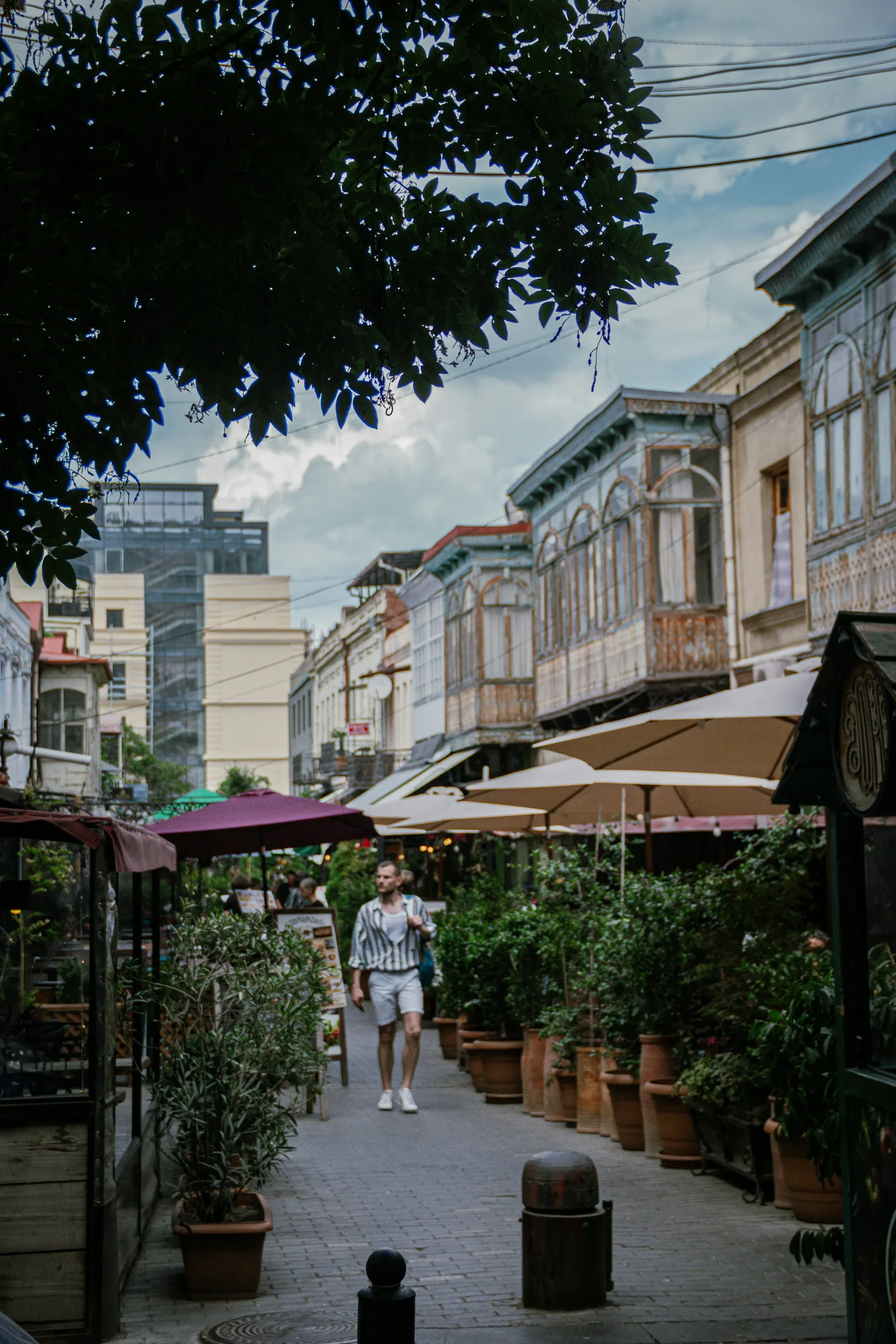
Picking a neighborhood in Tbilisi can feel overwhelming. The city doesn't organize itself the way most European capitals do — there's no clear "good side" and "bad side." Instead, you get a patchwork of wildly different vibes within a few blocks of each other. Soviet apartment towers next to art nouveau mansions. A hipster coffee shop beside a Soviet-era hardware store.
After living in Tbilisi for years, here's what we've learned: the "best" neighborhood depends entirely on what kind of life you want — your daily life will feel completely different depending on where you are. A 25-year-old digital nomad and a family with kids will thrive in completely different parts of the city.
This guide covers nine neighborhoods where expats actually live, with honest pros and cons, real rent prices, and the kind of unfiltered detail you won't find on real estate agency sites.
Quick Comparison
Before diving into each neighborhood, here's how they stack up at a glance.
| Neighborhood | 1-Bed Rent | Metro | Best For | Vibe |
|---|---|---|---|---|
| Vake | $450–700 | No | Families, long-term expats | Upscale, leafy, European |
| Vera | $400–600 | Nearby | Creatives, digital nomads | Bohemian, walkable, cozy |
| Saburtalo | $300–500 | Yes | Budget-conscious, students | Modern, practical, convenient |
| Old Town (Sololaki) | $400–650 | Nearby | Short-term, culture lovers | Historic, touristy, charming |
| Marjanishvili | $350–550 | Yes | Nightlife, young professionals | Hip, artsy, up-and-coming |
| Chugureti | $300–500 | Yes | Culture seekers, foodies | Multicultural, gritty, real |
| Mtatsminda | $350–550 | No | Views, quiet living | Steep, scenic, residential |
| Avlabari | $250–400 | Yes | Budget, cultural immersion | Local, authentic, affordable |
| Didi Dighomi | $250–400 | No | Families on a budget, space | Suburban, new builds, quiet |
Rent prices fluctuate seasonally
Prices spike from May to October when short-term tourists flood the market. If you're apartment hunting, winter months (November–March) give you more negotiating power and better deals. Prices listed are for long-term leases (6+ months).
Vake — The Expat Default
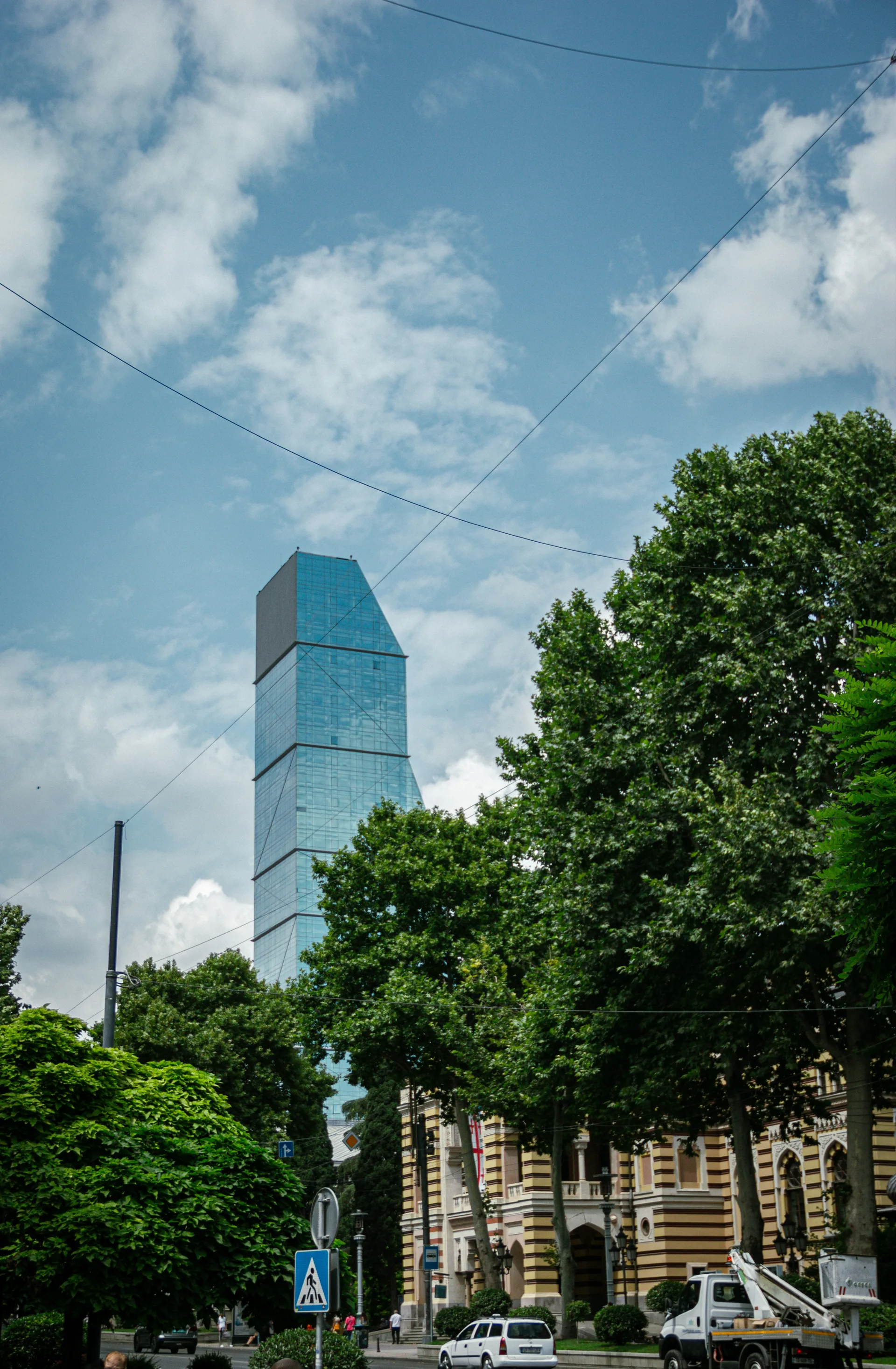
Ask any expat where to live and "Vake" will be the first answer. There's a reason for that — it's the most polished, infrastructure-rich neighborhood in Tbilisi. Broad tree-lined avenues, genuine sidewalks (a luxury in this city), good restaurants, and the closest thing to a Western European suburb you'll find in Georgia.
Chavchavadze Avenue is the main artery, lined with cafes, banks, pharmacies, and international restaurants. Vake Park is massive and genuinely beautiful — one of the best urban parks in the Caucasus. The residential streets branching off the main road are quiet, with a mix of renovated Soviet blocks and newer construction.
The expat density is high. You'll hear English (and Russian) in most cafes. International schools are here or nearby. If you have kids, Vake is probably where you'll end up.
The catch: No metro station. Vake relies entirely on buses, taxis, and walking. During rush hour, Chavchavadze Avenue becomes a parking lot. Getting from Vake to the other side of the river can take 40+ minutes by car during peak times. Also, Vake knows it's popular — landlords charge accordingly, and some renovations are cosmetic at best.
✅ Pros
Best infrastructure in Tbilisi. Great parks. Walkable main street. International restaurants and schools. Large expat community. Quiet residential streets.
❌ Cons
No metro. Brutal rush-hour traffic. Highest rent prices. Can feel like an expat bubble. Some apartments are overpriced for what you get.
Vera — The Creative's Favorite
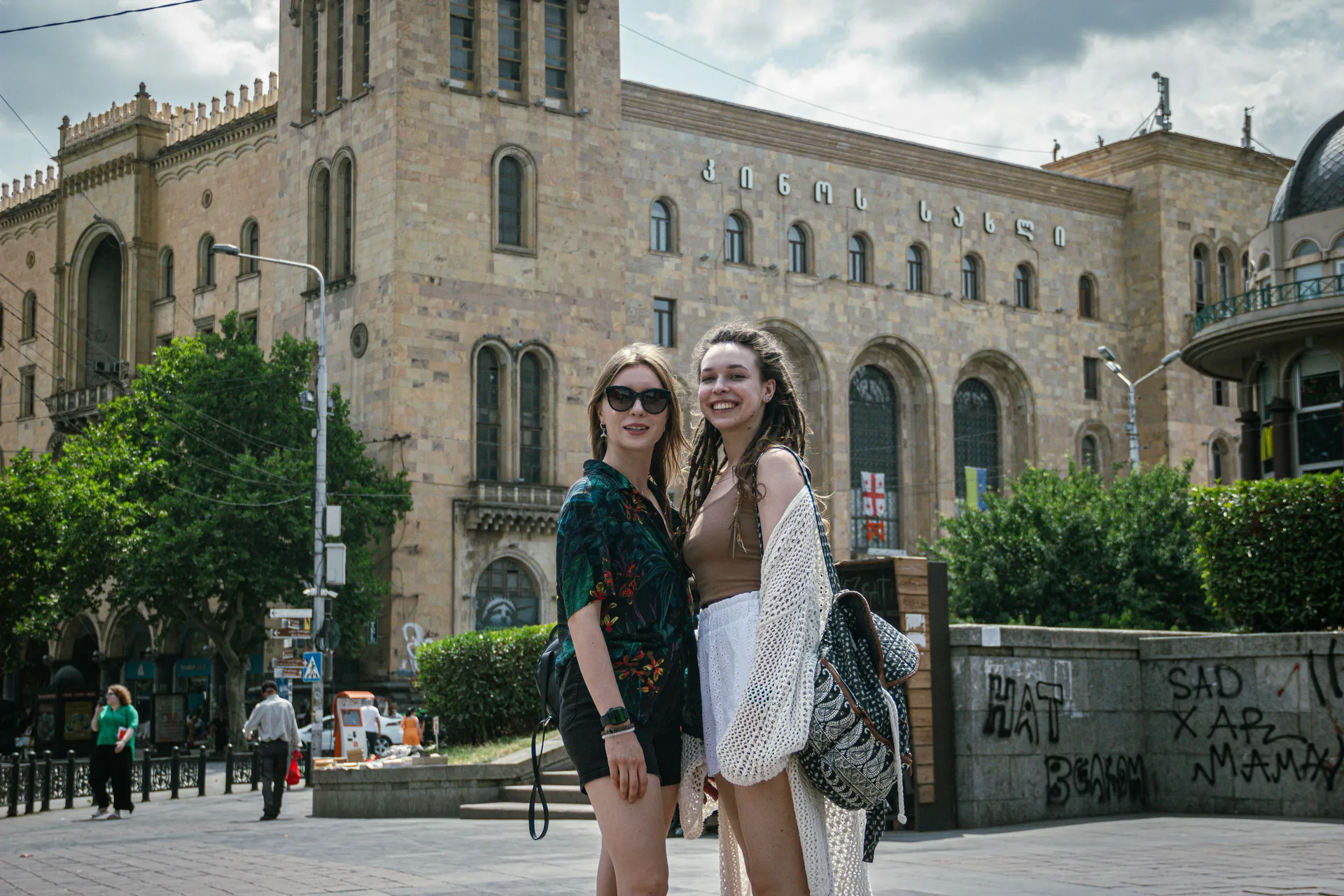
Vera is the neighborhood people fall in love with. It's compact, walkable, and has a specific charm that's hard to describe until you've spent a few days wandering its narrow streets. Low-rise buildings with wooden balconies, courtyards with grapevines, tiny cafes that don't bother with English menus.
It sits between Vake and the city center, which is its superpower — you can walk to Rustaveli Avenue in 10 minutes or to Vake Park in 15. The neighborhood has exploded with coffee shops and wine bars in recent years, but it still feels residential and calm once you step off the main streets.
Vera is where you'll find a lot of freelancers, artists, and digital nomads who've been in Tbilisi long enough to move past the tourist areas. The community is tight-knit. If you work from cafes, you'll start recognizing faces within a week.
The catch: Vera is small. The apartment supply is limited, and good places get snapped up fast. Many buildings are old and charming but also old and falling apart — check the plumbing, heating, and electrical before signing anything. Street parking is a nightmare. And while it's walkable, the hills can be steep.
✅ Pros
Beautiful architecture. Walkable to everything. Best cafe scene. Quiet but central. Strong creative community. Close to Rustaveli metro.
❌ Cons
Limited apartment supply. Old buildings with maintenance issues. Steep hills on some streets. No large supermarkets (small shops only). Parking is terrible.
Saburtalo — Best Value for Money
Saburtalo won't make your Instagram feed, but it might be the smartest choice for your wallet. This is where practicality beats aesthetics. The neighborhood is dominated by Soviet-era apartment blocks interspersed with newer construction, shopping malls, and a metro line that actually works.
The math is simple: you get 30–40% more apartment for your money compared to Vake, and you get metro access that Vake doesn't have. Tbilisi Mall, City Mall, and Carrefour are all in or near Saburtalo. Medical clinics, gyms, pharmacies — everything you need for daily life is within walking distance.
Saburtalo is popular with students (Technical University and several private universities are here) and expats who've done the Vake thing and realized they were paying a premium for the address. The upper part of Saburtalo (toward Bagebi and Nutsubidze) gets quieter and greener, with actual houses and small gardens.
The catch: It's not pretty. Let's be honest — Soviet apartment blocks aren't winning any design awards. The main roads (Pekini Avenue, Vazha-Pshavela Avenue) are busy and loud. The neighborhood lacks the walkable charm of Vera or the green polish of Vake. But if you prioritize function over form, it's hard to beat.
✅ Pros
Most affordable central area. Metro access. Major shopping malls. Good apartment supply (easy to find places). Medical facilities. Newer buildings available.
❌ Cons
Aesthetically uninspiring. Busy, noisy main roads. Less walkable than central neighborhoods. Fewer cafes and restaurants. Not as many expats (can be a pro).
Old Town (Sololaki) — Beautiful but Complicated
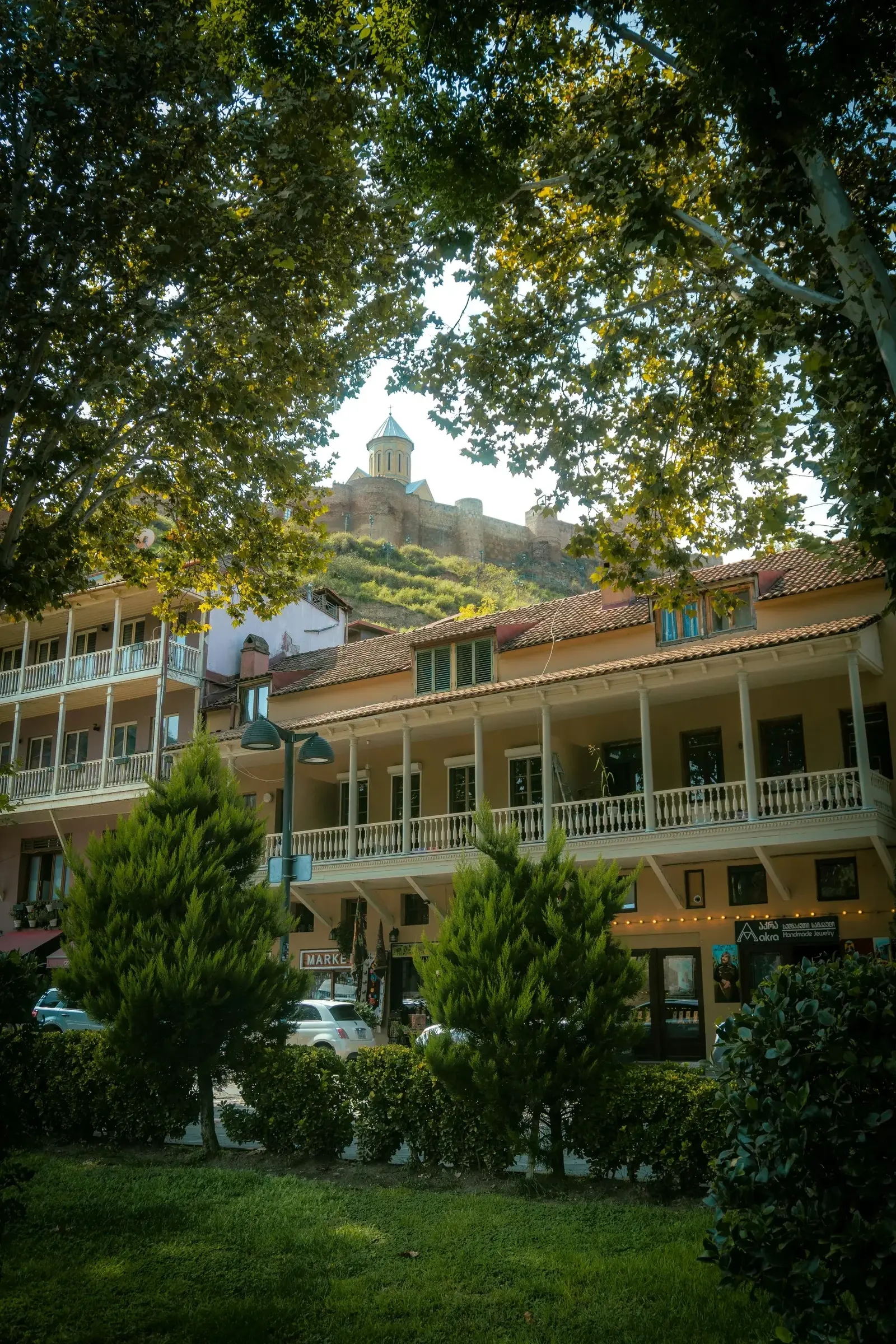
Sololaki and the surrounding Old Town area is where Tbilisi puts on its best face. Narrow winding streets, colorful houses with carved wooden balconies, sulfur baths, and views up to Narikala Fortress. It's the part of the city that makes people book a one-way ticket.
Living here full-time is a different story. The Old Town is small, touristy, and infrastructure-light. Grocery options are limited to small corner shops. The streets are cobblestone (great for photos, less great for carrying groceries). Many buildings are genuinely old — we're talking 19th century — and while they're atmospheric, they come with 19th-century plumbing and wiring.
That said, some expats love it precisely because it feels nothing like a modern European city. The sulfur baths are a short walk away. The restaurant scene around Shardeni and Erekle II streets is excellent. And the area around Leselidze Street has improved massively in recent years with new cafes and restored buildings.
The catch: Tourist noise (especially in summer). Old, unrenovated buildings behind pretty facades. Limited grocery shopping. Prices have crept up as the area gentrifies. Not ideal for long-term practical living unless you really value the atmosphere over convenience.
✅ Pros
Most beautiful area in Tbilisi. Historic charm. Great restaurants and bars. Walking distance to landmarks. Unique living experience. Rapidly improving infrastructure.
❌ Cons
Tourist crowds and noise. Old, sometimes unreliable infrastructure. Limited grocery options. Higher prices than you'd expect. Not practical for long-term daily life.
Marjanishvili — The Up-and-Comer
Five years ago, Marjanishvili was mostly known for its indoor market and a few Georgian restaurants. Now it's the neighborhood Tbilisi's creative class is actively building. Fabrika — a converted Soviet sewing factory turned hostel, coworking space, and courtyard hangout — kicked off the transformation, and the surrounding blocks have followed.
The area around Marjanishvili metro station and up toward Aghmashenebeli Avenue is dense with art galleries, specialty coffee shops, wine bars, and restaurants that lean more modern-Georgian than tourist-Georgian. There's real energy here — the kind of neighborhood that's changing month to month.
Rent is still reasonable compared to Vake and Vera, partly because the surrounding streets are a mix of renovated and unrenovated. You can find a great apartment on a charming street, and two blocks over it looks like it hasn't been touched since 1975. That's the trade-off of an area in transition.
The catch: Uneven quality block by block. Some streets feel polished and safe, others are rough. The neighborhood is still figuring out what it wants to be, which means construction and noise. The market area can be chaotic. And while it's metro-connected, getting to Vake or Saburtalo takes more effort.
✅ Pros
Best nightlife and bar scene. Metro access. Fabrika coworking hub. Aghmashenebeli Avenue is gorgeous. Lower rent than Vake/Vera. Young, international crowd.
❌ Cons
Inconsistent quality between streets. Construction and renovation noise. Some areas feel rough. Can be noisy at night near bars. Rapidly changing (could gentrify fast).
Chugureti — The Melting Pot
Chugureti is the neighborhood people discover after they've already been in Tbilisi a while. Wedged between Marjanishvili and Avlabari, it's historically been one of the city's most multicultural districts — Armenian, Azerbaijani, Iranian, and Kurdish communities have lived here for generations, and you can still feel that mix in the food and architecture.
Today, Chugureti is where you'll find some of Tbilisi's best Middle Eastern food, vintage clothing shops, and the kind of low-key bars that don't need Instagram accounts to stay full. The Dry Bridge flea market is right here. Bassiani, the legendary techno club, is at the edge of the district inside a former Soviet swimming pool. The energy is different from Marjanishvili's polished hipster vibe — Chugureti is grittier, more authentic, and doesn't try to impress anyone.
Rent is noticeably cheaper than neighboring Marjanishvili, despite being basically next door. The building stock is mixed — some renovated gems hidden among unremarkable Soviet blocks and older houses. Metro access is good (Marjanishvili and 300 Aragveli stations border the area).
The catch: The aesthetic is "work in progress." Some streets are genuinely rough. The nightlife proximity that makes it exciting also means noise. Infrastructure lags behind the trendier neighborhoods — fewer coworking spaces, fewer English-speaking services. You're trading polish for personality.
✅ Pros
Excellent Middle Eastern and multicultural food scene. Cheaper than Marjanishvili. Metro access. Dry Bridge market. Real cultural character. Bassiani and nightlife nearby.
❌ Cons
Rough around the edges. Fewer expat-oriented services. Mixed building quality. Can feel sketchy on side streets at night. Less greenery than west-side neighborhoods.
Mtatsminda — The Quiet Escape
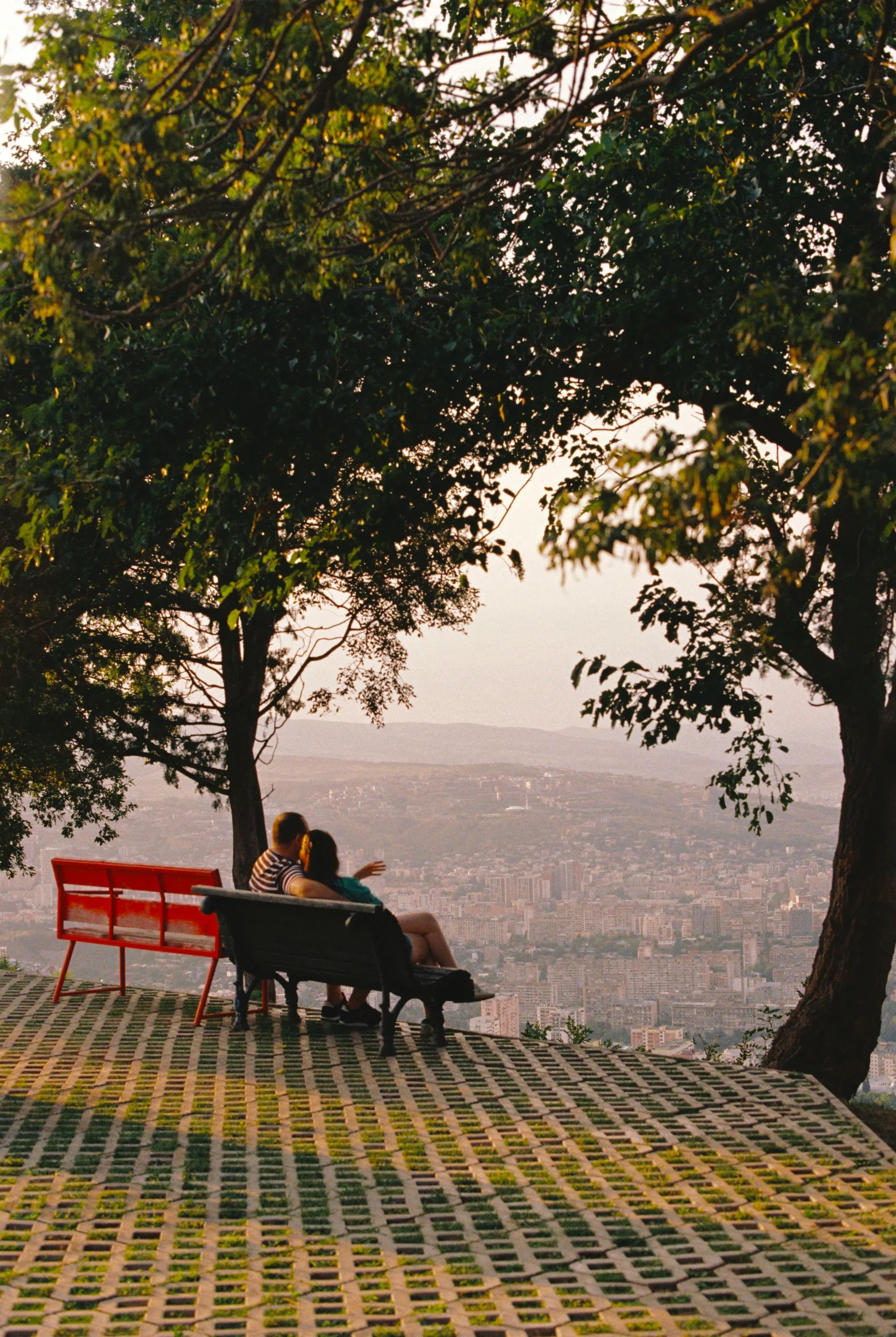
Mtatsminda is the hill that rises behind the city center, crowned by the TV tower and Mtatsminda Park's ferris wheel. Living on the slopes means trading convenience for views. And the views are genuinely spectacular — sweeping panoramas of the entire city, the Kura River, and on clear days, the Caucasus mountains in the distance.
The neighborhood is residential and quiet. Streets are steep and narrow, lined with old houses that range from beautifully restored to gently crumbling. There's a funicular railway that connects the top to Rustaveli Avenue, which is charming but not reliable enough to be your daily commute.
Mtatsminda works for people who want peace and don't mind the workout of living on a hill. Writers, remote workers who don't need to be anywhere specific, couples without kids — these are the people who thrive here. The area around Griboedov Street and the upper reaches near the Pantheon are particularly nice.
The catch: The hills are no joke. Coming home with groceries is a cardio session. No metro — you're dependent on taxis or the funicular. Limited restaurants and shops compared to Vake or Vera. Some streets are poorly lit at night. Winter ice on steep cobblestones is genuinely treacherous.
✅ Pros
Best views in Tbilisi. Very quiet and peaceful. Beautiful old houses. Funicular to city center. Low tourist presence. Fresh air above the city smog.
❌ Cons
Extremely steep streets. No metro. Limited shops and restaurants. Poorly lit at night. Icy and dangerous in winter. Carrying anything uphill gets old fast.
Avlabari — The Budget Pick
Avlabari sits on the east bank of the Kura River, directly across from the Old Town. It's the neighborhood you see in photos — the colorful cliff-side houses with balconies hanging over the river. Sameba (Holy Trinity Cathedral), the largest cathedral in Georgia, dominates the skyline.
For expats, Avlabari's appeal is the price. You can rent a decent one-bedroom apartment for $250–400, which is 30–50% less than Vake. The metro stops here (Avlabari station), and you're a short walk or bus ride from the city center. The local markets are cheap and authentic — this is where you buy your churchkhela and spices.
The neighborhood feels more "Georgian" than the expat enclaves on the west side of the river. Fewer English menus, more elderly neighbors who'll offer you wine from their balcony. If you want cultural immersion on a budget, Avlabari delivers.
The catch: Less infrastructure than the west side. Fewer cafes and coworking spaces. Some buildings are in rough shape. The expat community is much smaller — you'll need to cross the river for social events. Streets can feel empty and dark at night in the residential blocks away from the main road.
✅ Pros
Lowest rent in central Tbilisi. Metro access. Authentic Georgian atmosphere. Great views. Cheap local markets. Walking distance to Old Town.
❌ Cons
Limited cafes and coworking. Smaller expat community. Some rough buildings. Quieter at night. Less English spoken. Fewer restaurant options.
Didi Dighomi — The Suburban Alternative
Didi Dighomi is the answer to a question most newcomers don't think to ask: "What if I don't want to live in central Tbilisi at all?" Located on the northwestern edge of the city, Didi Dighomi is Tbilisi's fastest-growing residential district — a landscape of brand-new apartment towers, wide roads, and the kind of space that simply doesn't exist in the center.
The appeal is straightforward. For $250–400/month you get a modern apartment in a new building with an elevator that works, central heating that doesn't involve a Soviet-era gas boiler, and a parking space included. Try getting any of that in Vera for under $600. There are several large supermarkets (Carrefour, Goodwill), schools, clinics, and an increasing number of restaurants and cafes catering to the growing residential population.
Didi Dighomi has quietly become popular with families — both expat and Georgian — who want space, modern construction, and affordability. Several private schools and sports academies have set up here. The area around Tbilisi Sea (reservoir) offers green space and walking paths that central Tbilisi can't match.
The catch: You're 20–30 minutes from central Tbilisi by car, and that balloons to 45+ minutes in rush-hour traffic. No metro (and no plans for one anytime soon). The neighborhood has zero old-world Tbilisi charm — it's functional and new, full stop. If you came to Georgia for cobblestones and wooden balconies, Didi Dighomi will feel like you moved to the suburbs of any generic city. The social scene is nonexistent for expats — you'll be driving to Vake or Marjanishvili for anything interesting.
✅ Pros
Modern buildings with real amenities. Very affordable for the space. Parking included. Good supermarkets. Growing family infrastructure. Tbilisi Sea green space nearby.
❌ Cons
Far from city center. No metro. Zero Tbilisi charm. Boring streetscape. No expat social scene. Rush-hour traffic is painful. Limited restaurant/nightlife options.
Commute Times Between Neighborhoods
Tbilisi is compact, but traffic can make a 3-kilometer trip take 30 minutes. Here's what to actually expect.
| Route | By Bolt (no traffic) | Rush Hour | Metro |
|---|---|---|---|
| Vake → Old Town | 10 min | 25–40 min | N/A (no metro in Vake) |
| Vera → Marjanishvili | 7 min | 15–20 min | ~8 min (walk + 1 stop) |
| Saburtalo → Old Town | 12 min | 25–35 min | ~12 min |
| Avlabari → Vake | 12 min | 30–45 min | N/A (different lines) |
| Didi Dighomi → Old Town | 20 min | 40–60 min | N/A (no metro) |
| Marjanishvili → Saburtalo | 10 min | 20–30 min | ~10 min (transfer at Station Sq) |
The metro matters more than you think
Tbilisi traffic is genuinely bad. A 10-minute drive can become 40 minutes during rush hour. If you need to commute regularly, living near a metro station (Saburtalo, Marjanishvili, Avlabari) will save you hours per week and a lot of frustration. Read our getting around guide for the full transport picture.
How to Choose Your Neighborhood
Here's a decision framework based on what actually matters in daily life.
🎒 Digital Nomad (First Visit)
Start in Vera or Marjanishvili. Both are walkable, have great cafes for working, and put you in the middle of the social scene. Get an Airbnb for 2 weeks, then apartment hunt in person.
👨👩👧 Family with Kids
Vake for premium, Saburtalo or Didi Dighomi for budget. International schools cluster in Vake. Didi Dighomi has the most space per dollar if you need a 3-bedroom.
💰 On a Budget
Saburtalo for convenience, Avlabari for character. Both have metro access and let you live well on $800–1,200/month all-in. Look for newly renovated apartments in older buildings.
🎨 Creative / Long-term
Vera if you can find a place, Marjanishvili if you can't. Chugureti if you want the vibe without paying Marjanishvili prices. These are where Tbilisi's creative energy concentrates.
🏔️ Peace & Views
Mtatsminda if you don't mind hills. Upper Saburtalo (Bagebi/Nutsubidze) for a quieter suburban feel with metro access. Both are great for writers and fully remote workers.
🎉 Social Butterfly
Marjanishvili or Old Town. Walking distance to bars, restaurants, and where things happen. You'll never need a Bolt to get home from a night out.
Monthly Budget by Neighborhood
Rent is just part of the equation. Here's what a complete month actually costs in different areas, including utilities, groceries, and transport.
Budget Tier — Saburtalo, Avlabari, or Didi Dighomi
Comfortable Tier — Vake, Vera, or Marjanishvili
When to Hunt for Apartments
Timing matters more than most people realize. The Tbilisi rental market has a clear seasonal rhythm driven by tourism and the academic calendar.
| Period | Market | Prices | Strategy |
|---|---|---|---|
| Nov–Feb | Tenant's market | 15–25% below peak | Best time to negotiate. Landlords are anxious. Offer 6–12 month lease for bigger discount. |
| Mar–Apr | Neutral | Fair prices | Good selection, reasonable prices. Lock in before summer rush starts. |
| May–Jun | Landlord's market | Rising fast | Tourist Airbnb season begins. Good long-term places vanish. Move fast if you find something. |
| Jul–Sep | Peak prices | Highest of the year | Worst time to search. Many landlords switch to short-term Airbnb. Limited long-term options. |
| Oct | Cooling off | Dropping | University semester starts — student apartments fill up. But tourist properties come back to long-term market. |
The Airbnb-to-lease conversion trick
Many expats arrive, book a nice Airbnb for 2–3 weeks, then message the host directly asking about a long-term lease. Landlords often prefer this — steady income without Airbnb's commission. You might get 30–40% off the nightly rate for a 6+ month commitment. Just make sure to get a written lease for your protection.
Apartment Hunting Tips
Finding an apartment in Tbilisi is nothing like renting in Western Europe. There's no centralized listing platform, no standardized leases, and landlords range from professional to "my cousin manages it." Here's what works.
| Platform | Best For | Notes |
|---|---|---|
| SS.ge | Long-term rentals | Main local listing site. In Georgian, but Google Translate works. Most listings from agents. |
| MyHome.ge | Long-term rentals | Second largest. Similar to SS.ge but with English interface. Overlapping listings. |
| Facebook Groups | Direct from owners | "Tbilisi Apartments" and "Expats in Tbilisi" groups. Watch for scams — never pay before seeing. |
| Airbnb | First 2–4 weeks | Great for landing pad. Message hosts about monthly discounts. Many convert to long-term leases. |
| Walking around | Best deals | Seriously. Walk the streets you like, look for "ქირავდება" (for rent) signs, and call the number. |
Always see the apartment in person
Photos lie. Tbilisi apartments can look gorgeous in pictures and turn out to have no hot water, a broken boiler, or mold behind the wardrobe. Visit at different times of day — a quiet street at 2 PM might be a nightclub corridor at midnight. Check water pressure, heating, internet speed, and whether the building has an elevator (many don't, even on the 6th floor).
Rent Negotiation & Lease Tips
Georgian landlords expect negotiation. The listed price is almost never the final price. Here's how to play it.
- Offer 10–20% below asking — especially in winter or if the place has been listed for more than 2 weeks
- Pay in USD — most expat-oriented listings quote in dollars, and landlords prefer it. Some accept GEL but will set a higher price to hedge currency risk.
- Standard deposit is 1 month — anything more than that and you should push back. Get the deposit terms in writing.
- Lease length matters — committing to 6+ months gives you leverage. Some landlords will drop the price 15–20% for a year-long lease.
- Utilities are usually separate — budget $40–80/month for gas, electricity, water, and internet in a typical one-bedroom. Winter heating (gas) can spike to $60+ alone.
- Get a written lease — even a simple one. Some expats rent on a handshake, and it works until it doesn't. A basic lease protects both parties and costs nothing to draw up.
Getting Around: Metro, Buses & Bolt
Transport options shape which neighborhoods are practical for daily life.
| Mode | Cost | Coverage | Notes |
|---|---|---|---|
| Metro | 1 GEL (~$0.35) | 2 lines, 23 stations | Reliable, fast, clean. Runs 6 AM to midnight. Get a Metromoney card. |
| Bus | 0.50 GEL (~$0.18) | Extensive | Covers areas metro doesn't (including Vake). Can be crowded. Routes hard to learn at first. |
| Bolt / Maxim | 3–8 GEL typical | Everywhere | Cheap by European standards. Most expats use daily. Surge pricing during rain/rush hour. |
| Walking | Free | Central areas | Tbilisi is walkable but hilly. Sidewalks are inconsistent. Watch for cars on pedestrian streets. |
Safety by Neighborhood
Georgia is one of the safest countries in Europe — sometimes surprisingly so. Tbilisi has almost no violent crime targeting foreigners. Petty theft exists but is rare compared to most European capitals. That said, some areas feel safer than others, especially at night. For the full picture, read our safety guide.
| Neighborhood | Day Safety | Night Safety | Notes |
|---|---|---|---|
| Vake | Excellent | Excellent | Well-lit, well-maintained. Safest feeling area. |
| Vera | Excellent | Very good | Quiet at night. Some dark side streets. |
| Saburtalo | Very good | Good | Main roads well-lit. Back streets vary. |
| Old Town | Excellent | Good | Tourist areas well-patrolled. Back alleys dark. |
| Marjanishvili | Very good | Good | Main streets lively. Side streets uneven. |
| Chugureti | Good | Fair | Main roads fine. Side streets can feel empty. Improving rapidly. |
| Mtatsminda | Very good | Fair | Steep dark streets at night. Low foot traffic. |
| Avlabari | Good | Fair | Main road fine. Residential blocks quiet and dark. |
| Didi Dighomi | Very good | Good | New buildings, well-lit. Feels suburban-safe. Quiet at night. |
About the stray dogs
Tbilisi has a large stray dog population. They're mostly vaccinated (ear tags), friendly, and lazy — they won't bother you. But if you're nervous around dogs, be aware that some neighborhoods (Avlabari, Old Town, Chugureti) have more than others. They can bark in packs at night, which takes getting used to. Read more in our pets guide.
Common Mistakes
🏠 Renting sight-unseen
Booking a 6-month lease from photos alone. Tbilisi apartments can look amazing online and be terrible in person — water pressure, noise, heating quality, and neighbor situation are invisible in photos. Always do 2–3 weeks in an Airbnb first.
💸 Overpaying in Vake
Assuming Vake is the only option because everyone recommends it. Many expats move to Vera, Marjanishvili, or Saburtalo after a few months and save $200+/month for a similar or better living experience.
🚇 Ignoring the metro
Choosing a neighborhood without metro access and relying on Bolt. Tbilisi traffic is genuinely terrible during rush hours. A $3 Bolt ride that takes 8 minutes at 2 PM becomes a $6 ride that takes 35 minutes at 6 PM.
☀️ Apartment hunting in summer
Arriving in July and expecting good long-term deals. Summer is when landlords make money from tourists. Prices are 15–25% higher, selection is worse, and competition is fierce. Arrive in October–February if you can.
🤝 No written lease
Renting on a verbal agreement because the landlord seems nice. Most are fine, but without a lease you have zero leverage if they want to raise rent mid-stay, keep your deposit, or suddenly sell the apartment. A basic lease takes 30 minutes to draft.
❄️ Not checking heating
Tbilisi winters are cold (below freezing for weeks). Many older apartments have wall-mounted gas heaters that heat one room well and leave the rest freezing. Ask about the heating system before signing. Central heating in new builds is worth the premium.
Our Verdict
If we had to pick one neighborhood for a newcomer who plans to stay at least 6 months: Vera. It's the sweet spot between charm, walkability, and access to the rest of the city. The cafe culture is great for remote workers, the streets are beautiful, and you're close to both Vake's infrastructure and the city center's energy.
But honestly, most expats end up trying 2–3 neighborhoods before settling. Book an Airbnb in Vera or Marjanishvili for your first month, explore on foot, and then make your decision based on real experience rather than internet advice — including ours.
Tbilisi is small enough that no neighborhood is more than 20 minutes from any other (traffic excepted). You can always move. The stakes are low, and that's part of what makes this city so easy to love.
Frequently Asked Questions
What is the best neighborhood in Tbilisi for expats?
Vera is the best all-round choice for most expats — walkable, full of cafes, charming architecture, and close to both Vake's infrastructure and the city center. Vake is the default for families and those wanting Western-style comfort. Saburtalo offers the best value for money. Marjanishvili is the best up-and-comer for younger expats.
How much does rent cost in different Tbilisi neighborhoods?
Rent varies significantly: Vake is the most expensive ($450–$700 for a 1-bed), Vera is mid-high ($400–$600), Saburtalo is affordable ($300–$500), Marjanishvili is mid-range ($350–$550), Old Town ranges widely ($400–$650), and Avlabari and Didi Dighomi are cheapest ($250–$400). All prices are for furnished 1-bedroom apartments on long-term leases as of 2026.
Is Tbilisi safe for expats?
Tbilisi is very safe by global standards. Violent crime against foreigners is extremely rare. All central neighborhoods are safe to walk at night. The main concerns are petty theft in tourist areas (Old Town, Rustaveli), aggressive driving everywhere, and stray dogs — which are mostly harmless but can be startling in packs at night.
Should I live in Vake or Vera in Tbilisi?
Vake is better for families — international schools, parks, wider sidewalks, more infrastructure. Vera is better for digital nomads and creatives — more charming streets, better cafe scene, walkable to the city center. Vake is more expensive ($450–700) vs Vera ($400–600). Vera has more character; Vake has more convenience.
Where should families with children live in Tbilisi?
Vake is the top choice for families — it has the best international schools (QSI, British International School), parks, playgrounds, and family-friendly restaurants. Saburtalo is a good budget alternative with several schools nearby. Didi Dighomi offers the most space for money in modern buildings. Vera works for families with older children who want a more central lifestyle.
Written by The Georgia Expats Team
We've lived in Tbilisi for years across multiple neighborhoods. This guide is based on firsthand experience, hundreds of conversations with other expats, and a genuine love for this city's quirks — including the hills, the stray dogs, and the landlords who insist on cash.
Last updated: February 2026.
Related Guides
Renting an Apartment in Tbilisi
Contracts, deposits, what to check, and how not to get scammed.
Cost of Living in Tbilisi
What you'll actually spend on rent, food, transport, and everything else.
Getting Around Tbilisi
Metro, buses, Bolt, and the reality of Tbilisi traffic.
Coworking Spaces & Work-Friendly Cafés
Where to work remotely in Tbilisi, with prices and honest reviews.