Grocery shopping in Georgia is cheap, surprisingly good, and occasionally baffling. You'll find excellent produce, bizarre product layouts, and the best bread you've ever had — all for a fraction of what you'd pay in Western Europe. But you'll also spend your first month wondering why there are six types of sulguni cheese and zero types of cheddar.
This guide covers everything: which supermarket chains are actually worth your time, how to navigate traditional markets without getting ripped off, which delivery apps work best, what things cost, and the products expats miss most (plus where to find substitutes). We've been doing our weekly shop in Tbilisi for years. This is the guide we wish someone had written for us.
Supermarket Chains Ranked
Georgia has more supermarket chains than you'd expect for a country of 3.7 million people. The quality range is wide — from near-European hypermarkets to Soviet-era corner shops that haven't changed their inventory since 2004. Here's what you actually need to know about each.
| Chain | Best For | Price Level | Locations | Online Order |
|---|---|---|---|---|
| Carrefour | Imports, big shops, variety | Mid–High | 5+ hypermarkets | Website + App + Glovo |
| Goodwill | Ready meals, deli, meat | Mid–High | 3 hypermarkets | Website + App + Glovo |
| Spar | European imports, quality | High | 10+ stores | Website + App + Glovo |
| Fresco | Mid-range daily shopping | Mid | 15+ stores | Website + Glovo |
| Nikora | Budget basics, meat products | Low–Mid | 100+ nationwide | App + Glovo |
| Ori Nabiji | Convenience, neighborhood | Mid | 200+ stores | Website + App |
| Agrohub | Local/organic produce, bulk | Low–Mid | 2 locations | No |
Carrefour — The Closest Thing to a Western Hypermarket
If you're from Europe or the Middle East, Carrefour will feel familiar. It's the biggest and best-stocked chain in Georgia. The Tbilisi Mall and East Point locations are massive — you can find imported olive oil, decent wine selections, European brands, household goods, and electronics all under one roof. The downside: it's expensive by Georgian standards and the locations are spread out, so you'll likely need a taxi.
Carrefour is where you go for the big monthly stock-up — pantry staples, cleaning products, imported items you can't find elsewhere. For everyday produce and bread, the smaller chains or markets are better and cheaper.
Goodwill — Best Ready-Made Food
Goodwill is Georgia's original hypermarket chain and their strongest point is the prepared food section. Fresh salads, rotisserie chicken, hot meals, pastries — the quality is genuinely good and the prices are reasonable. Their meat counter and deli are also solid. If you're the type who buys pre-made meals for weeknight dinners, Goodwill is your place.
The grocery selection is comparable to Carrefour for most things, with a good range of European imports. Three locations: Vake, Saburtalo, and Didi Digomi.
Spar — Premium but Well-Stocked
Spar positions itself as the premium option and prices reflect that. But if you're looking for specific European brands — German bread, Dutch cheese, Italian pasta in particular varieties — Spar is often the only chain that stocks them. They also have their own brand products (decent quality, moderate price) and a reasonable organic section.
Nikora — The Everywhere Chain
Nikora is Georgia's largest retail network by store count, with locations in virtually every neighborhood. They started as a meat company and still have the best sausage and cold cuts selection of any chain. For basic daily needs — bread, eggs, dairy, drinks — Nikora is convenient and affordable. Don't expect variety or imports though. These are small-to-medium format stores, not hypermarkets.
Their loyalty card ("Family Card") gives you 10 points per 10 GEL spent, with 100 points = 1 GEL discount. Worth getting if you shop there regularly.
Ori Nabiji — The Neighborhood Convenience Store
The name means "Two Steps" in Georgian, which tells you everything about their strategy: they want to be within walking distance of every apartment in Tbilisi. And they mostly are. Ori Nabiji stores are small but surprisingly well-organized, with a decent range of essentials. Prices are competitive. This is your go-to for "I need eggs and milk" runs without crossing town.
Agrohub — For Produce Purists
Agrohub is different from every other chain on this list. It's essentially a farmer's market in supermarket format — focused on local Georgian agricultural products. Produce is noticeably fresher and cheaper than chain supermarkets. Cheese, honey, dried fruit, spices, and nuts are exceptional. If you care about eating local and seasonal, Agrohub should be in your rotation.
The Smart Strategy
Most expats settle into a two-store rotation: a big Carrefour/Goodwill trip once or twice a month for imports and bulk items, plus weekly visits to Nikora/Ori Nabiji or a market for fresh produce, bread, and dairy. This gives you the best balance of variety, quality, and price.
Traditional Markets
Supermarkets are convenient, but traditional markets are where you get the best prices and the freshest produce. They're also the most authentic Georgian shopping experience — loud, chaotic, and charming. If you've only ever shopped at supermarkets in Tbilisi, you're overpaying for produce.
🏪 Dezerter Bazaar
Tbilisi's biggest and most famous food market. Near Station Square metro. Produce, cheese, spices, meat, nuts — all at rock-bottom prices. Chaotic but rewarding. Best visited in the morning.
Station Square area • Open daily 7:00–18:00
🥬 Green Market (Navtlughi)
Smaller and calmer than Dezerter but equally good prices. Strong on seasonal vegetables, herbs, and homemade cheese. Popular with locals in the Isani/Samgori area.
Near Samgori metro • Open daily 8:00–17:00
🧀 Neighborhood Bazaars
Many neighborhoods have their own small open markets — Vake, Saburtalo, Didube. Usually just a few stalls selling seasonal fruit, vegetables, cheese, and herbs. Great for quick, cheap, ultra-fresh shopping.
Various locations • Mornings are best
🌿 Roadside Sellers
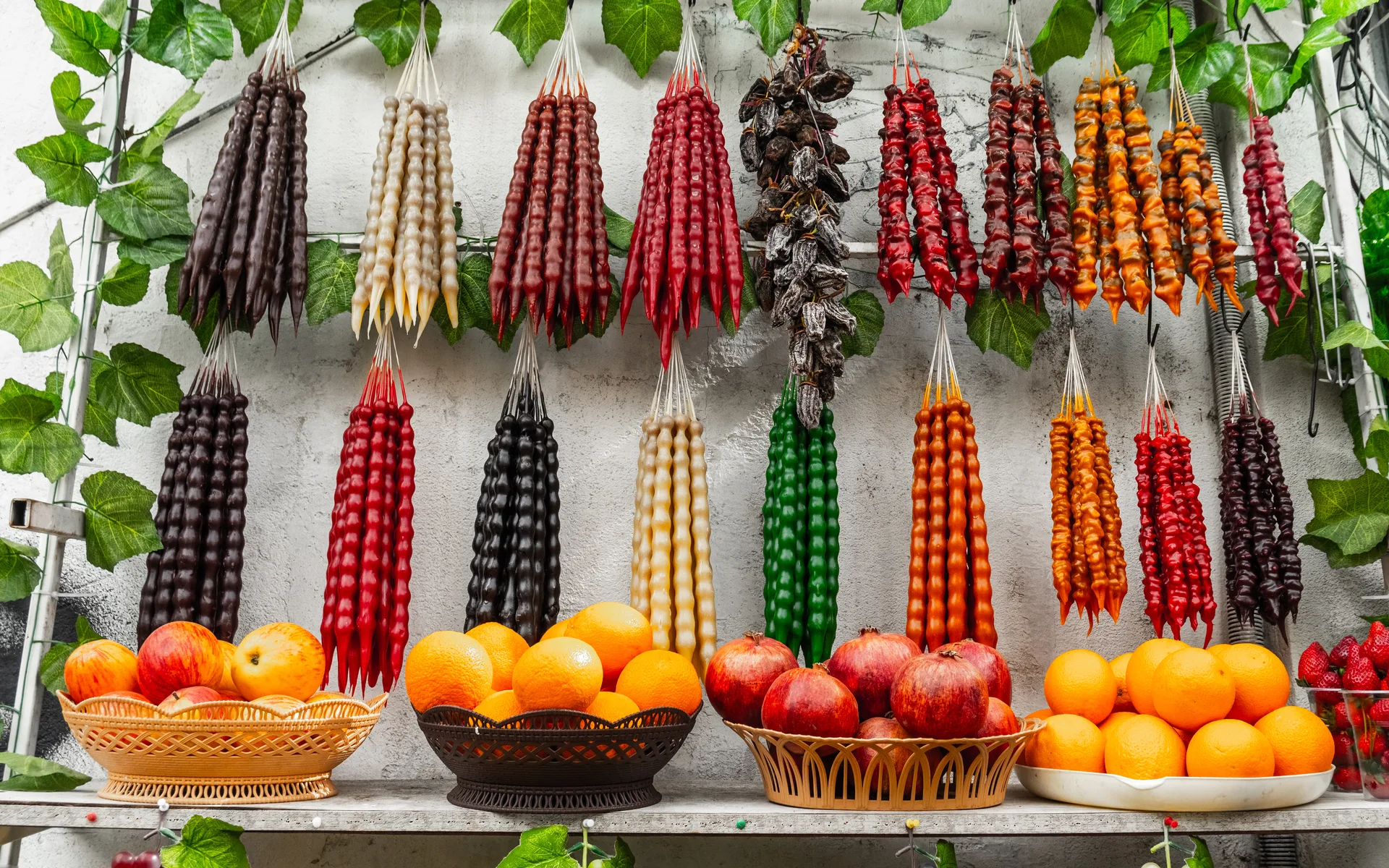
Along any road out of Tbilisi, you'll see people selling fruit, cheese, churchkhela, and honey from their cars or makeshift tables. Prices are excellent and the produce is usually same-day from their garden. Stop and buy — it's part of the culture.
Major roads • Seasonal
Market Tips for Newcomers
Prices at markets aren't always posted — ask before you buy. Bargaining is acceptable at Dezerter but don't go overboard (you're saving pennies). Bring your own bags. Pay cash — card payment is rare at traditional markets. And don't be surprised if vendors give you free samples of cheese or fruit — that's normal and not a sales trap.
Delivery Apps Compared
Tbilisi has excellent grocery delivery — better than many European capitals, honestly. The two main apps are Wolt and Glovo, and both deliver groceries from multiple supermarket chains, not just restaurants. Most stores on the apps deliver within 30–60 minutes.
| Feature | Wolt | Glovo |
|---|---|---|
| Grocery stores | Wolt Market + partner stores | Carrefour, Goodwill, Nikora, Spar, Fresco |
| Own grocery service | Yes — Wolt Market (4,000+ products) | No (partners only) |
| Delivery fee | 1.50–3.50 ₾ | 1.50–4.00 ₾ |
| Delivery time | 20–45 min typical | 30–60 min typical |
| Payment | Card, Apple Pay, Google Pay | Card, cash on delivery |
| App quality | Better UI, easier refunds | Functional, more store options |
| Coverage | Tbilisi, Batumi | Tbilisi, Batumi, Kutaisi, Rustavi |
The verdict: Most expats prefer Wolt for the app experience and faster delivery. Glovo has a wider selection of partner stores and is the only option that accepts cash on delivery — useful when you first arrive and don't have a Georgian bank card yet. Use both. Download both apps on day one.
Wolt Market Is a Game-Changer
Wolt Market is Wolt's own grocery warehouse — not a supermarket partnership. It has 4,000+ products, competitive prices, and delivers in 20–30 minutes. The selection is curated for urban Tbilisi: good produce, dairy, snacks, cleaning supplies, and a decent imported section. For regular grocery runs, it's hard to beat the convenience.
Direct Store Delivery
Several chains also offer their own delivery services, cutting out Wolt/Glovo:
| Store | How to Order | Notes |
|---|---|---|
| Carrefour | carrefour.ge + app | Full catalog, scheduled delivery slots |
| Goodwill | goodwill.ge + app | Best for prepared foods delivery |
| Spar | sparonline.ge + app | Premium selection online |
| Ori Nabiji | 2nabiji.ge + app | Good for quick essentials |
Direct ordering is useful for big planned shops where you want to browse the full catalog and pick a delivery window. For spontaneous "I need eggs and onions in 30 minutes" orders, Wolt and Glovo are faster.
What Things Actually Cost
One of the best things about living in Georgia is the food prices. Produce in particular is absurdly cheap by Western standards, especially if you buy seasonal and local. Here's what you'll actually pay in 2026.
| Item | Supermarket Price | Market Price | Notes |
|---|---|---|---|
| Bread (shotis puri) | 1.00–1.50 ₾ | 0.80–1.20 ₾ | Bakeries (tone) are cheapest |
| Eggs (10 pack) | 4.50–6.00 ₾ | 4.00–5.00 ₾ | Free-range not common |
| Milk (1 liter) | 3.50–5.00 ₾ | — | Sante, Eco Milk are popular |
| Chicken breast (1 kg) | 14–18 ₾ | 12–16 ₾ | Nikora has good meat prices |
| Pork (1 kg) | 16–22 ₾ | 14–18 ₾ | Shoulder/leg, boneless more |
| Tomatoes (1 kg) | 3.00–7.00 ₾ | 2.00–5.00 ₾ | Huge seasonal swing |
| Potatoes (1 kg) | 1.50–2.50 ₾ | 1.00–2.00 ₾ | Year-round staple |
| Sulguni cheese (1 kg) | 14–20 ₾ | 10–16 ₾ | Markets have better variety |
| Rice (1 kg) | 3.50–6.00 ₾ | — | Basmati costs more |
| Olive oil (1 liter) | 12–25 ₾ | — | Imported, mostly Turkish/Greek |
| Beer (0.5L, local) | 2.50–4.00 ₾ | — | Natakhtari, Argo, Kazbegi |
| Wine (decent bottle) | 8–20 ₾ | — | Superb value under 15 ₾ |
Seasonal Prices Are Real
Georgian produce prices swing dramatically with the seasons. Summer tomatoes can be 2 ₾/kg; in winter they jump to 7–8 ₾/kg. Watermelons that cost 0.50 ₾/kg in August are unavailable in January. Eating seasonal isn't just a lifestyle choice here — it's an economic one. Learn what's in season and your grocery bill drops significantly.
Monthly Budget Breakdown
🥗 Budget Shopper (Mostly Local Food)
🛒 Comfortable Shopper (Mix of Local + Imported)
For context, that's roughly $130–200/month at the budget level or $210–310/month comfortable — a fraction of what you'd spend in Western Europe. The full cost of living breakdown covers all other expenses.
Georgian Products You Should Try
Georgia produces some truly excellent food products that you won't find back home. Once you discover these, your shopping habits will change permanently.
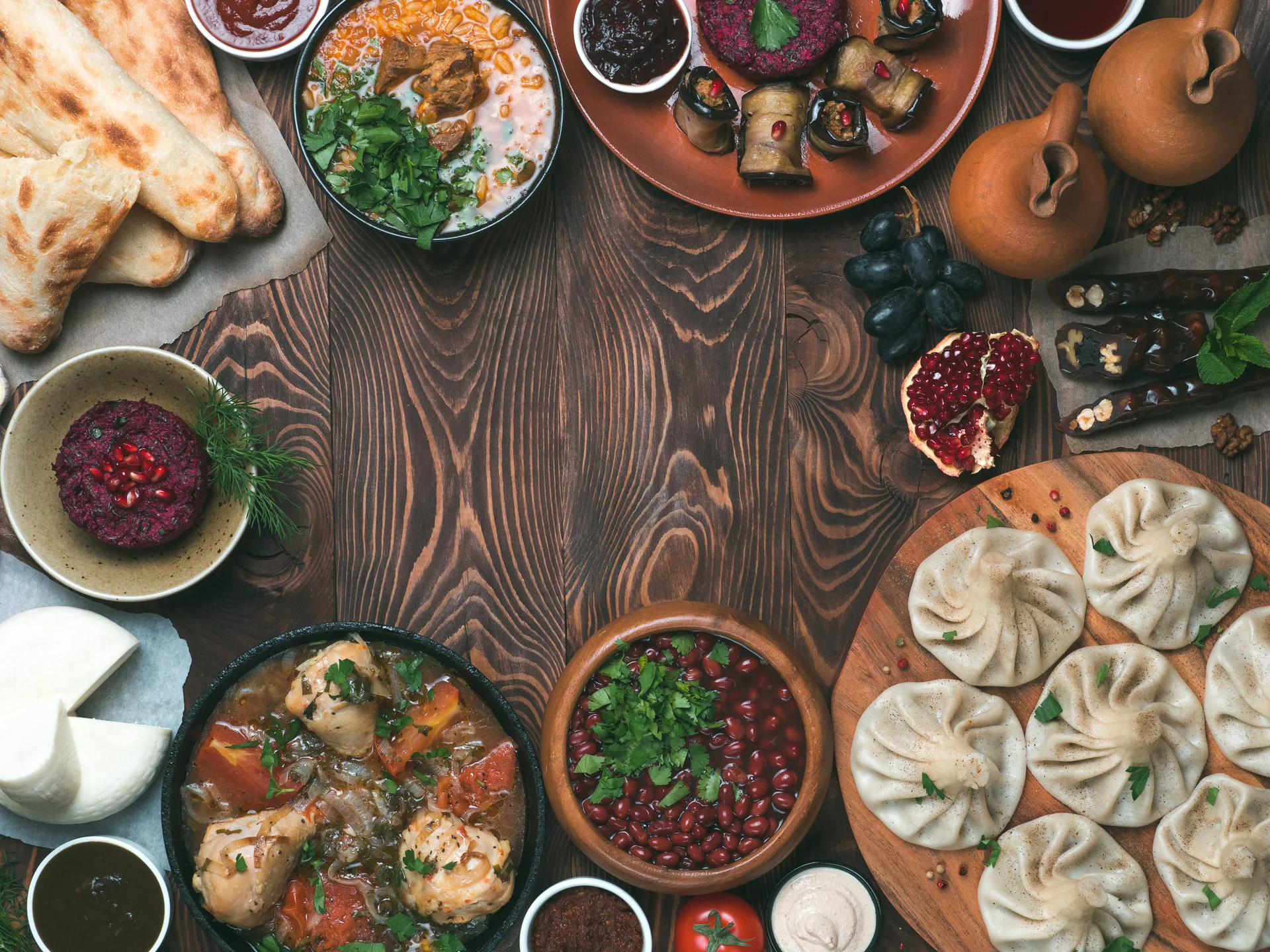
| Product | What It Is | Why You'll Love It |
|---|---|---|
| Sulguni cheese | Brined, stretchy cheese (like mozzarella's cousin) | Melts beautifully, incredible smoked version |
| Shotis puri | Canoe-shaped bread baked in a tone (clay oven) | Hot from the bakery, nothing compares |
| Tkemali | Sour plum sauce — Georgia's ketchup | Goes with everything, addictive |
| Adjika | Spicy chili-herb paste | Serious heat with complex flavor |
| Tarhun | Bright green tarragon soda | Tastes like nothing you've had before |
| Churchkhela | Walnuts dipped in grape juice, dried | Georgian "Snickers" — energy-dense, natural |
| Matsoni | Georgian yogurt (similar to kefir) | Thick, tangy, probiotic powerhouse |
| Bazhe | Walnut-garlic sauce | Creamy, nutty, pairs with chicken and fish |
| Georgian honey | Wildflower, chestnut, alpine varieties | Exceptional quality, dirt cheap at markets |
| Borjomi | Volcanic mineral water | Strong, salty — an acquired taste worth acquiring |
What's Hard to Find (And Where to Look)
Georgia's grocery stores have gotten much better at stocking international products, but there are still gaps that frustrate Western expats. Here's what people ask about most.
| Product | Status | Where to Find |
|---|---|---|
| Cheddar / hard cheese | Limited | Carrefour, Spar (expensive, small selection) |
| Good coffee beans | Available | Specialty shops: Coffee Lab, Bloom, Tbilisi roasters |
| Asian ingredients | Improving | Carrefour (soy sauce, rice noodles), Asian shops near Marjanishvili |
| Plant-based milk | Available | Most supermarkets stock Alpro or similar (3–7 ₾) |
| Peanut butter | Available | Carrefour, Spar — or Georgian nut butters at Agrohub |
| Tortillas / wraps | Rare | Carrefour sometimes, or make your own |
| Tahini / hummus | Available | Spar, Carrefour, some Frescoes |
| Quality fish / seafood | Limited | Goodwill fish counter, Carrefour frozen section |
| Breakfast cereal variety | Limited | Basic options everywhere, specialty at Spar/Carrefour |
The Cheese Situation
Georgia has incredible cheese — but it's almost entirely soft, brined cheese. Sulguni, imeruli, guda, chkinti-kveli — they're all delicious. What you won't find easily is the Western European hard cheese selection you might be used to. Cheddar, gouda, gruyère, and parmesan are available at Carrefour and Spar, but at import prices (15–30 ₾ for a small block). Embrace the local cheese. It's better than you think, and your wallet will thank you.
The Bakery Situation (It's Wonderful)
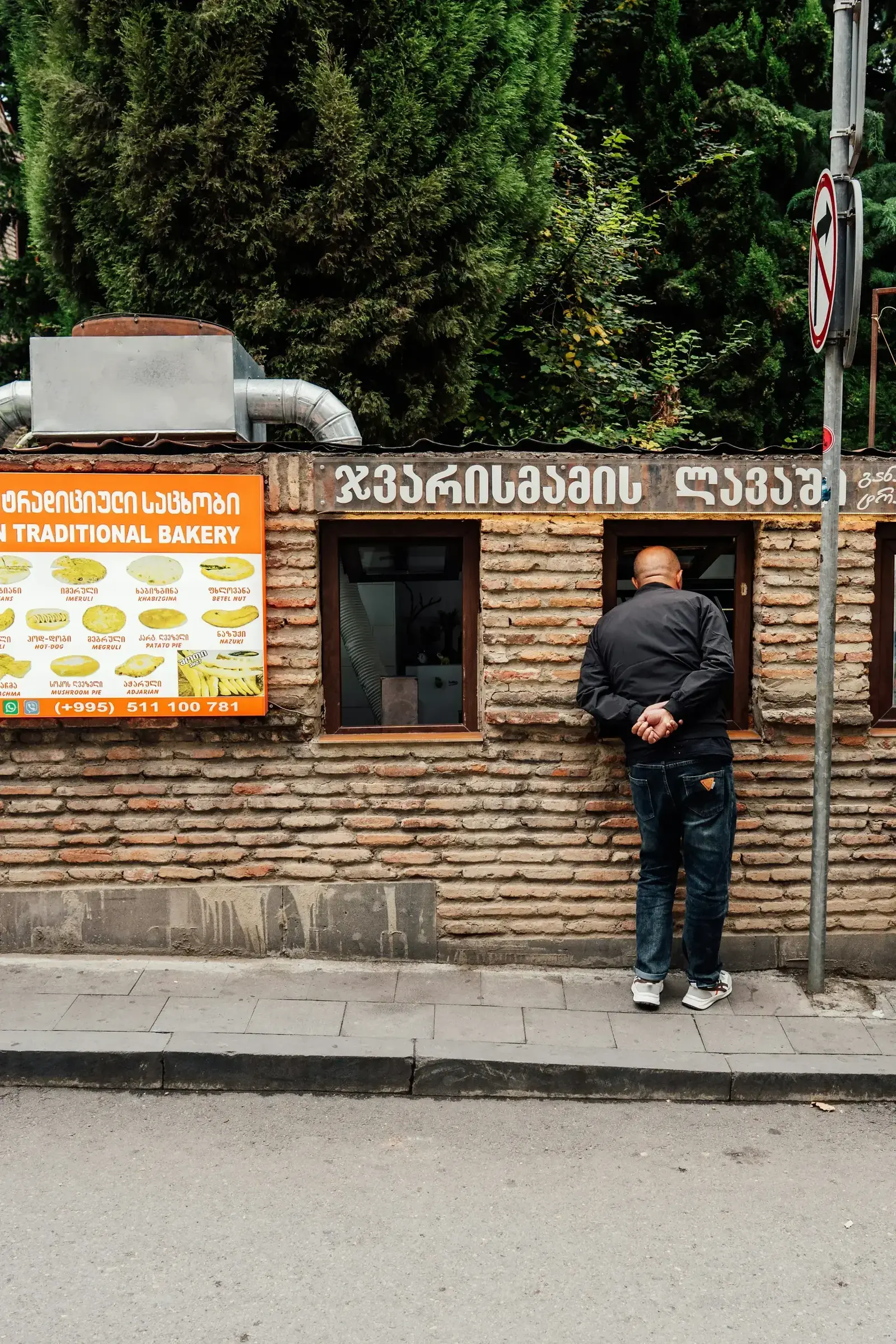
One thing Georgia does better than almost anywhere in the world is bread. Every neighborhood has at least one tone (traditional bakery with a clay oven built into the ground), and many have several. Shotis puri, shoti, lavashi, and other varieties come out of the oven hot, cost almost nothing, and taste incredible.
The tone bakeries are easy to spot — look for the distinctive flame-shaped bread hanging in the window or the queue of locals at what looks like a hole in a wall. Price is typically 0.80–1.50 ₾ per loaf. Many tone bakeries also sell khachapuri, lobiani, and other filled breads fresh throughout the day.
Supermarket bread exists but is mediocre compared to tone bread. If you live near a tone bakery (and you almost certainly do), there's no reason to buy bread anywhere else.
🍞 Shotis Puri
The classic — canoe-shaped, baked stuck to the inside of the tone. Chewy crust, soft interior. Buy it hot. Eat it within hours. Don't put it in the fridge.
🫓 Lavashi
Thin flatbread, also from the tone. Perfect for wrapping cheese and herbs. Stays fresh longer than shoti. Great with almost everything.
Practical Shopping Tips
| Tip | Details |
|---|---|
| Bring bags | Plastic bags cost 0.05–0.15 ₾. Georgia banned free bags in 2019. Bring reusable ones. |
| Weigh your produce | Most supermarkets have self-service scales in the produce section. Weigh and stick the label before checkout. Staff will do it if you miss this step, but the queue won't be happy. |
| Check expiration dates | Seriously. Dairy products in particular can be close to or past their date. Smaller stores are worse for this than big chains. |
| Payment cards work everywhere | All major chains accept Visa/Mastercard including contactless. Only traditional markets and small corner shops are cash-only. See our banking guide for setting up a Georgian account. |
| Morning is best for markets | Traditional markets are at their best before noon — freshest selection, most vendors open. By 2:00 PM things start winding down. |
| Learn "ramdenia?" (რამდენია?) | Means "how much?" — the single most useful word at any market. Vendors will show the price on a calculator or on their fingers. |
| Try before you buy (cheese) | At markets, cheese vendors will always let you taste before buying. Don't feel pressured to buy — tasting is expected and normal. |
Seasonal Produce Calendar
Buying seasonal produce in Georgia isn't just cheaper — it tastes dramatically better. Here's roughly what's at peak quality each season.
| Season | Best Produce | Notes |
|---|---|---|
| Spring (Mar–May) | Greens, herbs (tarragon, cilantro, dill), green plums, strawberries, young garlic | Green plums (tkemali) appear briefly — grab them |
| Summer (Jun–Aug) | Tomatoes, peppers, eggplant, peaches, plums, watermelon, figs, cherries, grapes | Peak season — everything is cheap and incredible |
| Autumn (Sep–Nov) | Persimmons, pomegranates, grapes (harvest), walnuts, quince, late tomatoes | Rtveli (grape harvest) season — wine country comes alive |
| Winter (Dec–Feb) | Citrus (tangerines from Adjara!), cabbage, root vegetables, dried fruit, nuts | Adjarian tangerines in Dec–Jan are a revelation |
The Tangerine Truck Phenomenon
Every December, trucks loaded with tangerines from western Georgia (Adjara) park on street corners across Tbilisi and sell by the kilogram. They're sweet, fragrant, and absurdly cheap (1–2 ₾/kg). Georgians buy them in 10–20 kg bags. You should too. It's one of the great joys of a Georgian winter.
Common Mistakes
Only shopping at one store
No single store has everything. Bread from the tone, produce from the market, imports from Carrefour — diversify your sources.
Ignoring traditional markets
Markets are 30–50% cheaper for fresh produce and the quality is often better. Yes, it's less convenient. It's worth it.
Buying out-of-season produce
Winter tomatoes in Georgia are as sad as anywhere. Buy what's in season and cook accordingly. Your food will taste better and cost less.
Not checking product labels
Labels are often in Georgian only. Use Google Translate's camera feature — point at any text and get instant translation. Essential for ingredients and allergens.
Expecting Western variety
You won't find 12 types of hummus or a wall of craft beer. Adapt your cooking to what's available. Georgian cuisine exists because these ingredients are what's here.
Skipping the tone bakery
Buying supermarket bread when there's a tone on your street is a genuine crime against good food. Always buy tone bread.
Frequently Asked Questions
Are grocery stores in Georgia open on Sundays?
Yes. Most supermarket chains are open 7 days a week, typically 9:00–22:00 or 10:00–22:00. Some Carrefour and Goodwill locations have extended hours. Smaller corner shops often open even earlier and close later. Traditional markets operate daily but wind down earlier on weekends.
Can I pay with a foreign bank card at Georgian supermarkets?
Yes. All major chains accept Visa and Mastercard, including contactless. Apple Pay and Google Pay also work. Traditional markets and small corner shops are cash-only. Delivery apps accept international cards too.
Is tap water safe to drink in Tbilisi?
Tbilisi's tap water is generally safe and comes from mountain sources. Many expats drink it without issues. If you prefer filtered water, a Brita-style filter is available at Carrefour or you can order 19-liter jugs for delivery (around 3–5 ₾ per jug). Borjomi and Nabeghlavi mineral waters are excellent and widely available.
Where can I buy alcohol in Tbilisi?
Every supermarket and most corner shops sell beer, wine, and spirits with no restrictions on hours or days. Georgia has very relaxed alcohol laws. Georgian wine is exceptional and often cheaper at supermarkets than dedicated wine shops.
Are there organic food options in Tbilisi?
Formal organic certification is rare in Georgia, but much of the produce at traditional markets is de facto organic — small farmers who can't afford pesticides. Spar has a small organic section. Agrohub focuses on local agricultural products. Some expats also join Facebook groups for organic farm delivery boxes.
Written by The Georgia Expats Team
We've been doing our weekly grocery runs in Tbilisi for years — from the Dezerter Bazaar to Carrefour to the tone bakery three doors down. This guide reflects real shopping experience, not a quick Google search.
Last updated: February 2026.
Related Articles
Cost of Living in Tbilisi
Rent, groceries, transport — real numbers and sample budgets.
Daily Life in Tbilisi
Internet, SIM cards, groceries, transport, apps, and social life.
Best Neighborhoods in Tbilisi
Where to live — rent prices, vibes, and pros/cons for each area.
Banking in Georgia
Which bank, what documents, fees, and tips from expats.