You've sorted your visa, found an apartment, and opened a bank account. Now what? The first few weeks of actually living in Tbilisi are when you realize the real questions aren't about residency permits — they're about where to buy decent coffee beans, which SIM card won't spam you with Georgian texts, and whether that unmarked shop on the corner is a pharmacy or a betting parlor (spoiler: it's probably a betting parlor).
This guide covers the unglamorous but essential stuff: getting connected, buying groceries, moving around the city, and building a social life. The things that turn "visiting Tbilisi" into "living in Tbilisi."
Key Takeaways
- • Magti is the best SIM card for most expats — biggest network, eSIM available, ~15 GEL/month for 15GB
- • Home internet is fast and cheap — 100 Mbps fiber for ~30 GEL/month ($11)
- • Bolt is essential — rides across Tbilisi cost 3–8 GEL ($1–3)
- • Wolt and Glovo deliver food and groceries to your door
- • Goodwill and Carrefour are the best supermarkets; bazaars are cheapest for produce
- • English is limited outside the expat bubble — learn basic Georgian phrases and use Google Translate
SIM Cards & Mobile Data
Getting a Georgian SIM card takes about 10 minutes and costs almost nothing. You'll need your passport — that's it. Every provider has stores on Rustaveli Avenue and in most shopping malls. You can also grab one at Tbilisi airport, though the tourist packages there expire quickly.
There are three mobile operators in Georgia: Magticom (usually called Magti), Silknet (which absorbed Geocell), and Cellfie (formerly Beeline). Magti has the best coverage and is what nearly every expat and most Georgians use. Silknet is a solid second choice. Cellfie is budget but has smaller coverage outside cities.
| Provider | Monthly Plan (~15GB) | Coverage | eSIM | Best For |
|---|---|---|---|---|
| Magticom | ~15 GEL ($5.50) | Best nationwide | Yes (via app) | Most expats, travelers |
| Silknet | ~14 GEL ($5) | Strong in cities | Yes | Bundling with home internet |
| Cellfie | ~10 GEL ($3.70) | Cities only | No | Budget, Tbilisi-only |
Pro Tip: Get an eSIM Before You Land
Download the Magti app and purchase an eSIM online before your flight. You can pay with Apple Pay or credit card, choose your plan, and be connected the moment you land. No airport queues, no passport photocopies.
One warning about Magti: you'll get occasional spam texts in Georgian. Since March 2024, you can opt out through their app, but it takes a few tries. Silknet is quieter on the spam front.
Topping up is easy — all providers have apps, and you can also pay at any TBC or BoG ATM, or through the bank's mobile app. Most corner shops sell top-up cards too, though paying through the app is simpler.
Home Internet
Tbilisi has surprisingly good internet. Fiber is available in most of the city, and you can get 100 Mbps for around 30 GEL/month ($11). Two companies dominate the home internet market: Magticom and Silknet.
| Provider | 100 Mbps | 300 Mbps | TV Bundle | Setup |
|---|---|---|---|---|
| Magticom | ~30 GEL/mo | ~45 GEL/mo | +22 GEL for 200+ channels | Free router, 1–3 days |
| Silknet | ~28 GEL/mo | ~42 GEL/mo | +20 GEL for 150+ channels | Free router, 1–3 days |
In most apartments, the landlord already has internet set up, and you just take over the existing connection. If you need to set up a new line, a technician typically comes within 1–3 business days. The router is usually provided free.
Speeds in practice: In central Tbilisi (Vake, Vera, Saburtalo), you'll generally get close to advertised speeds. In older buildings or up in Sololaki, the infrastructure can be flakier. If you're a remote worker, ask your landlord about the current provider and speed before signing a lease.
Backup Plan for Remote Workers
Power outages happen occasionally, especially in older neighborhoods. Keep your phone's mobile hotspot ready as a backup. With Magti's unlimited daily data add-ons (~3 GEL), you can work through most outages. Consider a small power bank for your router too.
Essential Apps
These are the apps that every expat in Tbilisi actually uses daily. Install all of them before you arrive — some require a Georgian phone number to register.
🚗 Bolt
The ride-hailing app. Forget Uber — Bolt is king in Tbilisi. (See our full getting around guide.) Rides cost 3–8 GEL across the city. Also offers scooter rentals.
🍔 Wolt
Food delivery from restaurants. Best selection, good English interface, and you can order groceries from partner stores too.
🛵 Glovo
Delivery of anything — food, groceries, pharmacy items, even alcohol. The "anything" courier option is genuinely useful.
💳 Bank Apps (TBC / BoG)
Pay for everything — utilities, phone top-ups, transfers, even parking. The TBC and BoG apps are surprisingly polished.
🗺️ Google Maps
Works well in Tbilisi for navigation. Public transport routes are mapped. For hiking, download offline maps or use maps.me.
🌐 Google Translate
Camera translation for Georgian text is a lifesaver — menus, signs, labels. Download the Georgian language pack for offline use.
Getting Around Tbilisi
Tbilisi is a city of hills, chaotic traffic, and surprisingly functional public transport. Here's how to move around without losing your mind.
| Transport | Cost | When to Use |
|---|---|---|
| Bolt (ride-hailing) | 3–8 GEL ($1–3) | Default option. Fast, cheap, no cash needed. |
| Metro | 1 GEL ($0.37) | Two lines, covers main areas. Rush hour is packed. |
| Bus | 0.50 GEL ($0.18) | Extensive network but slow. Use Google Maps for routes. |
| Marshrutka (minibus) | 0.80 GEL ($0.30) | Fills gaps. No fixed schedule, no English. An experience. |
| Cable car | 1 GEL | Rike Park to Narikala. Tourist attraction + legit transport. |
| Walking | Free | Central Tbilisi is walkable. Watch for uneven sidewalks and aggressive drivers. |
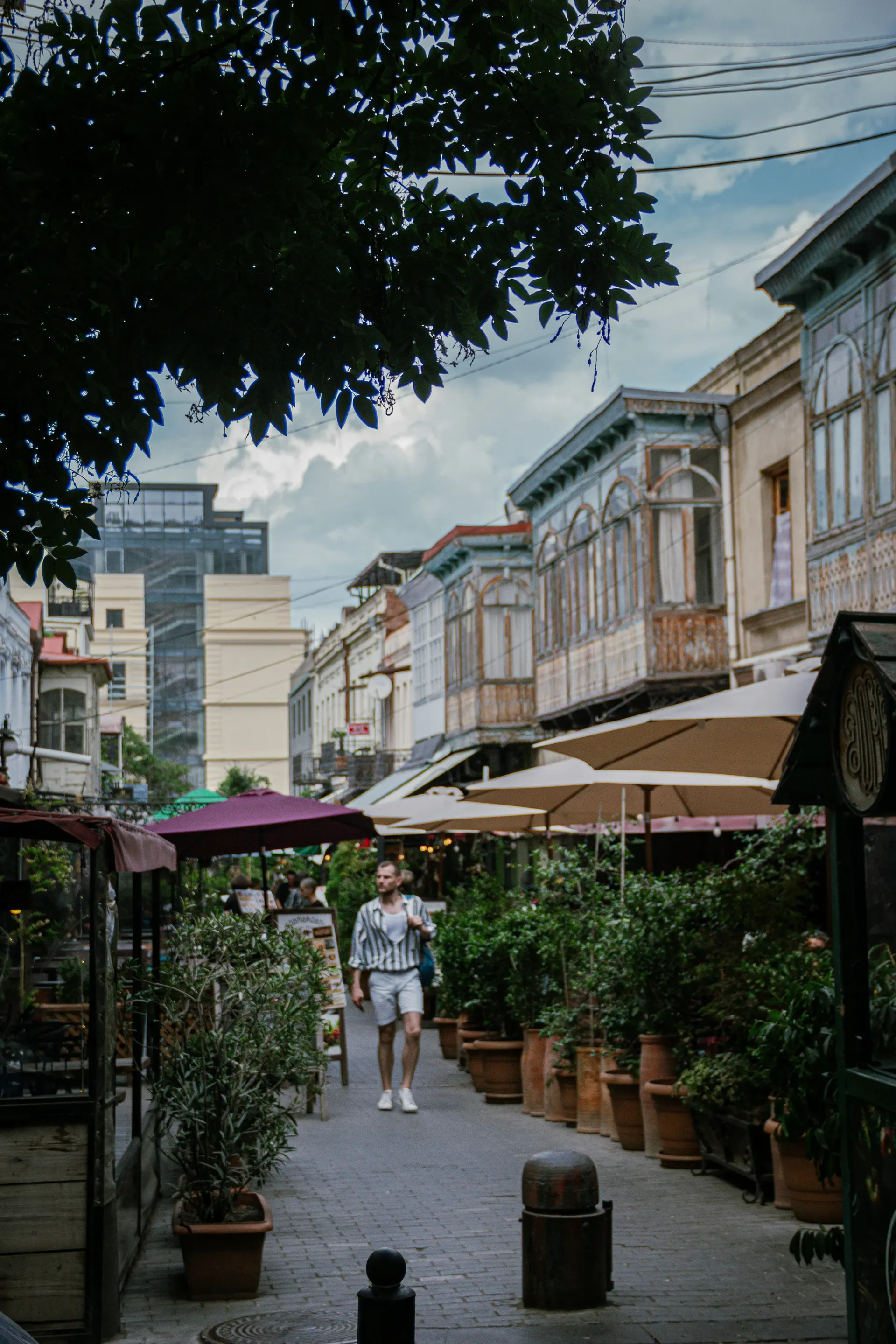
Bolt is what most expats use daily. It's cheap, the cars come quickly in central areas, and you can pay with your card. Surge pricing exists during rain and rush hour but rarely exceeds 2x. One thing to know: drivers sometimes call to confirm the pickup — if you don't speak Georgian, just say "diakh" (yes) and hope for the best. Most figure it out.
The metro has two lines that cross at Station Square (Sadguris Moedani). It's clean, safe, and runs from 6 AM to midnight. You'll need a Metromoney card (2 GEL from any station) which works on metro, buses, and cable cars. You can also tap with your bank card at newer gates.
The Metromoney Card Trick
The Metromoney transport card gives you free transfers within 90 minutes. Take the metro, then hop on a bus within 90 minutes, and the bus ride is free. Top up at any metro station or through the TBC/BoG banking app.
Driving yourself: Possible, but Tbilisi traffic is not for the faint-hearted. Lanes are suggestions. Parking is a contact sport. If you do drive, street parking costs 1–2 GEL/hour in the center (pay through the parking app or SMS). Most expats use Bolt until they move to the suburbs, then get a car.
Grocery Shopping
There's no single "best" supermarket in Tbilisi — it depends on what you're after. Here's the honest breakdown:
| Store | Vibe | Price Level | Best For |
|---|---|---|---|
| Goodwill | Upscale, clean, well-organized | $$$ | Imported goods, quality meat, expat favorites |
| Carrefour | Hypermarket, wide selection | $$ | International brands, bulk shopping, variety |
| Nikora | Everywhere, compact | $$ | Quick stops, basics, decent prepared food |
| Ori Nabiji (2 Nabiji) | Budget chain | $ | Cheapest staples, local products |
| Fresco | Mid-range, clean | $$ | Good produce section, bakery |
| Spar | European chain, familiar format | $$ | Weekly sales, European imports |
| Bazaar (farmer's market) | Outdoor markets, chaotic, wonderful | $ | Fresh produce, cheese, herbs, spices, dried fruit |
The expat shopping pattern that most people settle into: Goodwill or Carrefour for the big weekly shop (imported olive oil, international brands, wine), Nikora or Fresco for quick mid-week runs, and the bazaar for produce, cheese, and herbs.
Dezerter Bazaar (near Station Square) is the biggest market in Tbilisi. It's overwhelming, loud, and 100% worth it. Prices are a fraction of supermarket rates for produce. A kilo of tomatoes might cost 2 GEL in summer. Fresh churchkhela, spices, dried fruits, and mountains of cheese. Bring cash and don't be afraid to taste before buying — vendors expect it.
Check Expiration Dates
This isn't being paranoid — it's being realistic. Especially at smaller shops and even Carrefour, check the dates on dairy, bread, and packaged goods. Georgian labeling uses day/month/year format. Some stores put soon-to-expire items at eye level or in sale bins.
What's expensive: Imported cheese (especially Western European), avocados, berries in winter, international snack brands, and anything organic-labeled. What's cheap: Bread (shotis puri from a tone bakery is ~1 GEL), seasonal produce, local cheese (sulguni, imeruli), eggs, and wine — always wine.
Grocery delivery: Both Wolt and Glovo partner with supermarkets for delivery. Glovo also has "Glovo Express" dark stores with 15-minute delivery on basics. Useful for lazy Sundays.
Eating Out & Coffee Culture
Eating out in Tbilisi is cheap enough to do daily — and many expats do. A filling lunch at a Georgian restaurant costs 15–25 GEL ($5.50–9). Specialty coffee is 6–10 GEL ($2–3.70). It's one of the biggest lifestyle upgrades of living here.
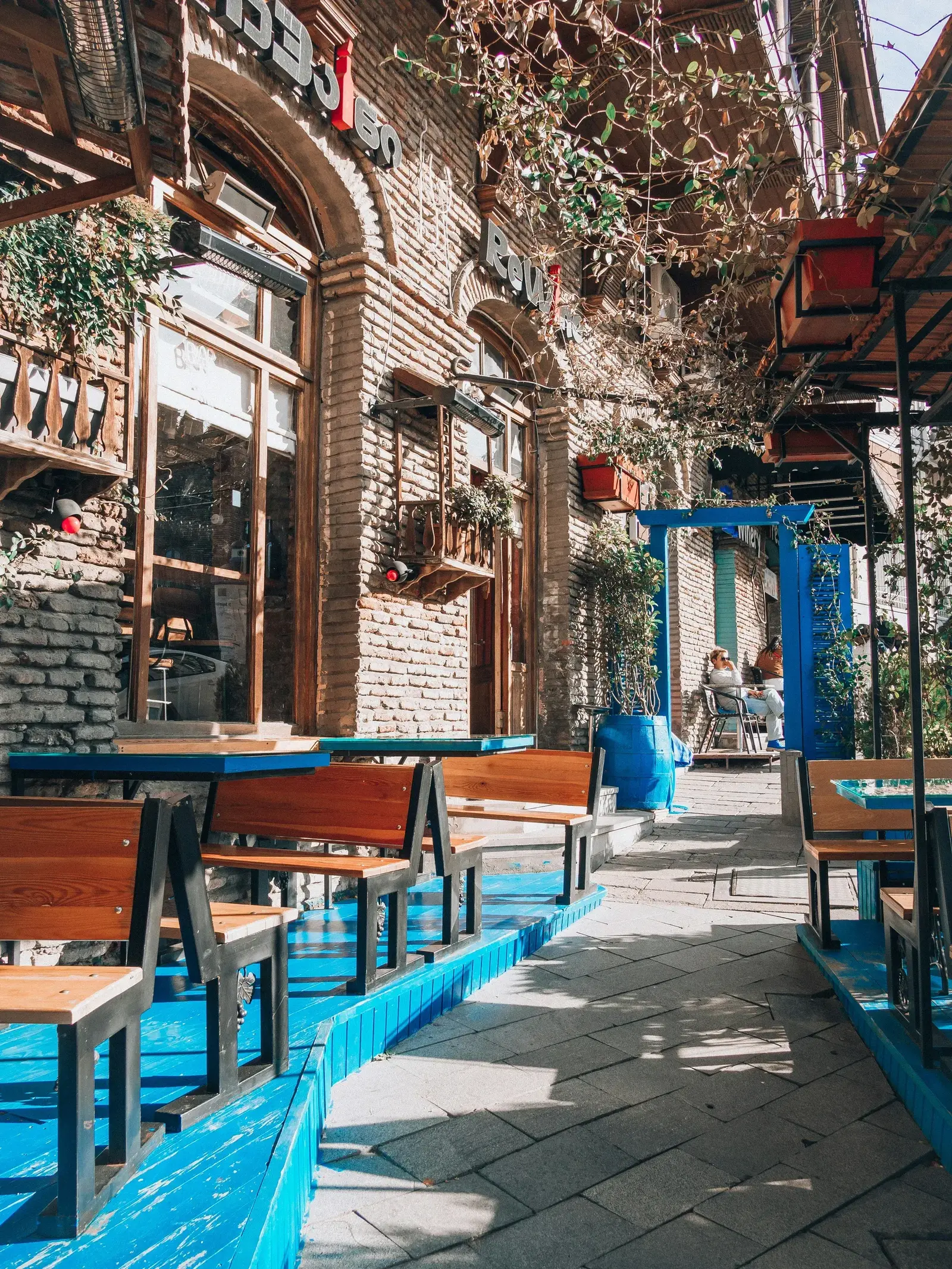
Tbilisi's café culture is genuinely excellent. The city has had a specialty coffee explosion in the last few years. Popular spots include Coffeesta, Koffee Kiosk, Double B, Tore, and dozens of smaller independent roasters. Many double as co-working spaces — a flat white and a full day of WiFi for 8 GEL.
For dining, Georgian food is heavy, generous, and incredible. But if you eat khachapuri and khinkali every day, your body will notice. The international food scene is growing: good Japanese, Thai, Indian, Italian, and Middle Eastern restaurants exist, especially in Vake and around Marjanishvili. Expect to pay more for non-Georgian food — a sushi dinner costs roughly double what a Georgian feast would.
Language & Communication
Let's be honest: you can survive in Tbilisi with zero Georgian. (See our full guide to learning Georgian for resources and strategies.) In the expat-heavy areas (Vake, Vera, Fabrika area), many restaurant staff and shop workers speak some English. Younger Georgians especially tend to know enough for basic interactions.
But once you leave the bubble — taking a marshrutka, visiting a government office, dealing with a landlord, going to a local doctor — Georgian matters. And even in the bubble, making an effort is the single fastest way to build genuine connections.
| Phrase | Georgian | Pronunciation |
|---|---|---|
| Hello | გამარჯობა | ga-mar-JO-ba |
| Thank you | მადლობა | mad-LO-ba |
| Yes / No | დიახ / არა | dee-AKH / a-RA |
| How much? | რა ღირს? | ra GHIRS? |
| Please | თუ შეიძლება | tu she-IZ-le-ba |
| I don't understand | ვერ გავიგე | ver ga-VI-ge |
| Bill, please | ანგარიში, თუ შეიძლება | an-ga-RI-shi, tu she-IZ-le-ba |
Russian is widely spoken by the older generation (40+) and is useful as a backup. Many Ukrainian and Russian expats communicate in Russian daily. But be aware that some Georgians — especially younger ones — have complicated feelings about Russian and may prefer you try English or Georgian.
Google Translate Camera Mode
Point your phone camera at Georgian text (ქართული) and get instant translations. This works offline if you download the Georgian language pack. Essential for menus, shop signs, medicine labels, and the inevitable government document in pure Georgian.
Utilities & Bills
Utility bills in Tbilisi are refreshingly low compared to Western Europe. Here's what you'll pay:
Monthly Utilities (70m² Apartment)
Gas is the wild card — heating in winter can push your gas bill from 15 GEL to 80+ GEL depending on your apartment's insulation (older Soviet buildings are notoriously drafty). Electricity varies too: if you run AC in summer, expect the higher end.
Paying bills: The easiest method is through your bank app (TBC or BoG). Go to "Payments" → "Utilities" → enter your subscriber number (found on a previous bill or your meter). You can set up autopay. Alternatively, there are yellow "Pay" terminals in most shops and metro stations that accept cash.
Social Life & Meeting People
Tbilisi has a thriving expat scene, especially since 2022 when a large wave of Russian, Ukrainian, and Belarusian relocators arrived. Meeting people is not hard — staying past surface-level acquaintances takes more effort.
🏢 Co-working Spaces
Fabrika, Impact Hub, Terminal, Lounge. Natural places to meet other remote workers. Most host events and workshops.
📱 Facebook Groups
"Expats in Tbilisi" and "Tbilisi Digital Nomads" are the most active. Good for questions, meetups, and finding apartments.
🏃 Sports & Hobbies
Running clubs, CrossFit boxes, yoga studios, hiking groups. The Hash House Harriers do regular runs. Football pickup games happen weekly.
🎵 Nightlife
Tbilisi's techno scene is famous (Bassiani, Khidi). But there's also a chill bar scene — wine bars, craft cocktails, live music venues in Sololaki and Marjanishvili.
Making Georgian friends is different from hanging out with other expats. Georgians are incredibly warm and hospitable, but friendships develop through repeated interaction — your regular café, your gym, your neighborhood. Once you're "in," expect to be invited to supras (feasts), family events, and trips to the countryside. Georgian hospitality is not a cliché — it's genuinely overwhelming.
Dating: Tbilisi has a normal dating scene. Tinder, Bumble, and Hinge all work. Cultural note: Georgian society is more traditional than Western Europe, especially outside Tbilisi. Family is central. Don't be surprised if things move faster or if you meet the parents sooner than you'd expect.
Safety & Street Smarts
Tbilisi is one of the safest cities you'll live in. Violent crime against foreigners is essentially nonexistent. Petty theft happens but is rare. You can walk alone at night in most areas without concern.
That said, a few things catch newcomers off guard:
🚶 Sidewalk Chaos
Cars park on sidewalks. Manholes are sometimes uncovered. Sidewalk surfaces change randomly. Watch your step, always.
🐕 Stray Dogs
Everywhere, tagged (ear tag = vaccinated), usually friendly. Don't pet unknown dogs. If one approaches, stay calm and keep walking.
🚗 Crossing Streets
Pedestrian crossings are more of a suggestion. Make eye contact with drivers before crossing. They'll usually stop — but verify first.
🎰 Betting Shops
You'll notice betting shops and casinos everywhere. This is a known social issue in Georgia. They're on every block — just part of the landscape.
Practical Tips Nobody Tells You
These are the things you figure out after living here for a few months. Save yourself the learning curve:
- Carry cash for small things. Card payments are widespread but some bakeries, marshrutkas, and bazaar vendors are cash-only. Keep 20-50 GEL in small bills.
- Water is safe to drink in Tbilisi — from the tap. It comes from mountain springs and tastes fine. No need for bottled water (though many expats buy it anyway out of habit).
- Pharmacies are everywhere and you can buy most medications without a prescription. Antibiotics, painkillers, allergy meds — just walk in and ask. Prices are low.
- Laundromats are rare. Most apartments have a washing machine. If yours doesn't, ask your landlord. Some dry cleaners offer wash-and-fold services.
- Tipping is not mandatory but appreciated. 10% at restaurants if the service was good. Rounding up for Bolt drivers is nice but not expected.
- Electricity outages happen. Usually brief (minutes to an hour), but old buildings in Sololaki and the Old Town get them more often. Keep your phone charged.
- Georgian postal service is slow. For packages, use DHL, FedEx, or services like USA2Georgia and EU2Georgia that forward packages from US/EU addresses to your door in Tbilisi.
- Recycling barely exists. Some glass/paper bins are appearing in Vake and Vera, but Georgia doesn't have a recycling infrastructure yet. This frustrates many Western expats.
- Get a VPN if you use streaming services. Georgian IP addresses get limited libraries on Netflix, Spotify, etc. A VPN set to your home country fixes this.
- Summer is brutal. July and August hit 38-40°C regularly. Many older apartments don't have AC. If heat sensitivity is an issue, make sure your apartment has it before signing.
Working Remotely
Tbilisi is one of the best remote work cities in the region. Fast internet, cheap cost of living, timezone that overlaps with Europe and partially with the US East Coast, and an endless supply of cafés where you can nurse a 7-GEL latte for four hours without anyone caring.
| Co-working Space | Area | Day Pass | Monthly | Vibe |
|---|---|---|---|---|
| Fabrika | Marjanishvili | ~20 GEL | ~250 GEL | Social, hostel complex, courtyard |
| Impact Hub | Vake | ~25 GEL | ~350 GEL | Professional, events, startup-y |
| Terminal | Didube | ~15 GEL | ~200 GEL | Budget-friendly, large, industrial |
| Lounge | Vera | ~20 GEL | ~280 GEL | Quiet, design-focused, good coffee |
Many expats skip co-working entirely and just work from cafés. Places like Entrée in Vake, Stamba (the hotel lobby), and Rooms Hotel are popular laptop-friendly spots with fast WiFi and no pressure to leave. Tip: if a café starts getting visibly annoyed at laptop workers, order something every couple of hours.
Weather & What to Pack
| Season | Temp Range | What to Expect |
|---|---|---|
| Spring (Mar–May) | 10–22°C | Best season. Mild, green, occasional rain. Light jacket enough. |
| Summer (Jun–Aug) | 25–40°C | Hot and humid. July/August brutal. AC is a must-have. |
| Autumn (Sep–Nov) | 8–25°C | Beautiful. Wine harvest season. Second-best time to arrive. |
| Winter (Dec–Feb) | -2–8°C | Cold, sometimes snowy. Apartments vary wildly in warmth. Bring layers. |
Frequently Asked Questions
Do I need to learn Georgian?
Not strictly, but it makes life much easier and richer. Even basic phrases (hello, thank you, numbers) open doors. For government and medical interactions, you'll either need Georgian, Russian, or a translator.
Is Tbilisi good for families?
Yes, increasingly so. International schools exist (expensive), Georgian public schools are free but in Georgian. Parks are plentiful, healthcare is adequate, and Georgians adore children.
Can I use Wise/Revolut instead of a local bank?
For the first few weeks, yes. Long-term, you'll need a local bank for rent payments, utility bills, and to avoid conversion fees. Most locals and businesses use bank transfers in GEL.
How's the air quality?
Variable. Traffic-heavy areas can be rough, especially in summer. Central Tbilisi is improving but not great. The areas near parks (Vake Park, Mtatsminda) are noticeably better.
What's the postal system like?
Georgian Post is unreliable for international packages. Use forwarding services like USA2Georgia, EU2Georgia, or OnTIME for reliable delivery. DHL and FedEx work but are expensive.
Written by The Georgia Expats Team
Based in Tbilisi for over five years, navigating everything from Magti SIM card spam to Dezerter Bazaar cheese negotiations. We write from lived experience — the good, the weird, and the unfiltered.
Last updated: February 2026.
Related Articles
Cost of Living in Tbilisi: What You'll Actually Spend
Real numbers and sample budgets for every lifestyle.
Best Neighborhoods in Tbilisi for Expats
Where to live — rent prices, vibes, and honest pros and cons.
Opening a Bank Account in Georgia
Which bank to choose, documents needed, and fees to watch out for.
Healthcare in Georgia: The Complete Expat Guide
Hospitals, insurance, costs, and the 2026 mandatory rule.