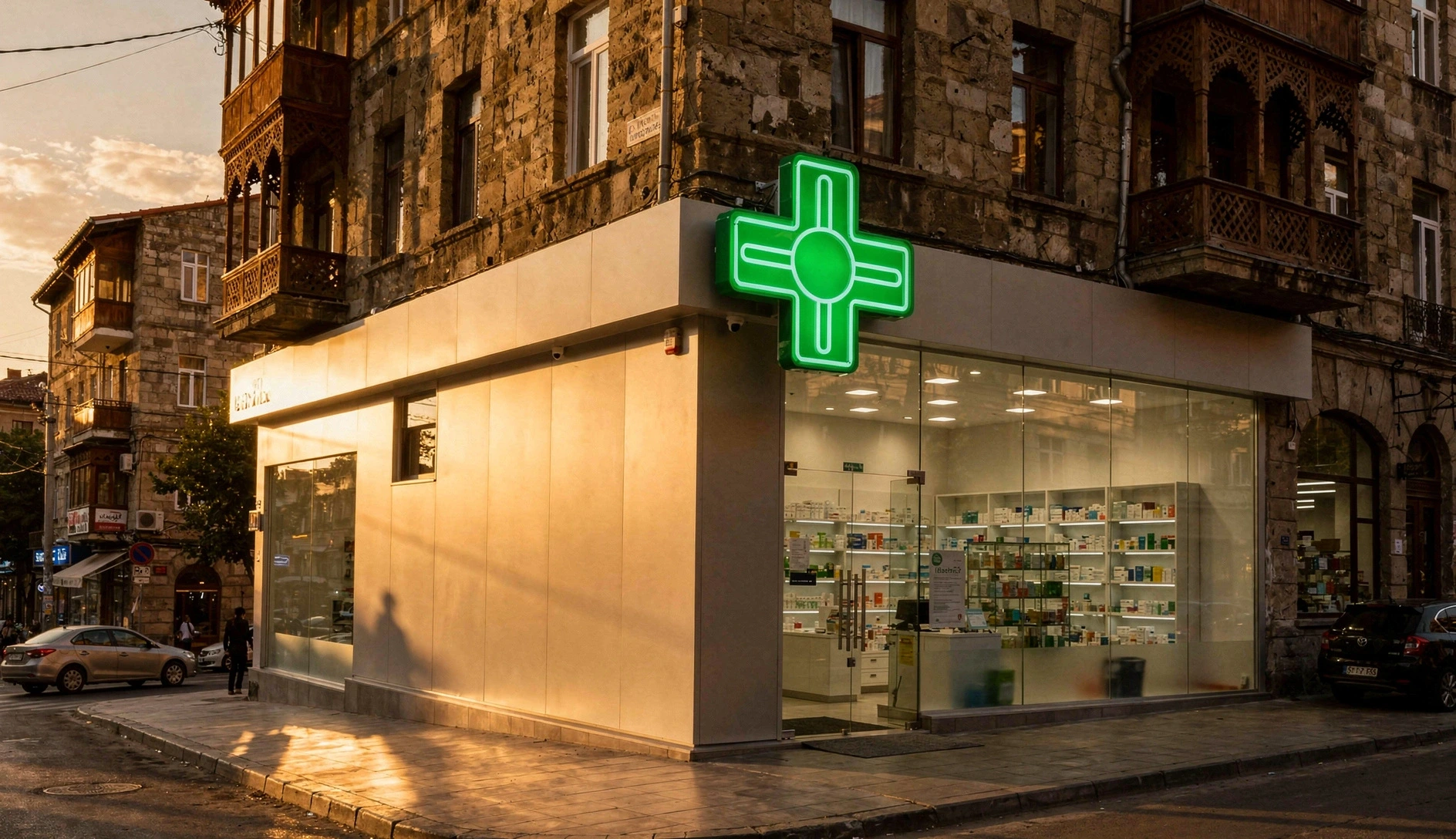
Georgia's pharmacy culture will surprise most Western expats. Walk into any pharmacy in Tbilisi and you can buy antibiotics, blood pressure medication, strong painkillers, and most other drugs that would require a prescription back home — no doctor's note needed. The pharmacist is effectively your first-line healthcare provider.
This is both a blessing and a trap. The blessing: you get fast, cheap access to medication without navigating the Georgian healthcare system. The trap: self-medicating without proper diagnosis is how people get into trouble, and the lack of regulation means nobody's checking for drug interactions.
This guide covers everything: what you can actually buy, what requires a prescription, the major pharmacy chains and how they compare, bringing your medication from home, prices, and the tools that make finding specific drugs easy.
Key Takeaways
- • Most medications are available without a prescription — antibiotics, blood pressure meds, most painkillers, birth control, and more
- • Only controlled substances (narcotics, psychotropics, some sedatives) require a Georgian prescription
- • Prices are 50–80% cheaper than Western Europe or the US for the same medications
- • Four major chains dominate: GPC, PSP, Aversi, and Pharmadepot — with pharmacies on nearly every block
- • mis.ge is the essential tool — search any drug by name and see which pharmacies stock it and at what price
- • Bringing medication into Georgia is straightforward for up to 10 packages — controlled substances need documentation
- • Pharmacists often speak some English and can recommend treatments — they're the de facto first stop before a doctor
Georgia's Pharmacy Culture
In most Western countries, pharmacies are basically drug dispensaries — you hand over a prescription, they fill it, you leave. In Georgia, the pharmacy is something more: it's a low-barrier healthcare access point. Georgians regularly walk into a pharmacy, describe their symptoms, and walk out with medication — no doctor visit required.
This happens because doctor visits cost money (even small amounts add up), wait times at public clinics can be long, and pharmacists in Georgia receive solid pharmaceutical training. The result is a culture where the pharmacist acts as a first-line diagnostician for common ailments. Got a cough? The pharmacist will recommend something. Urinary tract infection? They'll hand you an antibiotic course. Stomach pain? They'll ask questions and suggest treatment.
For expats, this is incredibly convenient. For anything routine — cold, infection, minor pain, allergies, skin issues — you can walk into a pharmacy, explain your problem (many pharmacists speak basic to decent English), and get what you need in five minutes for a fraction of what it would cost at home.
The flip side: this system works until it doesn't. Pharmacists aren't doctors. They can't run tests, they can't diagnose complex conditions, and they occasionally sell people things they don't need. For anything beyond the routine, see an actual doctor — our healthcare guide covers how to find one.
What You Can Buy Without a Prescription
This is the part that shocks most Western expats. Georgia divides medications into three groups:
| Group | Prescription? | Examples |
|---|---|---|
| Group I (Controlled) | Yes — special prescription (Form No. 3) | Narcotics, strong opioids, amphetamines, benzodiazepines |
| Group II (Prescription) | Yes — standard prescription | Some sedatives, certain psychotropics, select strong medications |
| Group III (OTC) | No — available over the counter | Nearly everything else |
Group III is enormous. Here's what you can walk in and buy without any prescription:
💊 Antibiotics
Amoxicillin, azithromycin, ciprofloxacin, metronidazole, doxycycline — the full range. Just ask the pharmacist. They'll often ask what it's for and may suggest the right one.
💉 Blood Pressure / Heart
ACE inhibitors, beta-blockers, statins, blood thinners. If you know your medication name, they'll find the equivalent. Many international brands are available.
🫁 Asthma / Respiratory
Inhalers (salbutamol, budesonide), nebulizer medications, allergy medications. All available over the counter.
💊 Birth Control
Oral contraceptives, emergency contraception (Plan B equivalent), condoms. No prescription, no questions, no judgment. Brand names differ but active ingredients are the same.
🧴 Skin & Topical
Prescription-strength retinoids (tretinoin), hydrocortisone, antifungal creams, antibiotic ointments. Things that cost $200 with a derm visit back home cost 5–15 GEL here.
😷 Pain & Anti-inflammatory
Ibuprofen, paracetamol, diclofenac, naproxen, tramadol (in some pharmacies — it's a gray area). NSAIDs are dirt cheap.
🦠 Antifungal / Antiparasitic
Fluconazole, albendazole, mebendazole, clotrimazole — all available without prescription. Useful for travel-related infections.
🧠 Thyroid / Diabetes
Levothyroxine, metformin, insulin (some types). Chronic medication is generally accessible, though insulin availability varies by pharmacy.
A Word of Caution on Self-Medicating
Just because you can buy antibiotics over the counter doesn't mean you should self-prescribe them. Antibiotic resistance is a real problem, and taking the wrong one (or an incomplete course) makes things worse. If you're not sure what you need, see a doctor first. A consultation at a private clinic costs 30–80 GEL ($12–30) — cheap enough to not skip.
What DOES Require a Prescription
The restricted list is relatively short but important to know. You'll need a prescription (written by a Georgian-licensed doctor) for:
| Category | Examples | Getting a Prescription |
|---|---|---|
| Benzodiazepines | Diazepam, alprazolam, lorazepam, clonazepam | Psychiatrist or neurologist |
| Opioid painkillers | Morphine, oxycodone, fentanyl | Specialist only, strict controls |
| Strong sedatives | Zolpidem, zopiclone | Neurologist or psychiatrist |
| ADHD medication | Methylphenidate (Ritalin/Concerta) — if available at all | Psychiatrist, very limited availability |
| Some antipsychotics | Varies — many are OTC, some restricted | Psychiatrist |
Foreign Prescriptions
A prescription from your home country is not valid at Georgian pharmacies for controlled substances. You'll need a Georgian doctor to write you a new one. For non-controlled medications, a foreign prescription isn't needed anyway — you can buy them over the counter. The real gap is controlled substances: if you take benzodiazepines, ADHD meds, or strong sleep medication, you'll need a Georgian psychiatrist to prescribe them. This can be done in a single appointment.
The Major Pharmacy Chains
Four chains control most of the Georgian pharmacy market. They're everywhere — you'll never be more than a few minutes' walk from at least one in central Tbilisi. They all carry similar stock but differ in pricing, availability of specific brands, and store quality.
GPC (Georgian Pharmaceutical Company)
The largest chain with 500+ locations nationwide. Green branding. Generally the widest stock, including imported European brands. Prices are mid-range — not the cheapest but reliable availability. Their 24-hour locations are the ones you'll find yourself at 2am with a fever.
Best for: Widest selection, 24-hour access
PSP Pharmacy
About 220 locations. Red branding. Often the cheapest prices for common medications. Strong cosmetics and personal care section. Their app and website have good search functionality. PSP tends to carry more Georgian-manufactured generics, which are the budget option.
Best for: Budget-conscious, common medications
Aversi Pharmacy
About 200 locations. Blue branding. Aversi is also a major pharmaceutical distributor and manufacturer — they import directly, which sometimes means better availability for niche medications. Prices are comparable to GPC. Their larger branches often have a wider selection of imported brands.
Best for: Hard-to-find medications, imports
Pharmadepot
The newer challenger, growing fast. Orange branding. Positions itself as the discount option — their prices are often 10–20% below GPC and Aversi for the same medications. Fewer locations but expanding rapidly, especially in Tbilisi. Worth checking for recurring prescriptions.
Best for: Lowest prices, recurring purchases
Medication Prices: What Things Actually Cost
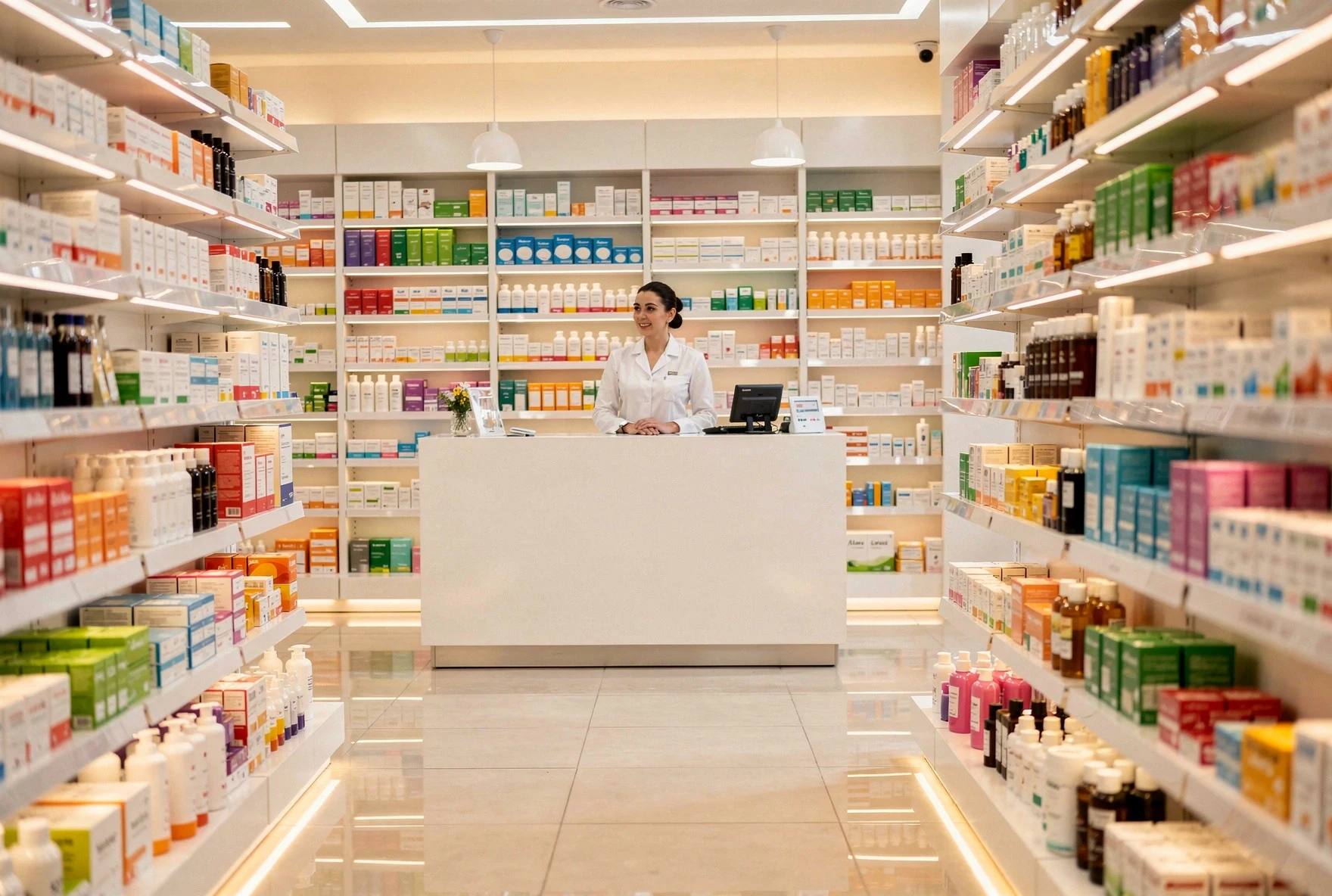
Georgia's medication prices will make you question everything you've ever paid at a pharmacy. The same active ingredients that cost $50+ in the US or €30 in Western Europe often cost 5–15 GEL ($2–6) here. Even brand-name imports are significantly cheaper.
| Medication | Type | Price (GEL) | Price (USD) |
|---|---|---|---|
| Ibuprofen 400mg (20 tabs) | Pain/anti-inflammatory | 2–4 GEL | $0.75–1.50 |
| Amoxicillin 500mg (20 caps) | Antibiotic | 5–12 GEL | $2–5 |
| Azithromycin 500mg (3 tabs) | Antibiotic (Z-pack) | 6–15 GEL | $2.50–6 |
| Omeprazole 20mg (28 caps) | Stomach acid/reflux | 4–10 GEL | $1.50–4 |
| Cetirizine 10mg (30 tabs) | Antihistamine/allergy | 3–8 GEL | $1–3 |
| Oral contraceptive (1 month) | Birth control | 8–20 GEL | $3–8 |
| Tretinoin 0.05% cream | Retinoid (skin) | 8–15 GEL | $3–6 |
| Salbutamol inhaler | Asthma rescue | 5–12 GEL | $2–5 |
| Augmentin 625mg (20 tabs) | Antibiotic (brand) | 25–30 GEL | $10–12 |
| Metformin 500mg (60 tabs) | Diabetes | 4–8 GEL | $1.50–3 |
Why so cheap? Georgia imports generics from India, Turkey, and local manufacturers at competitive prices. There's also genuine market competition — four major chains plus independent pharmacies all within walking distance keeps prices down. The downside: you won't always find the exact brand you're used to. But the active ingredients are identical.
Generic vs Brand: Know Your Active Ingredient
In Georgia, pharmacists work with international non-proprietary names (INN) — the generic name. If you ask for "Advil," they might not know it. But ask for "ibuprofen" and they'll have five options. Before traveling, check the generic name of every medication you take. Write it down. This is your pharmacy cheat sheet.
Finding Specific Medication: The mis.ge Tool
This is the single most useful tool for expats dealing with Georgian pharmacies: mis.ge (the Medical Information System). It's a government-run database that lets you search for any medication by name and see:
- Which pharmacies currently have it in stock
- The exact price at each pharmacy
- Whether it requires a prescription
- Available dosages and package sizes
- The manufacturer and country of origin
Here's how to use it:
Go to mis.ge
Open the website. Select the second checkbox (to search by international/generic name) or first checkbox (to search by brand name).
Type the Generic Name
Enter the international name (e.g., "amoxicillin," "omeprazole," "levothyroxine"). Results show all available brands and formulations.
Click the Orange Button
This shows prices across pharmacies and stock availability. You'll see which chain carries it and the exact GEL price. Save time and money by checking before walking to a pharmacy.
Bookmark mis.ge
Seriously, bookmark it. It's in Georgian by default but navigable even without the language — the drug names are in Latin script. It will save you from walking to three pharmacies only to find that the medication you need is only stocked at the fourth one across town. Price comparison alone has saved expats significant money on chronic medications.
Bringing Medication From Home
Most expats bring a supply of their regular medications when they first move. Here's what you need to know about importing medication into Georgia:
Standard Medications (Non-Controlled)
| Quantity | Documentation Required | Notes |
|---|---|---|
| Up to 10 packages | None | Just keep in original packaging |
| More than 10 packages | Prescription + doctor's note | Note should state diagnosis, dosage, and duration |
For most expats, 10 packages covers a 3–6 month supply of regular medication — enough to bridge the gap while you find a Georgian doctor and local pharmacy alternatives.
Controlled Substances (Narcotics/Psychotropics)
This is where Georgia gets strict. The country has tough drug laws, and controlled substances are taken seriously at customs. If you take medication containing codeine, benzodiazepines, ADHD stimulants, or strong opioids:
You MUST carry:
- • An English-translated prescription from your doctor
- • A medical certificate stating your diagnosis and treatment
- • Authentication from a competent authority in your departure country (e.g., notarized or apostilled)
- • Maximum 31-day supply — you cannot bring more
Commonly Flagged Substances
Be especially careful with medications containing codeine (common in strong cough syrups and combination painkillers like co-codamol), pseudoephedrine (in some cold medicines like Sudafed), and ephedrine. These are on Georgia's controlled substance lists. Even over-the-counter cold medicine from your home country may contain restricted ingredients here. Check the active ingredients before packing.
Mental Health Medication
This deserves its own section because it's a common pain point for expats. The good news first: most antidepressants (SSRIs, SNRIs) are available over the counter in Georgia. Sertraline, escitalopram, fluoxetine, venlafaxine — you can walk into any pharmacy and buy them. No prescription needed.
The complication comes with:
| Medication Type | Availability | Notes |
|---|---|---|
| SSRIs (sertraline, etc.) | OTC — widely available | Cheap: 8–20 GEL/month |
| SNRIs (venlafaxine, duloxetine) | OTC — widely available | 10–25 GEL/month |
| Benzodiazepines (Xanax, Valium) | Prescription required | Georgian psychiatrist must prescribe |
| ADHD meds (Ritalin, Adderall) | Very limited / unavailable | Amphetamines are strictly controlled; availability is poor |
| Sleep meds (zolpidem) | Prescription required | Neurologist or psychiatrist |
| Mood stabilizers (lithium) | Available, may need prescription | Requires monitoring — see a doctor |
ADHD medication is the biggest gap. If you take Adderall, Vyvanse, or similar amphetamine-based medication, you may struggle in Georgia. These are classified as narcotics and are either unavailable or extremely difficult to obtain. Methylphenidate (Ritalin/Concerta) exists in theory but availability is inconsistent. If ADHD medication is essential for you, bring a full supply (up to 31 days of controlled substances) and plan to discuss alternatives with a Georgian psychiatrist.
Finding a Psychiatrist
For prescription medications, you'll need a Georgian psychiatrist or neurologist. Private consultations run 60–120 GEL ($22–45). Most private psychiatrists in Tbilisi speak English. They're generally pragmatic about continuing existing prescriptions if you bring documentation from your home country doctor. Hospitals like MediClub, Evex, and the National Center for Mental Health can help.
24-Hour Pharmacies
Getting sick at 3am in a foreign country is a special kind of miserable. The good news: Tbilisi has plenty of 24-hour pharmacies. Every major chain operates some locations around the clock.
The best way to find one near you: open Google Maps, search "pharmacy" (or "აფთიაქი"), and filter by "Open now." GPC and PSP have the most 24-hour locations. In central Tbilisi (Vera, Vake, Saburtalo, Rustaveli corridor), you're almost always within a 10-minute walk of a 24-hour pharmacy.
In Batumi, 24-hour pharmacies are concentrated along Chavchavadze and near the seaside boulevard. Outside major cities, availability drops — smaller towns may not have any overnight pharmacy.
Language at the Pharmacy
Most pharmacists in Tbilisi speak at least some English — enough to understand medication names, dosages, and basic symptoms. In chains like GPC and PSP in central areas, you'll often find pharmacists with good English.
Tips for a smooth pharmacy visit:
Use Generic Names
Say "ibuprofen" not "Advil." Generic names are international and understood everywhere. Brand names vary by country and cause confusion.
Show the Packaging
If you have an empty box or blister pack of your usual medication, show it. Pharmacists can identify the equivalent instantly from the packaging.
Write It Down
If the pharmacist's English is limited, write the drug name and dosage on your phone. Latin pharmaceutical names are universally understood in writing.
Use Google Translate
The conversation mode (speak English, it translates to Georgian and back) works remarkably well for pharmacy interactions. Show your phone if needed.
The Expat Pharmacy Kit
After a few months, most expats settle into a standard set of medications they keep at home for common issues. Here's what experienced expats recommend stocking:
Home Medicine Cabinet Essentials
For about $15–19, you have a complete home pharmacy that covers 90% of the common illnesses and minor injuries you'll encounter. Try building that kit in the US or UK.
Beyond Medicine: Cosmetics, Supplements & Vitamins
Georgian pharmacies are more than pill dispensaries. They're also the primary retail channel for:
- Skincare: International brands (Bioderma, La Roche-Posay, Eucerin, CeraVe) are stocked at major chains. Prices are 20–40% below Western retail.
- Vitamins and supplements: Vitamin D (important — Georgian winters are gray), B12, iron, omega-3, magnesium. All available and cheap.
- Baby products: Formula, diapers, creams — pharmacy chains carry major brands alongside Georgian options.
- Personal care: Deodorant, shampoo, dental products — pharmacies stock these alongside supermarkets, often with pharmacy-grade brands.
PSP and GPC have the biggest cosmetics and supplement sections. Aversi tends to have more niche/imported skincare brands.
Common Mistakes
❌ Using Brand Names Only
Asking for "Tylenol" gets you blank stares. Ask for "paracetamol" and they'll have a dozen options. Learn the generic names of your medications before you arrive.
❌ Not Checking mis.ge First
Walking to three pharmacies looking for a specific medication when a 30-second search on mis.ge would tell you exactly where to go. Use the tool.
❌ Bringing Codeine Products
That bottle of co-codamol or codeine cough syrup from home? It's a controlled substance here. Bring documentation or leave it behind.
❌ Ignoring Expiry Dates
Check the expiry date on everything you buy. Rarely an issue at major chains, but smaller independent pharmacies in rural areas may stock older inventory.
❌ Overpaying at One Chain
Price differences between chains can be 20–30% for the same medication. For recurring prescriptions, compare prices on mis.ge. Pharmadepot is usually cheapest.
❌ No Documentation for Controlled Meds
Arriving at customs with benzodiazepines or ADHD meds and no paperwork is a recipe for a very bad day. Always carry translated prescriptions for controlled substances.
Dental & Vision
While pharmacies handle medication, it's worth noting that Georgia is also excellent for dental work and vision care at a fraction of Western prices. We have a dedicated dental care guide covering the full picture.
For vision: opticians are abundant in Tbilisi, and prescription glasses can be made same-day for 50–200 GEL ($19–75) depending on frames and lens type. Contact lenses are available at pharmacies and optical shops. Eye exams cost 20–50 GEL ($8–19) at private clinics.
Frequently Asked Questions
Can I buy antibiotics without a prescription in Georgia?
Yes. Most antibiotics including amoxicillin, azithromycin, ciprofloxacin, and doxycycline are available over the counter at any Georgian pharmacy. Simply ask the pharmacist by the generic name. No prescription or doctor visit required, though you should ideally get a proper diagnosis before taking antibiotics.
Is ADHD medication (Adderall, Ritalin) available in Georgia?
Very limited. Amphetamine-based medications like Adderall and Vyvanse are classified as narcotics and are essentially unavailable. Methylphenidate (Ritalin/Concerta) exists but availability is inconsistent. If you rely on ADHD medication, bring a supply with proper documentation (translated prescription, max 31-day supply) and consult a Georgian psychiatrist about alternatives.
How much does medication cost in Georgia compared to Western countries?
Typically 50–80% cheaper. A course of antibiotics costs $2–6, ibuprofen is under $1.50, and prescription-strength skin treatments cost $3–6. Even brand-name imports are significantly cheaper than Western retail prices.
Can I bring my medication into Georgia from abroad?
Yes. Standard (non-controlled) medications: up to 10 packages with no documentation needed. Controlled substances (narcotics, benzodiazepines, opioids): carry a translated prescription, medical certificate, and authentication from your departure country. Maximum 31-day supply for controlled substances.
What is mis.ge and how does it help?
mis.ge is Georgia's official Medical Information System — a free online database where you can search any medication by name and see which pharmacies stock it, the price at each pharmacy, whether it requires a prescription, and available dosages. Essential for finding specific medications and comparing prices.
Are there 24-hour pharmacies in Tbilisi?
Yes, all four major chains operate 24-hour locations in central Tbilisi. Search "pharmacy" or "აფთიაქი" on Google Maps and filter by "Open now." In central Tbilisi, you're rarely more than a 10-minute walk from one.
Written by The Georgia Expats Team
We've navigated Georgian pharmacies hundreds of times — from midnight fever runs to tracking down obscure medications using mis.ge. This guide is based on years of lived experience filling prescriptions, comparing chains, and occasionally being pleasantly shocked by how little things cost.
Last updated: February 2026.
Related Articles
Healthcare in Georgia
Hospitals, doctors, insurance, and the 2026 mandatory insurance rule.
Dental Care in Georgia
Modern clinics at 50–80% below Western prices — plus how to find a good dentist.
Insurance Guide
Health, car, and property insurance — what you need and which companies to choose.
Cost of Living in Tbilisi
Rent, groceries, transport — real numbers and sample budgets.